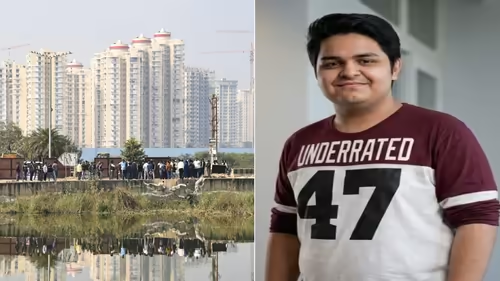
Noida Techie Drowning Death: UP Govt Fires CEO, Orders SIT Probe Amid Public Outrage
In a shocking incident that has sparked nationwide outrage, a 24-year-old software engineer tragically drowned in a rainwater-filled pit at a corporate park in Noida’s Sector 150. The victim, identified as Ankur Verma, was reportedly returning from work when he fell into an unmarked, uncovered water body near his office complex. The aftermath? A firestorm of public anger, viral social media campaigns, and unprecedented administrative action from the Uttar Pradesh government—including the immediate removal of Noida’s Chief Executive Officer (CEO) and the formation of a Special Investigation Team (SIT) to probe the Noida techie death .
Table of Contents
- What Happened: The Night of the Tragedy
- Public Outrage and Social Media Fury
- UP Govt’s Swift Response: CEO Removed, SIT Formed
- Key Questions the SIT Must Answer
- Broader Implications for Urban Infrastructure Safety
- Conclusion: Accountability and Prevention
- Sources
What Happened: The Night of the Tragedy
On the evening of January 16, 2026, Ankur Verma—a software developer employed at a prominent IT firm in Noida—was walking back to his residence after work. Around 8:30 PM, near the Wave City Center Metro Station in Sector 150, he stepped into what appeared to be a puddle but was, in fact, a deep, rainwater-filled excavation pit with no fencing, warning signs, or lighting .
Witnesses reported hearing cries for help, but by the time emergency services arrived, it was too late. Verma’s body was recovered hours later. The site, located just meters from a busy corporate corridor, had been left unsecured for weeks—an alarming lapse in basic urban safety protocols.
Public Outrage and Social Media Fury
News of the incident spread like wildfire. Within hours, #JusticeForAnkurVerma and #NoidaTecheDeath were trending on X (formerly Twitter), with citizens, tech professionals, and opposition leaders demanding accountability. Many pointed to a pattern of negligence in Noida’s rapid urban development—where infrastructure often outpaces safety regulations.
“How can a young man die in broad daylight in India’s ‘smartest’ city?” asked one viral post. Others shared photos of similar unmarked pits across Noida, highlighting systemic failures in municipal oversight.
UP Govt’s Swift Response: CEO Removed, SIT Formed
Bowing to mounting pressure, the Uttar Pradesh government acted decisively. On January 18, 2026, Chief Minister Yogi Adityanath announced two major decisions:
- Immediate removal of Noida Authority CEO R. K. Singh for “gross negligence and failure in ensuring public safety.”
- Formation of a three-member SIT headed by an IPS officer to investigate the circumstances of the Noida techie death, with a mandate to submit its report within five days .
The state also ordered an immediate audit of all open construction sites, stormwater drains, and excavation zones across Noida and Greater Noida, requiring developers and authorities to install proper barricades and signage within 72 hours.
Key Questions the SIT Must Answer
The SIT’s investigation will be closely watched. Key issues it must address include:
- Who was responsible for the excavation at the site—and why was it left uncovered for weeks?
- Did the Noida Authority receive prior complaints about the hazard?
- Why were there no streetlights or reflective markers in a high-footfall zone near a metro station?
- Were any officials previously warned about unsafe conditions in Sector 150?
Transparency in this probe is critical. As noted by the National Human Rights Commission (NHRC), “preventable deaths due to civic negligence constitute a violation of the right to life under Article 21” .
Broader Implications for Urban Infrastructure Safety
This tragedy is not isolated. From Bengaluru to Gurugram, Indian cities have seen a rise in accidents involving uncovered manholes, trenches, and drainage pits. The root cause? A development model that prioritizes speed over safety, and profit over public welfare.
Urban planners and activists argue that without strict enforcement of the Model Building Bye-Laws and mandatory third-party safety audits, such incidents will keep recurring. The Noida techie death could become a turning point—if authorities treat it as a systemic failure rather than a one-off accident.
For more on urban safety reforms, see our analysis on [INTERNAL_LINK:indian-cities-infrastructure-safety-reforms].
Conclusion: Accountability and Prevention
The removal of Noida’s CEO and the SIT probe are welcome first steps—but they’re not enough. True justice for Ankur Verma means ensuring no other family suffers a similar loss. That requires institutional reform, real-time monitoring of construction sites, and a cultural shift where public safety is non-negotiable in India’s urban growth story.
As citizens, we must continue to demand accountability. Because in the race to build smarter cities, we cannot afford to lose human lives.
Sources
- Times of India: Noida techie death: UP govt forms SIT to probe drowning incident, report in 5 days
- National Human Rights Commission (NHRC): Official Guidelines on Right to Life and Civic Safety
- Ministry of Housing and Urban Affairs: Model Building Bye-Laws, 2016