Introduction: A Preventable Tragedy Foretold
The drowning of a young software engineer in Noida has sent shockwaves through the city—not just because of the horror of the incident, but because it was entirely preventable. The Noida sewer collapse that claimed his life in early 2026 occurred at a location where developers had issued formal warnings as far back as March 2022 .
Wiztown Planners, the developer of a residential project in Sector 150, had alerted the Noida Authority about “hazardous conditions” caused by a collapsed sewer line that was flooding basements and destabilizing the ground. Despite repeated follow-ups from residents and even internal concerns from other civic departments, no permanent solution was ever implemented. Now, a family mourns a son, and a community demands answers: how could this have been allowed to happen?
Table of Contents
- The 2022 Warning That Was Ignored
- The Fatal Day: Noida Sewer Collapse Claims a Life
- Systemic Failures: Why No Action Was Taken
- Resident Alarms and Bureaucratic Silence
- Legal and Ethical Implications of Negligence
- Conclusion
- Sources
The 2022 Warning That Was Ignored
In a letter dated March 15, 2022, Wiztown Planners formally notified the Noida Authority about severe infrastructure issues near their Sector 150 plot. The letter explicitly stated that a major sewer line had collapsed, causing chronic waterlogging and flooding in underground parking areas of nearby buildings .
“The road adjacent to our plot is sinking due to the damaged sewer network,” the developer wrote, urging immediate remedial action to prevent “potential accidents and structural damage.” The communication included photographs and site assessments, yet it appears to have vanished into the bureaucratic void—a common fate for many citizen complaints in rapidly expanding urban zones like Noida.
The Fatal Day: Noida Sewer Collapse Claims a Life
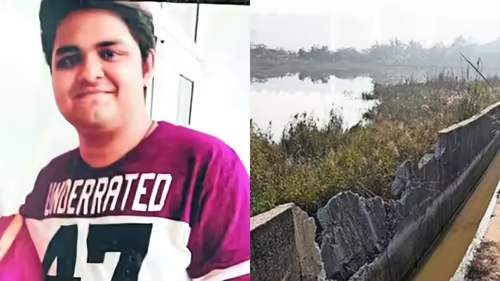
On January 18, 2026, 28-year-old Yuvraj, a software developer returning home from work, stepped onto what appeared to be solid ground near the same Sector 150 stretch. Without warning, the earth gave way beneath him. He fell into a deep, open cavity created by the long-collapsed sewer line and was quickly submerged in contaminated water and debris .
Despite frantic rescue efforts by locals and emergency services, he was pronounced dead at the hospital. An autopsy confirmed drowning as the cause of death. The tragic irony? The exact hazard Wiztown had warned about four years earlier had become a death trap.
Systemic Failures: Why No Action Was Taken
This isn’t an isolated case of poor maintenance—it’s a symptom of deeper systemic rot in urban governance. Several factors contributed to this deadly inaction:
- Siloed Departments: The Noida Authority, Public Works Department (PWD), and Jal Board often operate in isolation, with no clear accountability for integrated infrastructure management.
- Reactive, Not Proactive: Civic bodies typically respond only after a disaster occurs, not before. Preventive maintenance is chronically underfunded and deprioritized .
- Lack of Digital Tracking: There’s no centralized public system to track citizen or developer complaints, allowing critical warnings to be lost or ignored without consequence.
As [INTERNAL_LINK:urban-infrastructure-india] experts point out, cities like Noida are growing faster than their administrative capacity can handle, creating dangerous gaps in public safety.
Resident Alarms and Bureaucratic Silence
Wiztown wasn’t alone in raising the alarm. Residents of nearby housing societies had filed multiple complaints over the years about foul smells, sinkholes, and sudden ground subsidence during monsoons. In 2024, the Greater Noida Industrial Development Authority (GNIDA) even flagged the area as “high-risk” in an internal report—but again, no public advisory or repair work followed .
“We kept telling them something terrible would happen,” said one resident, who asked to remain anonymous. “But they just sent temporary patches—filling cracks with mud and gravel. It was a Band-Aid on a bullet wound.”
Legal and Ethical Implications of Negligence
The family of the deceased is now exploring legal action against the Noida Authority for criminal negligence under Section 304A of the Indian Penal Code (causing death by negligence). Legal experts suggest that the paper trail—including the 2022 warning—could form a strong basis for prosecution .
Beyond the courtroom, this case raises urgent ethical questions: When a private entity flags a public danger, does the state have a moral obligation to act? And when lives are lost due to inaction, who bears responsibility—the individual officer, the department, or the entire system?
Comparatively, countries like Japan and Singapore enforce strict liability on municipal bodies for infrastructure failures, with real-time monitoring and mandatory response timelines . India’s framework remains largely reactive.
Conclusion
The Noida sewer collapse that killed a promising young techie is more than a local news story—it’s a national wake-up call. It reveals how bureaucratic apathy, fragmented governance, and the absence of preventive urban planning can turn ordinary streets into graveyards. The 2022 warning was a cry for help that went unanswered. Now, in the aftermath of tragedy, authorities must do more than offer condolences; they must overhaul systems to ensure such a preventable death never happens again. For every citizen walking the streets of India’s booming cities, this case is a stark reminder: infrastructure isn’t just concrete and pipes—it’s a promise of safety.