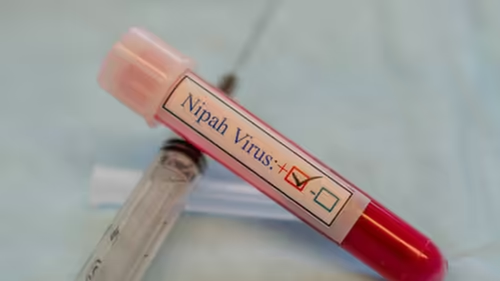
A chilling health alert has emerged from West Bengal: the Nipah virus—a rare but terrifying pathogen with a fatality rate that can soar up to 75%—has resurfaced . This isn’t the first time India has faced this bat-borne nightmare; outbreaks in Kerala (2018, 2021, 2023) and Siliguri (2001) left communities devastated and health systems scrambling. But what makes Nipah so dangerous isn’t just its lethality—it’s how silently it strikes.
Early symptoms mimic the common flu or dengue: fever, headache, muscle pain. By the time severe neurological signs like confusion, seizures, or coma appear, it’s often too late. And with no approved vaccine or antiviral treatment, prevention and rapid isolation are the only defenses we have. As health officials rush to contain the latest case, understanding the Nipah virus timeline, transmission, and warning signs could save lives.
Table of Contents
- What Is the Nipah Virus?
- Why the Nipah Virus Is So Deadly
- Timeline of Infection: From Exposure to Critical Stage
- How Is Nipah Virus Transmitted?
- West Bengal Outbreak: What We Know So Far
- Prevention and Public Health Measures
- Global Efforts and Future Vaccines
- Conclusion: Stay Vigilant, Not Panicked
- Sources
What Is the Nipah Virus?
First identified in 1999 during an outbreak among pig farmers in Malaysia, the Nipah virus (NiV) is a zoonotic virus—meaning it jumps from animals to humans. Its natural reservoir? Fruit bats of the Pteropus genus, commonly known as flying foxes .
These bats carry the virus without falling ill, but they shed it in urine, saliva, and birthing fluids. Humans typically get infected through:
- Consuming raw date palm sap contaminated by bat excretions (a common practice in parts of Bengal and Bangladesh).
- Direct contact with infected bats or pigs.
- Human-to-human transmission via respiratory droplets or bodily fluids—especially in healthcare or household settings.
The World Health Organization (WHO) lists Nipah as a priority pathogen for research due to its epidemic potential and lack of countermeasures .
Why the Nipah Virus Is So Deadly
Three factors make Nipah exceptionally dangerous:
- High fatality rate: Ranges from 40% to 75%, depending on the outbreak and healthcare access.
- No specific treatment: Only supportive care (fluids, oxygen, seizure control) is available.
- Rapid progression: Patients can deteriorate from mild fever to encephalitis (brain inflammation) within 24–48 hours.
Dr. Arun Kumar, a virologist involved in past Indian outbreaks, explains: “The virus attacks the endothelial cells lining blood vessels in the brain, causing swelling, hemorrhage, and neurological collapse. Once that cascade begins, it’s extremely hard to reverse” .
Timeline of Infection: From Exposure to Critical Stage
Understanding the progression is key to early intervention:
| Day | Symptoms/Stage |
|---|---|
| 4–14 (Incubation) | No symptoms. Virus replicates silently. |
| Day 1–3 | Fever, headache, sore throat, muscle pain—easily mistaken for flu or dengue. |
| Day 4–7 | Neurological symptoms emerge: drowsiness, disorientation, seizures. |
| Day 7+ | Encephalitis, coma, respiratory distress. High risk of death or permanent brain damage. |
Some survivors suffer long-term effects like persistent convulsions or personality changes—a condition known as “relapsing Nipah encephalitis.”
How Is Nipah Virus Transmitted?
Transmission occurs through three main routes:
- Animal-to-human: Via contaminated food (e.g., raw date palm sap) or direct contact with infected bats/pigs.
- Human-to-human: Through close contact with secretions (saliva, urine, blood) of infected individuals—especially risky for family caregivers and healthcare workers.
- Environmental: Though less common, surfaces contaminated with bat excreta may pose a risk.
Crucially, Nipah is not airborne like measles or tuberculosis. It requires close, prolonged exposure—making containment possible with strict protocols.
West Bengal Outbreak: What We Know So Far
The latest case, reported in a rural district of West Bengal, involves a patient who consumed raw date palm sap—a known risk factor in the region . Health authorities have initiated contact tracing, isolated the patient, and placed over 50 close contacts under surveillance.
State and central teams from the National Centre for Disease Control (NCDC) are on-site, conducting serological testing and community awareness drives. So far, no secondary cases have been confirmed—but vigilance remains high.
Prevention and Public Health Measures
Since there’s no cure, prevention is everything. The Indian government and WHO recommend:
- Avoid raw date palm sap—especially during winter months when bats are active.
- Wash fruits thoroughly and avoid those partially eaten by bats.
- Use PPE if caring for suspected cases.
- Report fever with neurological symptoms immediately to local health authorities.
Hospitals must implement strict infection control—like those used during Ebola outbreaks—to prevent nosocomial (hospital-based) spread. For more on pandemic preparedness, see our guide on [INTERNAL_LINK:zoonotic-disease-prevention].
Global Efforts and Future Vaccines
While no licensed vaccine exists yet, promising candidates are in development. The NIH and WHO are fast-tracking monoclonal antibody therapies and mRNA-based vaccines originally designed for Hendra virus (a close relative of Nipah) .
In the meantime, India’s Integrated Disease Surveillance Programme (IDSP) continues to monitor hotspots, particularly in eastern states where bat habitats overlap with human settlements.
Conclusion: Stay Vigilant, Not Panicked
The re-emergence of the Nipah virus in West Bengal is a stark reminder of the fragile boundary between wildlife and human health. While the threat is real, panic isn’t the answer. With early detection, community awareness, and robust public health responses—as demonstrated successfully in Kerala—outbreaks can be contained before they spiral.
Stay informed, avoid high-risk foods, and trust science—not rumors. In the fight against emerging pathogens, knowledge is our most powerful vaccine.
Sources
- Times of India: Nipah virus has a high fatality rate: Doctor shares what makes the virus dangerous
- World Health Organization (WHO): Nipah Virus Fact Sheet
- CDC: CDC – Nipah Virus Disease
- National Centre for Disease Control (India): Outbreak Response Guidelines