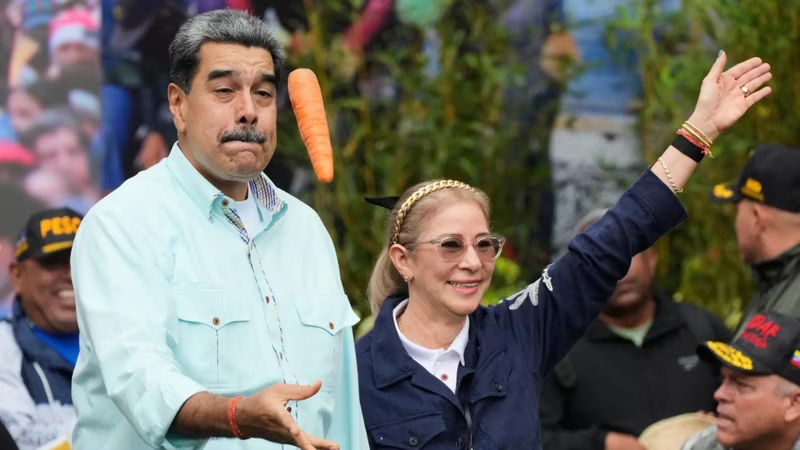
In early January 2026, social media feeds lit up with explosive claims: Venezuelan President Nicolas Maduro had been captured after U.S.-led strikes on Caracas. Headlines screamed of regime collapse, military takeovers, and dramatic arrests. But here’s the critical truth—none of it is verified. In fact, as of Saturday, January 3, 2026, Nicolas Maduro remains in power, addressing supporters from Miraflores Palace and denying any such event.
So, where did these rumors come from? Why do they keep resurfacing? And who exactly is Nicolas Maduro—the man at the heart of one of Latin America’s most enduring political crises?
Table of Contents
- Who Is Nicolas Maduro?
- The Origin of the ‘Maduro Captured’ Rumor
- Has the U.S. Launched Strikes on Venezuela?
- Why Disinformation Spreads So Fast
- Maduro’s Hold on Power Despite Crisis
- What the Future Holds for Venezuela
- Conclusion: Critical Thinking in the Age of Viral Lies
- Sources
Who Is Nicolas Maduro?
Nicolas Maduro Moros, born in 1962, rose from bus driver and union leader to become Venezuela’s president in 2013—following the death of Hugo Chávez, the charismatic socialist leader who handpicked him as successor.
Under Maduro’s rule, Venezuela has plunged into one of the worst peacetime economic collapses in modern history. Hyperinflation, mass migration (over 7 million citizens have fled since 2015), food shortages, and crumbling infrastructure have defined his presidency.
Despite widespread protests and international condemnation—including sanctions from the U.S., EU, and others—Maduro has clung to power through control of the military, electoral manipulation, and support from allies like Russia, China, and Iran.
The Origin of the ‘Maduro Captured’ Rumor
The recent Nicolas Maduro captured claims appear to stem from a fabricated news post circulating on fringe websites and social media platforms on January 1–2, 2026. These posts falsely cited “U.S. military sources” and included doctored images of Maduro in custody.
Major news organizations—including The Times of India, Reuters, and AFP—have found no evidence of such an event. The U.S. Department of Defense issued no statement about strikes or arrests in Venezuela. Meanwhile, Maduro appeared live on state television on January 3, denouncing the rumors as “imperialist psychological warfare.”
Has the U.S. Launched Strikes on Venezuela?
No. There is no credible evidence that the United States has conducted military strikes on Venezuela in early 2026—or at any point in recent years.
While the U.S. has long opposed Maduro’s regime—imposing sweeping sanctions on oil, gold, and government officials since 2017—it has consistently ruled out direct military intervention. The Biden administration, like its predecessors, favors diplomatic and economic pressure over boots on the ground.
That said, the U.S. has supported opposition leader Juan Guaidó, whom it recognized as interim president in 2019—a move rejected by Maduro and his allies.
Why Disinformation Spreads So Fast
The Nicolas Maduro captured myth is a textbook case of how disinformation thrives:
- Emotional triggers: People want to believe authoritarian leaders fall suddenly.
- Algorithmic amplification: Social media rewards shocking, unverified claims with visibility.
- Geopolitical fog: Venezuela’s opacity makes verification hard, creating a vacuum for rumors.
- Foreign influence ops: Both pro- and anti-Maduro actors may seed false narratives to manipulate perception.
Fact-checkers at organizations like Reuters Fact Check and AP News have repeatedly debunked similar claims over the years.
Maduro’s Hold on Power Despite Crisis
Despite economic freefall and international isolation, Maduro remains firmly in control. How?
- Military loyalty: Top generals benefit from illicit mining and drug trafficking networks tied to the regime.
- Election engineering: The 2024 presidential election—widely criticized as neither free nor fair—gave Maduro another six-year term.
- Foreign backing: Russia provides security advisors; China offers oil-for-loan deals; Iran supplies fuel and drones.
Meanwhile, the opposition remains fragmented, and ordinary Venezuelans are exhausted—more focused on survival than revolution.
What the Future Holds for Venezuela
Short-term, Maduro’s grip appears secure. But long-term risks loom:
- A potential oil price crash could further cripple state revenues.
- Internal military fractures may emerge if privileges dry up.
- Renewed U.S. sanctions—especially on digital currency or gold exports—could intensify pressure.
However, without a unified, credible opposition and clear international strategy, regime change seems unlikely in the near term.
Conclusion: Critical Thinking in the Age of Viral Lies
The rumor that Nicolas Maduro captured after U.S. strikes is just that—a rumor. In an era of deepfakes, AI-generated text, and weaponized misinformation, readers must pause before sharing sensational claims.
Venezuela’s crisis is real. Its suffering is real. But solutions won’t come from viral hoaxes—they’ll come from informed discourse, diplomatic engagement, and support for democratic resilience. For more on global disinformation trends, check out our guide on [INTERNAL_LINK:how-to-spot-fake-news].
Sources
- The Times of India: “Who is Nicolas Maduro? Venezuelan president ‘captured’ after US strikes”
- Reuters Fact Check
- Associated Press Fact Check
- U.S. Department of State – Venezuela Sanctions Archive
- Human Rights Watch – Venezuela Country Reports (2025)