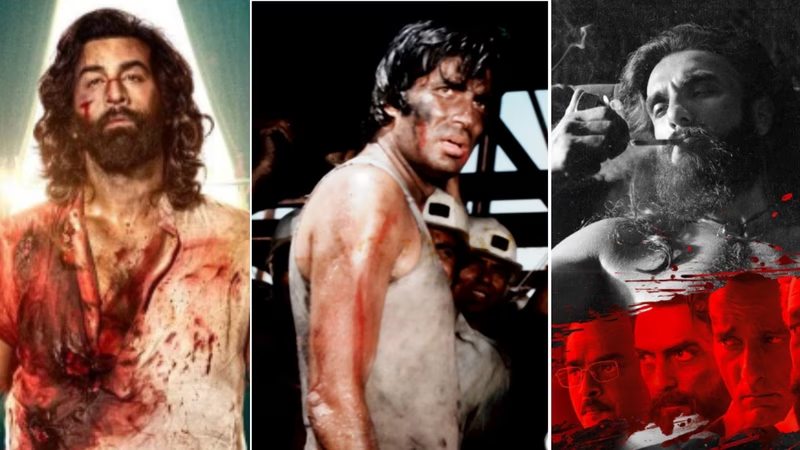
For decades, the “Angry Young Man” was Bollywood’s—and India’s—rebel with a cause. From Amitabh Bachchan’s Vijay in Deewar to the street-protesting student in real life, he raged against injustice, unemployment, and a broken system that promised progress but delivered only patronage.
Now, in the age of Naya Hindustan, that same archetype is back—but wearing a different uniform, chanting different slogans, and targeting different villains. No longer railing against the state, today’s Angry Young Man often defends it fiercely, seeing critics as traitors and dissent as sabotage.
This dramatic pivot raises urgent questions: Has the Angry Young Man’s core rage changed sides? Or has the very definition of “the system” been rewritten so thoroughly that fighting for it now feels like rebellion?
Table of Contents
- The Original Angry Young Man: A Brief History
- What Is ‘Naya Hindustan’?
- Naya Hindustan and the New Angry Young Man
- Why the Shift Happened: Key Drivers
- Digital Amplification and Polarization
- Is This Empowerment—or Co-option?
- Conclusion: The Future of Indian Youth Rage
- Sources
The Original Angry Young Man: A Brief History
Born in the economic stagnation of the 1970s, the Angry Young Man was a cultural response to systemic failure. He wasn’t just mad—he was marginalized. Unemployment, bureaucratic red tape, and dynastic politics left millions feeling voiceless.
His anger was anti-establishment, anti-elitist, and deeply democratic. He didn’t want to join the system; he wanted to burn it down and rebuild it fairly.
This sentiment fueled mass movements—from anti-corruption protests in 2011 to campus uprisings demanding social justice. The state was the antagonist.
What Is ‘Naya Hindustan’?
Coined and popularized by Prime Minister Narendra Modi, Naya Hindustan (“New India”) envisions a nation that is self-reliant (Atmanirbhar), digitally empowered, and globally respected. It promises to replace old hierarchies with meritocracy and colonial mindsets with civilizational pride .
Crucially, it frames national strength not just in economic terms, but in cultural and civilizational ones. In this narrative, threats come not from within the system—but from external forces: “anti-nationals,” “urban Naxals,” “tukde-tukde gang,” and Western ideological imports.
[INTERNAL_LINK:modi-vision-for-new-india] The state is no longer the enemy—it’s the shield protecting Bharat from fragmentation.
Naya Hindustan and the New Angry Young Man
Today’s Angry Young Man looks strikingly different:
- He’s active on X (formerly Twitter), not just street corners.
- He wears saffron wristbands or displays tricolor profile pictures.
- His rage is directed at “anti-India” voices in media, academia, and entertainment.
- He sees patriotism as loyalty to the current leadership, not just the Constitution.
This isn’t apathy—it’s redirected energy. The same fire that once demanded accountability now demands conformity. The rebellion hasn’t vanished; it’s been repurposed.
Why the Shift Happened: Key Drivers
Several structural and psychological factors explain this transformation:
- Economic Frustration Meets Nationalist Outlet: With youth unemployment hovering near 20% , anger needs a target. Blaming “anti-nationals” offers emotional relief when jobs don’t materialize.
- Cultural Assertion: Many young Indians, especially from non-metropolitan backgrounds, feel their traditions were mocked by elite discourse. Naya Hindustan validates their identity.
- Perceived Global Disrespect: Incidents like Western media caricatures or diplomatic slights fuel a desire to “show the world” India’s strength—often through unwavering support for the government.
Digital Amplification and Polarization
Social media algorithms reward outrage. A young man posting “#BoycottBBC” gets more engagement than one critiquing policy details. Over time, performative nationalism becomes the easiest path to digital clout—and community belonging.
According to a 2025 study by the Pew Research Center, 68% of Indian internet users aged 18–30 say they’ve encountered online harassment for expressing “unpatriotic” views . Fear of social exile pushes many toward conformity.
Is This Empowerment—or Co-option?
Critics argue the Angry Young Man has been co-opted: his revolutionary spirit neutralized by channeling it into state-aligned nationalism. His rage is no longer disruptive—it’s stabilizing for the status quo.
Supporters counter that this is genuine empowerment: for the first time, non-elite, vernacular-speaking youth feel seen, heard, and proud of their heritage. They’re not defending a corrupt system—they’re defending a civilizational project they believe in.
The truth likely lies somewhere in between. But one thing is clear: the Angry Young Man hasn’t disappeared. He’s just chosen a new battlefield.
Conclusion: The Future of Indian Youth Rage
The story of Naya Hindustan cannot be told without understanding this metamorphosis of youth anger. Whether this shift leads to a more unified nation or deeper polarization depends on whether institutions can address real grievances—jobs, education, dignity—beyond symbolic victories.
Because if the promises of Naya Hindustan remain unfulfilled, even the most loyal Angry Young Man may one day turn his rage back toward the system itself.