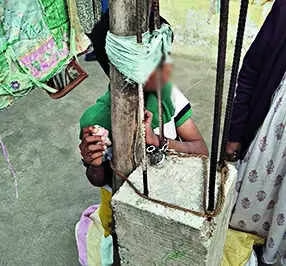
In what can only be described as a harrowing betrayal of trust, a 12-year-old boy in Nagpur was found chained inside his own home—restrained for hours every day by the very people meant to protect him: his parents. The reason? Alleged theft of a mobile phone. For over two months, the child, a school dropout already vulnerable to neglect, was treated not as a son, but as a prisoner in his own house. His wrists bore bruises from the chains, and his eyes reflected deep psychological trauma.
Thankfully, the boy was rescued after neighbors alerted authorities. He has since been moved to a government-run children’s home for medical care, counseling, and safety. But the incident—now infamously known as the Nagpur child chaining case—has ignited a national conversation about child abuse, parental accountability, and the urgent need to enforce India’s child protection laws.
Table of Contents
- The Nagpur Child Chaining Case: What Happened?
- Signs of Abuse and Trauma in the Victim
- Legal Framework: Child Protection Laws in India
- Why Do Parents Resort to Extreme Punishment?
- The Role of Schools and Communities in Preventing Abuse
- What Happens Next: Police and Child Welfare Response
- How to Report Child Abuse in India: A Guide for Citizens
- Conclusion: A Call for Compassion and Accountability
- Sources
The Nagpur Child Chaining Case: What Happened?
According to Nagpur police, the boy had dropped out of school and was accused by his parents of repeatedly stealing household items, including a mobile phone. Frustrated and lacking coping mechanisms—or empathy—they took matters into their own hands.
Every morning, before leaving for work, the parents allegedly chained the boy to a fixed object inside their one-room home and locked the door from the outside. He remained confined until their return in the evening—sometimes for 10 to 12 hours—with limited access to food, water, or a bathroom.
The abuse went unnoticed for weeks until a concerned neighbor, hearing faint cries, reported the situation to local child welfare officials. On January 2, 2026, a team from the Child Welfare Committee (CWC) and police conducted a raid and found the boy in distress .
Signs of Abuse and Trauma in the Victim
Medical examinations revealed:
- Deep abrasions and healing scars on both wrists from prolonged restraint.
- Signs of malnutrition and dehydration.
- Severe anxiety, withdrawal, and fear of adults—classic symptoms of complex trauma.
Child psychologists emphasize that chaining a child is not discipline—it’s torture. The psychological impact can last a lifetime, affecting brain development, emotional regulation, and the ability to form healthy relationships .
Legal Framework: Child Protection Laws in India
India has robust legal safeguards for children:
- Juvenile Justice (Care and Protection of Children) Act, 2015: Classifies physical or mental abuse by parents as a “child in need of care and protection.”
- POCSO Act: While typically used for sexual abuse, its spirit upholds the dignity and safety of all children.
- Section 75 of JJ Act: Punishes cruelty to a child with up to 3 years in prison and a fine.
Despite these laws, enforcement remains weak—especially in cases of “private” family discipline. This case, however, may set a precedent. Police have filed a formal complaint, and the parents could face criminal charges.
Why Do Parents Resort to Extreme Punishment?
This isn’t mindless cruelty—it’s often born from desperation, ignorance, and systemic failure.
Many parents, especially in low-income households, lack access to parenting education, mental health support, or alternatives to punitive discipline. When a child acts out—perhaps due to undiagnosed ADHD, trauma, or just adolescent curiosity—the response can be disproportionately harsh.
In this boy’s case, his school dropout status likely exacerbated the situation. Without the watchful eyes of teachers or counselors, he became invisible to the safety net that schools often provide.
The Role of Schools and Communities in Preventing Abuse
This tragedy underscores a critical truth: child protection is a community responsibility.
Schools must track dropouts and conduct home visits. Neighbors must speak up—like the hero in this case. Local NGOs and Anganwadi workers should be trained to spot signs of neglect.
Resources like [INTERNAL_LINK:child-protection-services-maharashtra] could have intervened earlier—if they’d known.
What Happens Next: Police and Child Welfare Response
The Nagpur Police have launched a full investigation under the JJ Act. The parents are cooperating but have not been arrested yet—a decision that has drawn criticism from child rights activists.
Meanwhile, the boy is under the care of a government observation home, where he’ll receive trauma-informed therapy, educational support, and a chance to heal. His long-term placement—whether reunification with family or alternative care—will be decided by the CWC after thorough assessment.
How to Report Child Abuse in India: A Guide for Citizens
If you suspect a child is being abused:
- Call the national child helpline: 1098 (24/7, free, confidential).
- Contact your local Child Welfare Committee (CWC).
- File a report with the nearest police station—mandatory under Section 19 of the POCSO Act.
- Document what you observe (photos, notes) without confronting the abuser directly.
Your call could save a life.
Conclusion: A Call for Compassion and Accountability
The Nagpur child chaining case is not just a crime—it’s a mirror. It reflects a society that often confuses control with care, and punishment with parenting. While legal action must follow, true justice lies in prevention: through education, community vigilance, and unwavering support for every child’s right to safety, dignity, and love. Let this boy’s suffering not be in vain—but a catalyst for change.