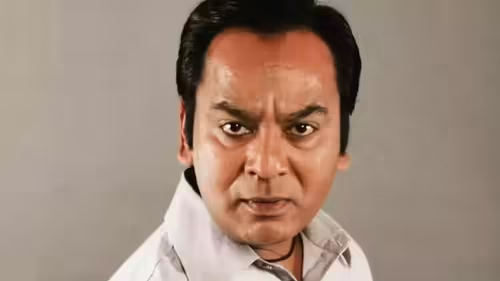
In a disturbing twist that has shaken both the entertainment industry and the city of Mumbai, actor Nadeem Khan—best known for his role in the Marathi film *Dhurandhar*—has been taken into police custody on charges of rape. The allegations, which date back over a decade, involve his former domestic worker, who claims she was sexually exploited under the repeated promise of marriage—a cruel deception that left her emotionally and psychologically scarred .
The arrest of Nadeem Khan is not just another celebrity scandal; it’s a stark reminder of the deep power imbalances that can enable abuse, especially in private households where vulnerable workers often have little recourse. This case has ignited public outrage and renewed calls for stronger protections for domestic laborers across urban India.
Table of Contents
- Who Is Nadeem Khan? The Fall from Grace
- The Allegations: A Decade of Deception
- Legal Framework: Promise of Marriage and Rape Laws
- Broader Implications: Domestic Workers in India
- Industry Reaction: Silence and Accountability
- What Happens Next in the Nadeem Khan Case?
- Conclusion: A Call for Justice and Reform
- Sources
Who Is Nadeem Khan? The Fall from Grace
Until recently, Nadeem Khan was a recognizable face in regional Marathi cinema, with *Dhurandhar* (2023) being one of his most prominent roles. The film, a gritty crime drama, ironically dealt with themes of justice and moral ambiguity—now a grim contrast to the real-life accusations against him. Khan, 45, had built a modest but respectable career, often portraying intense, grounded characters. His public image was that of a serious artist, making the current allegations all the more jarring for fans and colleagues alike .
The Allegations: A Decade of Deception
According to the 41-year-old complainant, she began working as a domestic helper in Khan’s Mumbai residence around 2013. She alleges that Khan soon began making romantic overtures, eventually promising to marry her. Relying on this assurance, she entered into a physical relationship with him. However, over the years, those promises were repeatedly broken. Despite bearing emotional and psychological trauma, she remained silent out of fear and societal stigma—until she finally filed a formal complaint with the Mumbai Police in January 2026 .
Police officials confirmed that the woman’s statement details multiple instances of non-consensual sexual acts, all occurring under the guise of a future marital union. The case was registered under Section 376 (rape) and Section 417 (cheating) of the Indian Penal Code at the Agripada police station .
Legal Framework: Promise of Marriage and Rape Laws
In India, obtaining consent for sex through a false promise of marriage can constitute rape under certain conditions. The Supreme Court has ruled in several landmark cases—including *Uday v. State of Karnataka* (2003) and *Deepak v. State of Haryana* (2023)—that if the promise was made in bad faith or without any genuine intention to follow through, the consent is deemed invalid .
Key legal considerations in such cases include:
- Whether the accused had a genuine intention to marry at the time of the relationship.
- Whether the victim’s consent was directly tied to the promise of marriage.
- Patterns of manipulation, isolation, or coercion used by the accused.
Given the decade-long duration of the alleged abuse, prosecutors may argue that Khan’s repeated delays and broken vows demonstrate a clear pattern of deceit.
Broader Implications: Domestic Workers in India
This case shines a harsh light on the precarious conditions faced by India’s estimated 4–5 million domestic workers—mostly women—who operate in an informal, unregulated sector with minimal legal safeguards . Many live in their employers’ homes, making them especially vulnerable to exploitation, harassment, and abuse. Fear of job loss, social shame, or retaliation often prevents them from speaking out.
While the Sexual Harassment of Women at Workplace (Prevention, Prohibition and Redressal) Act, 2013, theoretically covers domestic workers, enforcement remains weak. Experts from organizations like the International Labour Organization (ILO) have long advocated for better registration systems, grievance mechanisms, and awareness campaigns to protect this invisible workforce . For more on labor rights in India, see our coverage on [INTERNAL_LINK:domestic-worker-rights-india].
Industry Reaction: Silence and Accountability
As of now, the Marathi film industry has largely remained silent on the Nadeem Khan case—a common response in the early stages of such allegations. However, given the gravity of the charges and the growing public scrutiny, pressure is mounting for a formal statement from industry bodies like the Maharashtra Film Chamber. In recent years, the #MeToo movement has forced greater accountability in Indian cinema, but cases involving less globally prominent actors often slip through the cracks.
What Happens Next in the Nadeem Khan Case?
Khan has been remanded to police custody for further questioning. Investigators are expected to collect digital evidence, call witnesses, and potentially conduct a medical examination of the complainant. If the charges are substantiated, the case will be transferred to a sessions court, where it could take months or even years to reach a verdict. Under Indian law, rape is a non-bailable offense, and a conviction could lead to a minimum of 10 years in prison, extendable to life imprisonment.
Conclusion: A Call for Justice and Reform
The Nadeem Khan case is more than a celebrity crime story—it’s a symptom of systemic failures that leave millions of domestic workers at risk. While the legal process must run its course, this moment should serve as a catalyst for change: stronger workplace protections, better access to legal aid, and a cultural shift that empowers victims to speak without fear. Justice for the complainant isn’t just about punishing one man—it’s about ensuring no other domestic worker suffers in silence again.
Sources
- Times of India: ‘Dhurandhar’ actor Nadeem Khan held for raping domestic help
- Supreme Court Judgment: Uday v. State of Karnataka (2003)
- ILO Report: Domestic Workers in India – Status, Challenges and Policy Options
- The Hindu: Domestic workers still waiting for recognition and protection
- National Commission for Women (NCW) Official Portal