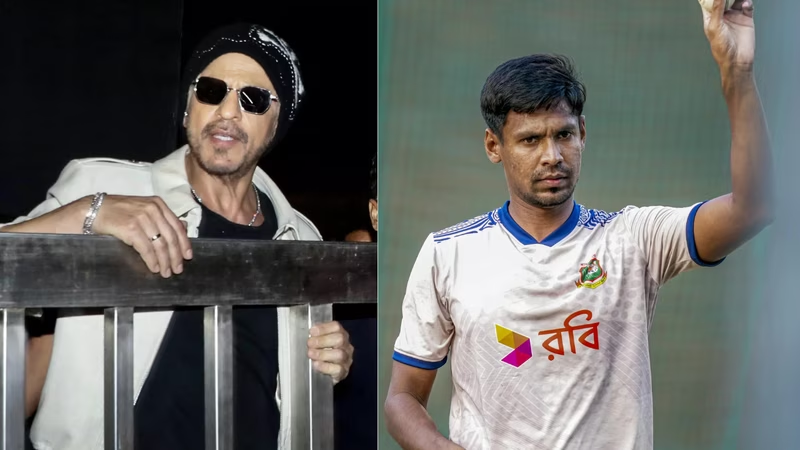
The IPL has always been more than just cricket—it’s a spectacle of fandom, finance, and national pride. But the 2026 season hasn’t even begun, and it’s already mired in a volatile mix of geopolitics and identity politics. All because Kolkata Knight Riders (KKR) signed one man: Bangladeshi fast bowler Mustafizur Rahman .
What should have been a routine auction-day headline has exploded into a full-blown political crisis. BJP leaders and right-wing religious outfits in West Bengal have launched fierce protests, citing deteriorating India-Bangladesh relations and alleged violence against minorities in Bangladesh. Some groups have gone as far as declaring that they “won’t even let Shah Rukh Khan enter Kolkata” if Mustafizur plays at Eden Gardens . This isn’t just about sport anymore—it’s about sovereignty, symbolism, and the shrinking space for cross-border goodwill in public life.
Table of Contents
- The Signing That Sparked a Storm
- Why Mustafizur Rahman Became a Lightning Rod
- Political Backlash from BJP and Religious Groups
- The Threats Against Shah Rukh Khan and KKR
- IPL’s Delicate Balance Between Sport and Diplomacy
- What Happens Next: Security and Scheduling Chaos?
- Summary: Cricket Can’t Escape Geopolitics
- Sources
The Signing That Sparked a Storm
During the IPL 2026 Mega Auction, KKR made a strategic move by securing Mustafizur Rahman for a reported ₹8 crore—a bargain for a bowler of his caliber, known for his lethal cutters and death-over mastery . On paper, it was a smart cricket decision. Mustafizur has played in the IPL before (for Sunrisers Hyderabad and Mumbai Indians) and is widely respected by players and fans alike.
But this time, the context was different. Rising tensions between India and Bangladesh—fueled by border disputes, migration concerns, and reports of attacks on Hindu minorities in Bangladesh—have turned any official or symbolic engagement with Bangladeshis into a sensitive issue . KKR’s signing, though purely sporting, was instantly politicized.
Why Mustafizur Rahman Became a Lightning Rod
It’s crucial to note: Mustafizur Rahman himself has never made political statements. He’s a professional athlete who’s competed globally, including in India, without controversy. Yet, in today’s climate, his nationality alone is enough to ignite fury.
BJP leaders in West Bengal argue that “normalizing ties” through sports sends the wrong message to the Bangladesh government at a time when it’s allegedly failing to protect its minority communities . “This is not about one player—it’s about national dignity,” said a BJP spokesperson in Kolkata .
Ironically, Mustafizur has often spoken of his love for Indian fans and has called Eden Gardens one of his favorite venues—a fact that now adds painful irony to the threats he’s indirectly facing.
Political Backlash from BJP and Religious Groups
The backlash has been swift and organized. Hindutva groups like the Vishwa Hindu Parishad (VHP) and Bajrang Dal have held street protests outside KKR’s Eden Gardens, holding placards that read “No Bangladeshi Players on Sacred Soil” . BJP MLAs have filed representations with the state police, demanding “heightened security assessments” if Mustafizur is allowed to play in Kolkata.
More alarmingly, some fringe groups have issued veiled threats. “If Mustafizur steps onto the Eden Gardens pitch, we cannot guarantee the safety of anyone associated with KKR—not even its owner,” declared a local leader of a right-wing outfit . While these are not official BJP statements, they reflect the charged atmosphere that now surrounds the team.
The Threats Against Shah Rukh Khan and KKR
The most shocking element of this controversy is the direct targeting of Bollywood superstar and KKR co-owner **Shah Rukh Khan**. Known as “King Khan” and a beloved figure in Kolkata, SRK has long used cricket as a bridge between cultures. But now, he’s being cast as a “traitor to national interest” by online trolls and protest banners.
“Won’t even let SRK enter the city if he brings Mustafizur,” one protest sign read—a statement both shocking and deeply personal . The franchise, which has deep emotional ties to Kolkata’s identity, now finds itself at the center of a nationalist storm it never asked for.
IPL’s Delicate Balance Between Sport and Diplomacy
This isn’t the first time the IPL has faced political headwinds. In 2016, the BCCI barred Pakistani players from the league after the Uri attacks. In 2019, matches in Chennai were moved due to Cauvery water dispute tensions . But the Mustafizur case is different—it’s not about India-Pakistan, but about **India-Bangladesh**, a relationship the Indian government has historically tried to keep **stable and cooperative**.
The Ministry of External Affairs has yet to comment, but experts warn that allowing sports to become a proxy for foreign policy could set a dangerous precedent. “Cricket has long been a soft-power tool,” says Dr. Anjali Roy, a sports diplomacy scholar at IIT Kharagpur. “When we weaponize it, we lose that bridge.” For more on the history of cricket diplomacy, see our feature on [INTERNAL_LINK:cricket-as-a-diplomatic-tool].
What Happens Next: Security and Scheduling Chaos?
KKR now faces a logistical nightmare. Will the West Bengal Police provide adequate security for Mustafizur and the team? Could the BCCI be forced to move KKR’s home games out of Kolkata—as they did for Punjab Kings during the Farmers’ Protest in 2021?
Options on the table include:
- Moving all KKR home matches to a neutral venue like Ahmedabad or Lucknow.
- Benching Mustafizur for Kolkata games only—a move that would be legally and ethically dubious.
- Standing firm and risking on-ground unrest, betting on the BCCI and central government to provide full security.
Whatever the choice, the IPL’s image as a carefree, unifying festival of cricket is already damaged.
Summary: Cricket Can’t Escape Geopolitics
The signing of Mustafizur Rahman by KKR was meant to strengthen a cricket team. Instead, it has exposed the fragile state of India-Bangladesh people-to-people ties and the growing influence of nationalist rhetoric in public discourse. While the BCCI and KKR have yet to issue a formal response, one thing is clear: in 2026, cricket is no longer just a game. It’s a battlefield of identity, memory, and political will. And for Shah Rukh Khan, the man who once brought joy to millions through sport, the message from Kolkata’s streets is now chillingly personal.