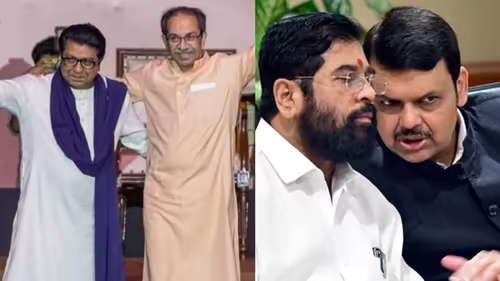
Politics in Maharashtra moves fast, but this? This felt like an earthquake. In a move that has left political analysts scrambling and Uddhav Thackeray’s camp nursing serious bruises, five corporators from Raj Thackeray’s Maharashtra Navnirman Sena (MNS) in the Kalyan-Dombivli Municipal Corporation (KDMC) have officially thrown their weight behind Eknath Shinde’s Shiv Sena, which is in a firm alliance with the BJP .
This isn’t just a local KDMC shuffle. It’s a strategic masterstroke with far-reaching consequences, directly impacting the high-stakes battle for the Mumbai Mayor’s post and signaling a potential realignment of forces in the state’s complex political matrix. The so-called MNS crossover is more than a defection; it’s a declaration of where the winds of power are currently blowing.
Table of Contents
- The KDMC Shift: What Exactly Happened?
- Why This MNS Crossover is a Massive Blow to Uddhav
- The Strategic Play for the BMC Mayoral Race
- What’s in it for the MNS and Shinde?
- Broader Implications for Maharashtra Politics
- Conclusion: A New Chapter in the Power Game
- Sources
The KDMC Shift: What Exactly Happened?
The Kalyan-Dombivli Municipal Corporation (KDMC), a crucial urban local body in the Mumbai Metropolitan Region, has been a key battleground. Until recently, the MNS had forged an alliance with Uddhav Thackeray’s Shiv Sena (UBT) for the civic polls, a partnership aimed at consolidating anti-BJP votes .
However, in a sudden and decisive turn, five MNS corporators have publicly announced their support for Eknath Shinde’s faction. Their stated reason? A desire for “stability” in the civic administration—a clear nod to the Shinde-BJP government’s control at the state level. This move effectively hands a significant advantage to the ruling alliance in KDMC and, more importantly, sends a powerful message across the political spectrum .
Why This MNS Crossover is a Massive Blow to Uddhav
For Uddhav Thackeray’s camp, this development is a double-edged sword.
First, it’s a direct betrayal of their electoral understanding with the MNS. The alliance was built on mutual trust to counter the dominant BJP-Shinde combine. This MNS crossover shatters that trust and exposes the fragility of Uddhav’s coalition-building efforts in the post-split era .
Second, and perhaps more critically, it’s a massive psychological and strategic setback. It signals to other potential allies and even fence-sitters that the momentum is firmly with Shinde and the BJP. In the cut-throat world of Maharashtra politics, perception is often reality, and this move makes Uddhav’s camp look vulnerable and isolated .
The Strategic Play for the BMC Mayoral Race
While the immediate impact is felt in KDMC, the real target is much bigger: the Brihanmumbai Municipal Corporation (BMC). The BMC is not just India’s richest civic body; its mayoral post is a prestigious political trophy.
The upcoming election for the Mumbai Mayor is expected to be a direct proxy war between the Uddhav-led Maha Vikas Aghadi (MVA) and the BJP-Shinde alliance. Every single vote in the BMC council counts. The KDMC shift is a clear signal that the Shinde camp is actively working to consolidate its position and poach allies from the opposition camp, even outside Mumbai’s immediate boundaries .
This move tightens the race by demonstrating the ruling alliance’s ability to attract cross-party support, making it harder for Uddhav to secure a comfortable majority. It’s a classic game of chess, where a move in one part of the board (KDMC) is designed to checkmate the opponent in another (BMC).
What’s in it for the MNS and Shinde?
Every political move has a payoff. For the five MNS corporators, aligning with the ruling state government likely promises access to resources, administrative support for their constituencies, and a more influential voice in KDMC decisions. In the harsh reality of local politics, being on the winning side often means getting things done for your voters .
For Eknath Shinde, this is a brilliant coup. It not only strengthens his position in a key municipal corporation but also serves as a potent symbol of his growing legitimacy. It helps him chip away at Uddhav’s narrative of being the sole custodian of the Shiv Sena’s legacy and demonstrates his ability to build a broader, pan-Maharashtra coalition beyond just the BJP .
Broader Implications for Maharashtra Politics
This event is a microcosm of the larger trends in the state:
- The Weakening of Regional Alliances: The Uddhav-Thackeray-Raj Thackeray understanding was a classic example of regional parties trying to unite against a national giant. Its collapse shows how difficult such alliances are to sustain under pressure.
- The Primacy of State Power: The lure of being allied with the party in power at the state level (Shinde-BJP) is proving to be a stronger force than ideological or historical ties.
- A Test for Uddhav’s Leadership: This setback will be a major test for Uddhav Thackeray’s ability to regroup, rebuild trust, and present a united front ahead of the crucial BMC elections and the 2029 state polls.
For more context on the ongoing power struggle, read our deep dive on [INTERNAL_LINK:shiv-sena-split-impact-on-maharashtra-politics].
Conclusion: A New Chapter in the Power Game
The MNS crossover in KDMC is far more than a local news item. It’s a pivotal moment that has injected fresh uncertainty into Maharashtra’s political landscape. It has bruised Uddhav Thackeray’s camp, emboldened Eknath Shinde, and thrown the already tense Mumbai mayoral race into a new, more competitive phase. As the dust settles, one thing is clear: the battle for Maharashtra’s soul is far from over, and every corporator’s vote is now a precious commodity in this high-stakes game.
Sources
- Times of India: KDMC shift sends ripples: MNS crossover leaves Uddhav camp with ‘bruises’; BMC race tightens
- Election Commission of India: Statistical Reports on Municipal Corporations
- The Indian Express: MNS corporators in KDMC back Shinde, deal blow to Uddhav Thackeray