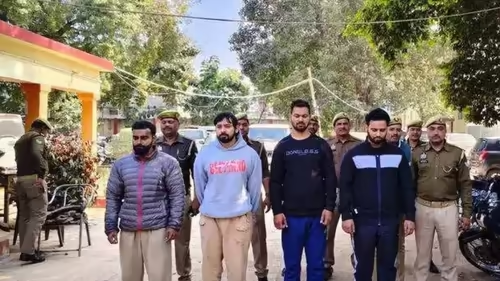
In a chilling revelation that has sent shockwaves across Uttar Pradesh, a seemingly ordinary fitness center in Mirzapur has been exposed as the epicenter of a sophisticated and predatory criminal enterprise. The alleged scheme? A horrifying blend of modern technology and age-old coercion, targeting vulnerable young women for forced conversion and exploitation.
Authorities have busted a gym syndicate accused of creating AI-generated obscene videos of Hindu women to blackmail them into converting to another religion and submitting to sexual demands. This isn’t just a local crime; it’s a stark warning about the terrifying new frontiers of digital abuse and organized predation in India .
Table of Contents
- The Mirzapur Gym Syndicate Exposed
- How the AI Blackmail Racket Worked
- Shocking Involvement of a Police Constable
- The Rise of Deepfake Threats in India
- Legal Action and Government Response
- Conclusion: A Wake-Up Call for Digital Safety
- Sources
The Mirzapur Gym Syndicate Exposed
The case came to light following complaints from two women who were members of local gyms in Mirzapur . Their testimonies unraveled a disturbing network of deception. The accused, who ran multiple gyms including the KGN Gym, are alleged to have first lured their victims with promises of friendship and fitness guidance—a classic grooming tactic . Once trust was established, the situation took a dark turn.
Police investigations suggest that the syndicate targeted as many as 30 Hindu women, systematically working to isolate them and pressure them into religious conversion. The district administration has taken swift action, sealing all five gyms under suspicion until at least February 27th .
How the AI Blackmail Racket Worked
The most alarming aspect of this case is the use of artificial intelligence. The gang allegedly used publicly available photos of the women—likely from social media—and employed AI tools to generate fake, obscene videos . These deepfakes, designed to look authentic, were then used as a weapon of psychological terror.
The victims were threatened with the public release of these fabricated videos unless they complied with the perpetrators’ demands, which included both religious conversion and sexual exploitation. This tactic exploits the deep social stigma and potential for honor-based violence that can follow such an accusation, making the victims feel they have no choice but to submit.
This method of extortion is not isolated. Recent cases in Faridabad saw a college student die by suicide after being blackmailed with AI-generated images of his sisters , and a Delhi man was arrested for a similar AI-image extortion scheme . The Data Security Council of India has already identified deepfake exploitation as a major cyber threat for 2025 .
Shocking Involvement of a Police Constable
Adding a layer of institutional betrayal to this already heinous crime, one of the six arrested individuals is a Head Constable from the Government Railway Police (GRP) . His alleged involvement raises serious questions about the potential for abuse of power and the need for stringent internal vetting within law enforcement agencies. How a serving officer could be part of such a predatory network is a critical question for the ongoing investigation.
The Rise of Deepfake Threats in India
The Mirzapur case is a grim milestone in the escalating crisis of deepfake abuse in India. As AI tools become more accessible and sophisticated, they are increasingly falling into the hands of criminals. The primary targets are often women and girls, whose lives and reputations can be destroyed by a few seconds of fabricated video.
According to a Data Security Council of India report, the malicious use of deepfakes is a top national cybersecurity concern. The technology is being used not just for blackmail, but also for political disinformation and financial fraud, creating a complex web of digital threats that current laws are struggling to contain .
Legal Action and Government Response
The Uttar Pradesh Police have acted swiftly, arresting six individuals and sealing the implicated gyms . The state’s stringent anti-conversion laws, which prohibit religious conversion through force, fraud, or inducement, are likely to be a key part of the prosecution’s case .
However, the legal framework for dealing with AI-generated content is still evolving. While existing laws on defamation, cybercrime, and blackmail can be applied, there is a growing consensus that specific legislation targeting the creation and distribution of non-consensual deepfakes is urgently needed. This case will undoubtedly put pressure on lawmakers to close this dangerous legal gap.
Conclusion: A Wake-Up Call for Digital Safety
The Mirzapur gym scandal is more than just a local crime story; it’s a national emergency. It exposes the terrifying convergence of organized criminal intent and powerful, easily accessible technology. The targeting of Hindu women for forced conversion through AI blackmail represents a new and insidious form of gendered violence that society is ill-prepared to handle.
This case serves as a critical wake-up call for everyone—from individuals managing their digital footprint to social media platforms hosting user data, and from law enforcement agencies to our legislative bodies. Vigilance, education, and robust legal safeguards are no longer optional; they are essential for protecting the most vulnerable in our increasingly digital world. For more on related security issues, see our coverage on [INTERNAL_LINK:cybersecurity-in-india].
Sources
- Times of India: Gym syndicate in UP targeted Hindu women for conversion; GRP head constable among 6 held
- India Today: Mirzapur gyms under scanner after women allege forced conversion, 5 arrested
- Data Security Council of India: India Cyber Threat Report 2025