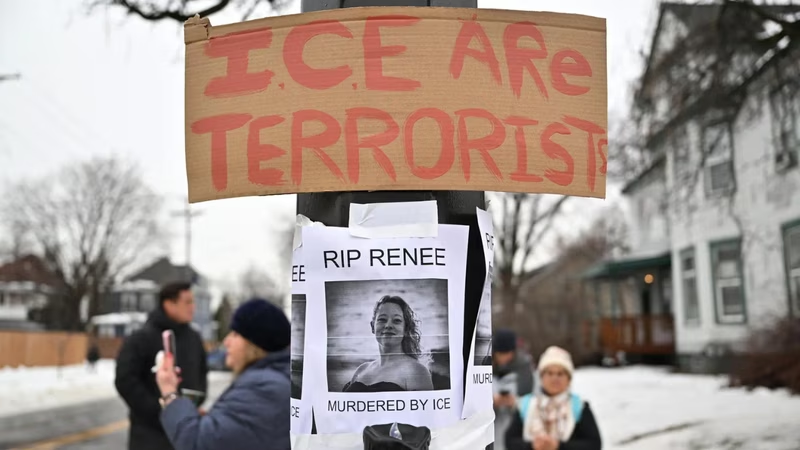
A deadly encounter between US federal agents and a civilian in Minneapolis has sent ripples all the way to New Delhi. On January 7, 2026, an Immigration and Customs Enforcement (ICE) officer fatally shot a woman during a law enforcement operation, an incident that has now drawn the formal attention of India’s Ministry of External Affairs (MEA) . The MEA’s primary concern? The safety and well-being of the significant Indian diaspora residing in the Minneapolis area—a community that has been growing steadily and is now an integral part of the city’s fabric .
This Minneapolis shooting is more than just a local crime story; it’s a flashpoint that intersects immigration policy, law enforcement tactics, and international diplomacy. With tensions already high in the US over federal immigration raids, this incident has ignited a fierce debate about the use of force and the potential risks faced by immigrant communities.
Table of Contents
- What Happened: The Minneapolis Shooting Details
- Why India Is Watching: The Diaspora Factor
- Official Responses: US and Indian Governments React
- Broader Implications: The Immigration Enforcement Debate
- Conclusion: A Community on Edge
- Sources
What Happened: The Minneapolis Shooting Details
According to the US Department of Homeland Security (DHS), the incident occurred on Wednesday, January 7, 2026, during a federal immigration enforcement operation in south Minneapolis . The DHS stated that an ICE officer discharged their weapon after a vehicle “attempted to run over officers” at the scene . The individual behind the wheel, described in some reports as a woman, was fatally shot .
The official narrative from federal authorities frames the shooting as a defensive action. However, this account has been met with immediate skepticism and anger from local officials. Minneapolis Mayor Jacob Frey publicly condemned the officer’s actions, calling them “reckless” and demanding a thorough, independent investigation . The Minnesota Bureau of Criminal Apprehension (BCA) has since taken over the probe to ensure impartiality .
Why India Is Watching: The Diaspora Factor
The MEA’s swift statement was not issued in a vacuum. It was a direct response to the presence of a large and active Indian-American community in Minnesota. While exact figures for the Minneapolis metro specifically are nuanced, data shows that Minnesota is home to approximately 53,000 Indian Americans . This community, though not the largest in the US, is vibrant, well-established, and deeply integrated into the state’s professional, academic, and civic life.
For a nation like India, which places immense strategic and emotional value on its global diaspora, any incident that threatens their security or sense of belonging abroad is a matter of serious diplomatic concern. The fear is that aggressive federal enforcement actions could create an atmosphere of fear and uncertainty within these communities, regardless of their own legal status.
Official Responses: US and Indian Governments React
The divergence in official responses highlights the political and social fault lines the Minneapolis shooting has exposed.
From New Delhi: The MEA’s statement was measured but clear. A spokesperson said, “We are closely monitoring the situation… given the presence of a large Indian community in the US.” The ministry requested a full report from its Consul General in Chicago, whose jurisdiction includes Minnesota, to assess the situation on the ground . This is standard protocol for India when its citizens might be affected by civil unrest or violence overseas.
From Washington D.C.: The DHS has stood by its agent, framing the event as a tragic but necessary outcome of a dangerous situation. In a show of force, the department has reportedly deployed more than 2,000 additional officers to the area, describing it as its “largest immigration enforcement” operation, which has only served to heighten local anxieties .
Broader Implications: The Immigration Enforcement Debate
This incident is a stark microcosm of the deep divisions in American society over immigration. Critics argue that deploying armed federal agents for routine immigration checks in urban neighborhoods is an excessive militarization of a civil process and creates unnecessary danger for everyone involved . They point to this Minneapolis shooting as a tragic, predictable consequence of this aggressive posture.
Supporters of the current enforcement strategy, however, contend that ICE officers face genuine threats in the line of duty and must be empowered to protect themselves. They argue that the suspect’s alleged attempt to use a vehicle as a weapon justified the lethal response.
For the Indian diaspora and other immigrant groups, the takeaway is a chilling one: interactions with federal authorities, even if you are a legal resident or citizen, can carry an unforeseen and potentially fatal risk in the current climate.
Conclusion: A Community on Edge
The fatal Minneapolis shooting has left a community on edge and triggered an international diplomatic watch. While the investigation continues, the core issue remains: how to balance national immigration laws with the safety and trust of the diverse communities that call America home. For India, the message is clear—it will not remain silent when its diaspora’s welfare is potentially at stake. As the BCA’s investigation unfolds, all eyes will be on Minneapolis, waiting to see if justice can help heal a city—and reassure a global community—shaken by this tragedy.
For more on international affairs and diaspora issues, explore our related coverage on [INTERNAL_LINK:indian-diaspora-global-impact] and [INTERNAL_LINK:us-immigration-policy-explained].
Sources
- Times of India: ‘Closely monitoring’: MEA expresses concerns over Minneapolis shooting
- Amnesty International USA: ICE Agent Fatally Shoots Woman in Minneapolis
- Xinhua News Agency: U.S. Homeland Security says ICE officer fatally shot “rioter” in Minneapolis
- Minnesota Star Tribune: Minneapolis Mayor Jacob Frey says the ICE officer who shot and killed a motorist acted recklessly
- Minnesota Bureau of Criminal Apprehension: BCA statement regarding investigation of ICE fatal shooting in Minneapolis
- Migration Policy Institute: State Immigration Data Profile: Minnesota