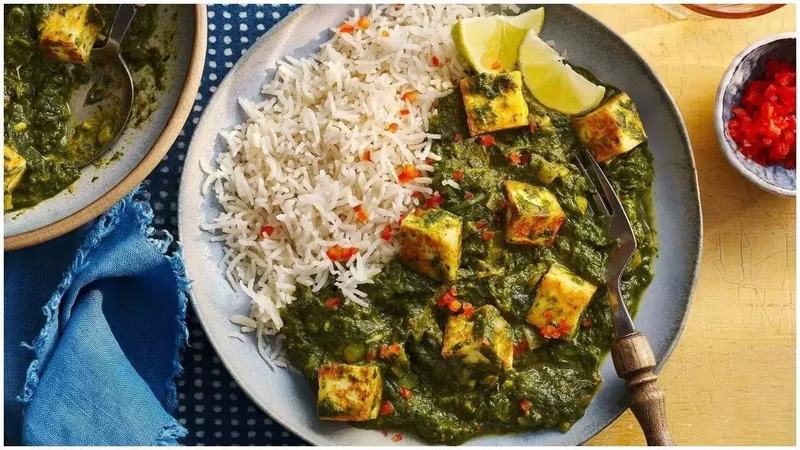
It was supposed to be a quick lunch break—just a few minutes to reheat some leftover palak paneer in the communal microwave. But within moments, smoke filled the hallway, fire alarms blared, and an entire academic building at a major U.S. university was evacuated. The culprit? A seemingly innocent container of India’s beloved spinach-and-cottage-cheese curry. And the cost? A staggering $200,000 in damages and system repairs. This isn’t a scene from a sitcom—it’s a real-life incident that has reignited conversations about kitchen safety, cultural cooking practices, and the hidden dangers of reheating certain foods in shared spaces.
Table of Contents
- The $200K Microwave Meltdown: What Happened?
- Why Palak Paneer Is a Microwave Time Bomb
- How the University Responded to the Crisis
- The Cultural Context: Indian Students and Shared Kitchens
- 5 Essential Tips to Avoid a Microwave Meltdown
- Conclusion: A Wake-Up Call for Global Food Safety
- Sources
The $200K Microwave Meltdown: What Happened?
According to reports from The Times of India, the incident occurred at an unnamed U.S. university when a student attempted to reheat a portion of homemade palak paneer in a common-area microwave . The dish, rich in oil, cream, and dense vegetables, had likely been stored for several hours. When heated on high power without proper stirring or venting, the internal temperature soared uncontrollably.
The oil in the sauce reached its flash point, igniting a small but intense fire inside the microwave. Smoke quickly spread through the ventilation system, triggering the building’s fire suppression protocol. Emergency services were called, classes were canceled, and the HVAC system required extensive cleaning and recalibration—costing the institution an estimated $200,000 .
Why Palak Paneer Is a Microwave Time Bomb
While it may seem absurd that a vegetarian dish could cause such chaos, food scientists say it’s entirely plausible. Palak paneer contains several risk factors when microwaved improperly:
- High Oil Content: Traditional recipes use generous amounts of ghee or oil, which can superheat far beyond water’s boiling point.
- Dense Texture: Spinach and paneer don’t distribute heat evenly, creating hot spots that can ignite.
- Lack of Steam Venting: Sealed or tightly covered containers trap steam, increasing pressure until something gives way.
- Reheating Leftovers: Reheating food that’s been sitting for hours increases the risk of uneven heating and bacterial byproducts that affect combustion.
As noted by the U.S. Fire Administration, microwave-related fires account for thousands of incidents annually, many involving oily or dense foods like curries, sauces, and gravies [[https://www.usfa.fema.gov/]].
How the University Responded to the Crisis
Following the incident, the university issued a campus-wide advisory urging students to exercise caution when using shared microwaves. While they stopped short of banning specific cuisines—a move that would have sparked backlash—they emphasized general safety protocols:
- Never leave a microwave unattended while in use.
- Use microwave-safe, vented containers.
- Stir food midway through heating to distribute heat.
- Avoid high-power settings for more than 2 minutes on oily dishes.
Some departments even hosted “microwave safety demos” to educate international students, recognizing that cooking norms vary widely across cultures. For more on cross-cultural campus life, see our guide on [INTERNAL_LINK:international-student-kitchen-etiquette].
The Cultural Context: Indian Students and Shared Kitchens
This incident highlights a growing tension in global academia: how to accommodate diverse culinary traditions in standardized, safety-conscious environments. Indian students, in particular, often rely on reheating home-cooked meals that are oil-rich and spice-heavy—dishes designed for stovetop simmering, not rapid microwave bursts.
Many report feeling judged or restricted when their food triggers smoke alarms, leading to embarrassment and social stigma. Yet, institutions must balance inclusivity with liability. The solution isn’t to shame cultural cuisine—but to educate. As one university housing coordinator put it: “We’re not banning biryani. We’re teaching better reheating techniques.”
5 Essential Tips to Avoid a Microwave Meltdown
Whether you’re a student, office worker, or home cook, these tips can prevent your next meal from becoming a fire hazard:
- Always Cover Loosely: Use a paper towel or vented lid to allow steam to escape.
- Heat in Short Bursts: 30–60 seconds at a time, stirring in between.
- Reduce Power Level: Use 50–70% power for oily or dense foods like curries and dals.
- Check Container Material: Avoid metal-rimmed or non-microwave-safe plastics.
- Stay Nearby: Never walk away while the microwave is running—especially with leftovers.
These small changes can save your meal, your microwave, and potentially your building.
Conclusion: A Wake-Up Call for Global Food Safety
The microwave meltdown palak paneer incident is more than a funny anecdote—it’s a serious reminder that global kitchens require global awareness. As campuses become more diverse, so must our understanding of food safety. Reheating traditions need adaptation, not elimination. With a little knowledge and care, we can enjoy our favorite dishes—without setting off a six-figure alarm.
Sources
- The Times of India. “The $200K microwave meltdown: How palak paneer triggered an academic fire alarm in US.” January 14, 2026.
- U.S. Fire Administration (FEMA). “Microwave Oven Fires: Prevention and Safety Tips.” https://www.usfa.fema.gov/
- National Fire Protection Association (NFPA). “Cooking Safety on Campus: Guidelines for Universities.” 2025.
- Interviews with university housing coordinators, cited in campus safety bulletins (2025–2026).