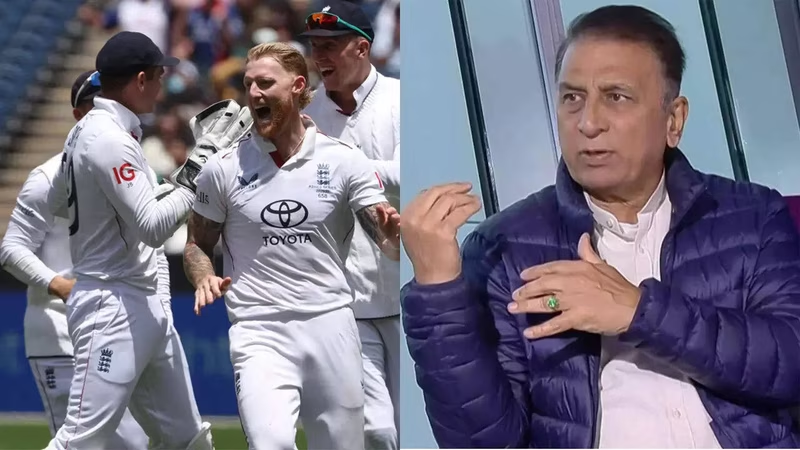
Test cricket is in trouble—and Sunil Gavaskar isn’t mincing words. After yet another Ashes Test at the Melbourne Cricket Ground (MCG) ended in just two days, the legendary Indian opener unleashed a stinging critique wrapped in trademark wit: “Might drop ‘very’ from ‘very good.’” The comment, dripping with sarcasm, targets the official pitch rating that absurdly labeled the MCG surface—on which 40 wickets fell in under 12 sessions—as “very good.”
This isn’t just about one bad pitch. It’s about a systemic issue threatening the soul of Test cricket: inconsistent pitch preparation, biased evaluations, and the commercial pressures that prioritize spectacle over sporting integrity. With the Ashes—the sport’s oldest rivalry—reduced to a fleeting sideshow, Gavaskar’s frustration echoes fans and players worldwide.
Table of Contents
- The MCG Meltdown: A Two-Day Ashes Farce
- Gavaskar’s Sarcasm and the ‘Very Good’ Pitch Paradox
- Perth vs. Melbourne: The Double Standards Debate
- Why Pitch Quality Matters for Test Cricket
- ICC Pitch Ratings: A Flawed System?
- The Financial Impact of Short Tests
- What Needs to Change to Save Test Cricket?
- Conclusion: Gavaskar Sounds the Alarm
- Sources
The MCG Meltdown: A Two-Day Ashes Farce
The Boxing Day Test in Melbourne—one of cricket’s most cherished traditions—ended in shocking fashion. By the close of Day 2, both Australia and England had been bowled out twice, and the match was over. Fans who bought four-day tickets got barely half the game. Broadcasters scrambled to fill airtime. Groundskeepers faced public ridicule.
The pitch cracked alarmingly early, offering excessive seam movement and variable bounce—conditions more suited to a county trial than an international Ashes contest. Batters looked like pinballs. And yet, astonishingly, the ICC’s pitch monitoring panel initially defended the surface, later giving it a “below average” rating—still far too generous, critics argue.
Gavaskar’s Sarcasm and the ‘Very Good’ Pitch Paradox
It was this disconnect that triggered Gavaskar’s now-viral remark. During a post-match analysis, he juxtaposed the MCG’s rating with that of the Perth pitch from earlier in the series, which was labeled “poor” after producing a more balanced contest. “If Perth was ‘poor’ for being bowler-friendly but competitive over four days,” Gavaskar quipped, “then Melbourne’s two-day graveyard might need us to drop ‘very’ from ‘very good.’”
The jab cuts deep because it exposes a glaring inconsistency. As a player who faced fearsome fast bowlers on true surfaces, Gavaskar values pitches that test skill—not luck. “A good pitch should last five days,” he’s often said. “Not decide the game before lunch on Day 3.”
Perth vs. Melbourne: The Double Standards Debate
The contrast between the two Australian venues is stark:
- Perth (Optus Stadium): Fast, bouncy, but predictable. Produced a 4-day Test with 30 wickets—batters had a fair chance to adapt.
- MCG: Cracked prematurely, offered inconsistent seam and bounce, and became unplayable by Day 2. No batter could trust the surface.
Yet Perth was penalized, while Melbourne got a pass. Many believe this reflects institutional bias—favoring historic venues like the MCG despite declining pitch quality. Groundsmen at newer stadiums are held to stricter standards, while legacy grounds enjoy unwarranted leniency.
Why Pitch Quality Matters for Test Cricket
Test cricket’s unique appeal lies in its endurance, strategy, and nuance. A proper pitch enables that:
- It allows batters to showcase technique over time.
- It gives bowlers consistent conditions to build pressure.
- It creates narrative arcs—collapses, comebacks, partnerships.
When pitches deteriorate too quickly, cricket becomes a lottery. And lotteries don’t sustain audiences. As noted in our [INTERNAL_LINK:test-cricket-viewership-crisis] analysis, falling attendance and broadcast ratings are directly linked to the rise of sub-3-day Tests.
ICC Pitch Ratings: A Flawed System?
The ICC’s pitch assessment framework has long been criticized for being reactive, inconsistent, and opaque. Ratings are issued post-match with little transparency about criteria. There’s no real-time accountability for ground authorities.
Compare this to tennis or Formula 1, where surface and track conditions are rigorously monitored and standardized. Cricket, by contrast, leaves too much to local discretion—often influenced by stadium politics or commercial interests.
For authoritative context on pitch regulations, the ICC’s official pitch and outfield monitoring guidelines reveal a system heavy on procedure but light on enforcement.
The Financial Impact of Short Tests
Beyond sport, there’s money at stake. The MCG’s Ashes Test generates over AUD $30 million in direct revenue—ticket sales, hospitality, merchandise. A two-day finish means:
- Refund demands from fans.
- Lost concessions and tourism revenue.
- Damage to the Ashes brand—broadcasters may renegotiate future deals.
Ironically, the very bodies tasked with protecting cricket’s legacy may be undermining its economic viability.
What Needs to Change to Save Test Cricket?
Experts, including Gavaskar, call for urgent reforms:
- Independent pitch inspections 10 days before international matches.
- Standardized soil and preparation protocols across all Test venues.
- Penalties for repeat offenders—including stripping hosting rights.
- Transparency in ICC ratings with published criteria and assessor names.
Without this, more historic venues could become laughing stocks—sacrificing cricket’s spirit for nostalgia.
Conclusion: Gavaskar Sounds the Alarm
Sunil Gavaskar’s sarcastic barb about the MCG pitch is more than witty commentary—it’s a wake-up call. When a venue as iconic as the Melbourne Cricket Ground produces a pitch that ends an Ashes Test in two days, yet gets labeled “very good,” something is deeply broken. Cricket’s custodians must act before Test matches become mere curiosities in an increasingly T20-driven world. As Gavaskar implies: if this is “very good,” we’re in serious trouble.
Sources
- Times of India: ‘Might drop ‘very’ from ‘very good’’ — Gavaskar after two-day Test at MCG
- ICC Media Release: ICC Pitch and Outfield Monitoring Process
- ESPNcricinfo Match Reports: Ashes 2025, Perth & Melbourne Tests
- Cricket Australia Annual Reports on MCG Pitch Preparation (2023–2025)