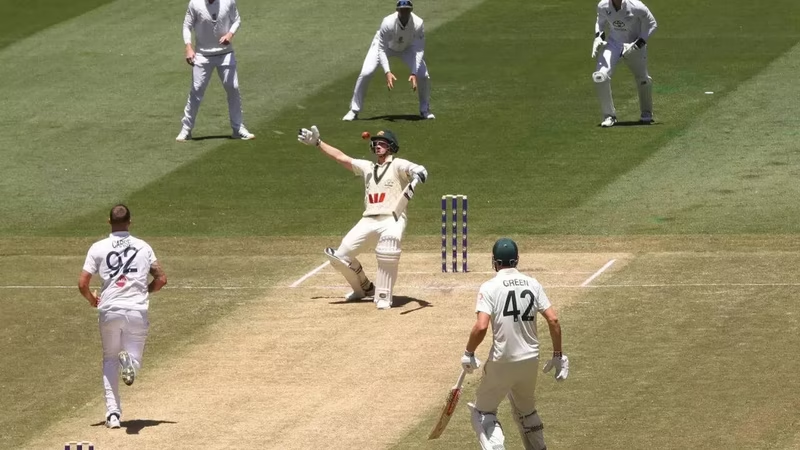
The hallowed turf of the Melbourne Cricket Ground (MCG) is under an unprecedented cloud of uncertainty. Following the chaotic fourth Ashes Test, the International Cricket Council (ICC) has officially slapped the venue with a MCG demerit point, branding the pitch as ‘unsatisfactory’ . This decision has sent shockwaves through the cricketing world, raising a critical question: is one of the sport’s most iconic stadiums now on a path toward a ban?
Table of Contents
- What Does ‘Unsatisfactory’ Really Mean for a Cricket Pitch?
- The ICC Demerit Points System Explained
- What the MCG Demerit Point Means for the Future
- A Troubled History: MCG’s Past Pitch Problems
- Conclusion: A Wake-Up Call, Not a Death Knell
- Sources
What Does ‘Unsatisfactory’ Really Mean for a Cricket Pitch?
An ‘unsatisfactory’ rating is no minor slap on the wrist. It’s the second-lowest possible grade in the ICC’s four-tier pitch evaluation system, sitting just above the dreaded ‘unfit’ rating. The system categorizes pitches as ‘very good’, ‘satisfactory’, ‘unsatisfactory’, or ‘unfit’ .
This label is reserved for pitches that are deemed to have provided an unfair advantage to one side or failed to offer a proper contest between bat and ball. In the case of the MCG Ashes Test, the pitch was criticized for its excessive seam movement and variable bounce, which led to a lightning-fast match where 36 wickets fell in just two days . The ICC match referee, Jeff Crowe, concluded that these conditions made the pitch ‘unsatisfactory’ .
The ICC Demerit Points System Explained
The demerit points system is the ICC’s primary enforcement mechanism to ensure consistent, high-quality playing surfaces across all international venues. It’s a straightforward but powerful tool:
- Unsatisfactory Pitch: Results in 1 demerit point for the host venue .
- Unfit Pitch: Results in 3 demerit points for the host venue.
The real teeth of the system lie in its long-term consequences. These demerit points aren’t fleeting; they stay on a venue’s record for a rolling five-year period. And if a ground accumulates six demerit points within that timeframe, the penalty is severe: a 12-month suspension from hosting any form of international cricket .
This system, which was updated in January 2018, was designed to hold host boards accountable for the quality of their most important asset: the pitch . It’s a direct response to the numerous controversies over the years where pitches have dictated the outcome of a match before a ball is even bowled.
What the MCG Demerit Point Means for the Future
For Australian cricket fans, the immediate takeaway is that a ban is not
However, this incident serves as a major warning shot across the bow of Cricket Australia. The MCG demerit point will remain active on the venue’s record until December 2030. Any future pitch failures at the ‘G’ during this period will bring the stadium dangerously close to a ban. The pressure is now squarely on the MCG’s curators to deliver pitches that are not just passable, but genuinely competitive and fair.
This situation also highlights the delicate balance curators must strike, especially in Australia. The traditional expectation of a fast, bouncy Australian pitch is part of the country’s cricketing identity, but it must not come at the cost of fundamental fairness and a proper contest.
A Troubled History: MCG’s Past Pitch Problems
This isn’t the first time the MCG’s pitch has come under scrutiny. The ground has a history of producing surfaces that heavily favor pace bowlers, sometimes to an extreme degree.
Back in 2018, the MCG was placed on an official notice by the ICC after a Test match against South Africa, where the pitch was again rated poorly . While it didn’t result in a demerit point at the time, it was a clear signal that the venue was on thin ice. This latest demerit point confirms that the underlying issues have not been fully resolved.
The MCG must now look to other iconic venues that have successfully navigated similar challenges. For instance, venues like Lord’s or Edgbaston in England have managed to maintain their unique characteristics while consistently meeting the ICC’s ‘satisfactory’ or ‘very good’ benchmarks.
Conclusion: A Wake-Up Call, Not a Death Knell
In summary, while the news of the MCG demerit point is certainly concerning, it’s more of a stern wake-up call than a death sentence. The ICC’s system is designed to be corrective, not purely punitive. It gives the MCG a five-year window to get its act together. The onus is now on Cricket Australia to invest in its ground staff, review its pitch preparation protocols, and ensure that future matches at the ‘G’ are decided by skill, not by a surface that’s deemed ‘unsatisfactory’. For now, fans can breathe easy—international cricket will return to the MCG, but its curators are officially on notice. To learn more about other recent ICC decisions, check out our guide on [INTERNAL_LINK:icc-code-of-conduct-changes].
Sources
- International Cricket Council. (n.d.). ICC Pitch and Outfield Monitoring Process. Retrieved from https://www.icc-cricket.com
- ESPNcricinfo. (2022, January 2). MCG on notice after ICC rates pitch ‘poor’. Retrieved from https://www.espncricinfo.com
- The Guardian. (2022, January 1). ICC rates Melbourne’s pitch for the fourth Ashes Test as unsatisfactory. Retrieved from https://www.theguardian.com
- Times of India. (2022, January 1). ‘Unsatisfactory’ pitch: Will MCG face ban after demerit point? Retrieved from https://timesofindia.indiatimes.com