The fragile peace in Manipur’s Churachandpur district has been shattered by a brutal and calculated act of violence that has sent shockwaves across the state and the nation. A 31-year-old Meitei man, Mayanglambam Rishikant Singh, was visiting his Kuki fiancée when he was abducted by a group of armed individuals and later found shot dead near Natjang village . What makes this incident even more horrifying is that the entire act was captured on video, which was then circulated with a chilling message: “No Peace, No Popular Government” . This brazen execution is not just a murder; it’s a direct assault on the very possibility of reconciliation between the Meitei and Kuki communities, and a stark reminder of the deep-seated tensions that continue to fuel the Manipur unrest.
Table of Contents
- The Harrowing Incident: From Abduction to Execution
- Decoding the Video Message: A Threat to the State
- The Broader Context of the Manipur Unrest
- NIA Steps In: A Sign of the Case’s Gravity
- Impact on the Fragile Peace Process
- Conclusion: A Call for Justice and Unity
- Sources
The Harrowing Incident: From Abduction to Execution
Mayanglambam Rishikant Singh’s story is a tragic testament to the human cost of the ongoing conflict. He had traveled to the Kuki-majority Churachandpur district to be with his fiancée, a place that should have been a sanctuary of love and hope. Instead, it became the scene of his final moments. According to police reports, a group of unidentified armed men forcibly took him from his fiancée’s residence . His body was discovered later, bearing fatal gunshot wounds, near Natjang village . The fact that he was targeted while in a personal, vulnerable space—his partner’s home—underscores the terrifying normalization of violence in the region. This wasn’t a random act of mob violence; it was a targeted, premeditated killing that has left a community in mourning and a state on edge.
Decoding the Video Message: A Threat to the State
The perpetrators didn’t just kill Rishikant; they documented it and issued a clear political statement. The circulated video, a piece of evidence as gruesome as it is significant, carried the message: “No Peace, No Popular Government” . This is a direct challenge to the authority of the state government in Imphal. It signals that the militant groups responsible feel powerful enough to dictate terms, using extreme violence as their primary tool of negotiation. The message is unequivocal: any attempt to establish a functioning, popularly elected government will be met with terror until their demands are met. This tactic of using publicized brutality to instill fear and control the political narrative is a hallmark of insurgent strategies worldwide, and its appearance in Manipur marks a dangerous new phase in the Manipur unrest.
The Broader Context of the Manipur Unrest
To understand the gravity of this event, one must look at the larger picture of the Manipur unrest. The conflict, which erupted in May 2023, is rooted in a complex web of historical grievances, land rights disputes, and competing demands for Scheduled Tribe (ST) status between the valley-dwelling Meitei community and the hill-dwelling Kuki-Zo tribes . What began as protests has since spiraled into a protracted ethnic conflict, displacing tens of thousands of people and creating a deep chasm of mistrust between the two communities. Incidents like the killing of Rishikant are not isolated; they are symptoms of a much deeper societal fracture. His death, occurring in a Kuki-majority area while he was with his Kuki partner, highlights the perilous state of inter-community relations, where even personal bonds are not safe from the overarching tide of communal hatred.
Key Factors Fueling the Conflict
- Land and Identity: Disputes over land ownership and tribal identity are at the heart of the conflict.
- Political Marginalization: Both communities feel politically and economically marginalized, leading to a struggle for greater autonomy and recognition.
- Breakdown of Law and Order: The prolonged violence has severely weakened the state’s ability to enforce the law equally across all regions, creating security vacuums exploited by militant groups .
NIA Steps In: A Sign of the Case’s Gravity
In response to the national outrage and the sheer brutality of the crime, the case has now been handed over to the National Investigation Agency (NIA) for a thorough probe . This move is significant. The transfer of the investigation from local police to a central agency like the NIA indicates that the authorities recognize this as more than just a local homicide. It is being treated as a potential act of terrorism with wider implications for national security and communal harmony. The NIA’s involvement brings with it greater resources, forensic expertise, and a mandate to track down not just the triggermen, but the entire network behind this heinous act. For a grieving family and a terrified public, this offers a glimmer of hope that justice might be served.
Impact on the Fragile Peace Process
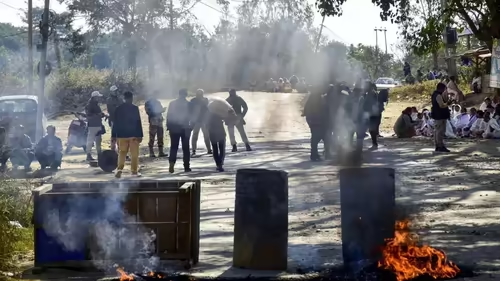
This cold-blooded murder is a massive setback to any ongoing or future peace efforts in Manipur. It has already sparked protests in Meitei-dominated areas, threatening to ignite a fresh cycle of retaliatory violence . The carefully constructed, albeit fragile, channels of communication between community leaders are now at risk of being severed. The video message itself is a declaration that the perpetrators have no interest in peace talks; they seek to rule through fear. Rebuilding trust after such a public and vicious act will be an immense challenge for the state and central governments. It requires not only swift justice but also a renewed, more robust commitment to addressing the root causes of the conflict that have been allowed to fester for decades. For more on the historical roots of this conflict, see our deep dive on [INTERNAL_LINK:history-of-manipur-conflict].
Conclusion: A Call for Justice and Unity
The killing of Mayanglambam Rishikant Singh is a stark and brutal reminder that the Manipur unrest is far from over. It is a human tragedy that exposes the terrifying reality of life in a region torn apart by ethnic strife. The onus now lies on the authorities to ensure a swift and transparent investigation by the NIA, bringing every person involved—from the planners to the executors—to justice. Beyond that, the political leadership at both the state and central levels must demonstrate extraordinary courage and wisdom to address the core issues dividing the Meitei and Kuki communities. Without a genuine, inclusive dialogue and a commitment to equitable solutions, the cycle of violence will only continue, claiming more innocent lives like Rishikant’s. The message from the killers was “No Peace.” The message from the rest of the nation must be a resounding demand for justice, accountability, and a lasting peace.
Sources
- Times of India: Meitei man shot dead after being abducted from fiancée’s home in Churachandpur
- The Hindu: Manipur violence escalates with killing of Meitei man in Churachandpur
- Ministry of Home Affairs, Government of India: Official statements on the NIA’s role in internal security