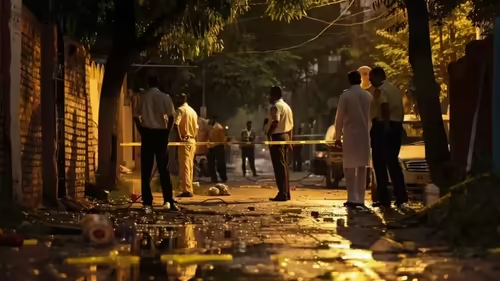
In a heart-wrenching tragedy that underscores the failures of India’s justice system, a 20-year-old Kuki-Zo woman from Manipur has died—still waiting for justice nearly two years after she was kidnapped and gang-raped during the state’s horrific ethnic violence in May 2023 .
The young survivor, whose identity remains protected under Indian law, endured not only the physical and psychological trauma of the assault but also the crushing weight of institutional silence. An FIR was officially registered in July 2023, yet as of January 2026, **no suspects have been identified or arrested**—a shocking lapse that has drawn national outrage and renewed scrutiny over the handling of gender-based violence in conflict zones .
Table of Contents
- The Horror of May 2023
- A Failed Justice System: The Manipur Gang Rape Case
- Why Investigations Stalled: Key Obstacles
- Broader Implications for Women in Conflict Zones
- Calls for Accountability and Reform
- Conclusion: A Life Lost, A System Exposed
- Sources
The Horror of May 2023
The violence that erupted in Manipur in May 2023 between the Meitei and Kuki-Zo communities plunged the state into chaos. Homes were torched, villages emptied, and hundreds were killed. Amid this turmoil, women became targets of systematic sexual violence—a tactic long documented in ethnic and communal conflicts worldwide .
This young woman was reportedly abducted from her village in the Churachandpur district, held captive, and subjected to a brutal gang rape by multiple assailants. The incident, which gained national attention after a viral video showed two women being paraded naked, became emblematic of the deep-seated insecurity faced by marginalized communities during unrest .
A Failed Justice System: The Manipur Gang Rape Case
Despite widespread condemnation—including a Supreme Court intervention—the investigation into this specific Manipur gang rape case has moved at a glacial pace. The FIR, filed on July 25, 2023, under Sections 376D (gang rape), 366 (kidnapping), and relevant provisions of the SC/ST (Prevention of Atrocities) Act, named unknown persons as accused .
Over 20 months later, authorities have neither identified the perpetrators nor filed a chargesheet. Local activists and human rights organizations allege that the delay stems from a combination of political sensitivity, lack of forensic follow-up, and inadequate witness protection in a highly polarized environment .
Why Investigations Stalled: Key Obstacles
Several systemic issues have hampered progress in this case:
- Witness Intimidation: Survivors and potential witnesses fear retaliation in a region still divided along ethnic lines.
- Forensic Backlog: Critical DNA samples collected from the survivor were reportedly sent to labs with months-long processing delays.
- Political Hesitation: With both communities represented in the ruling coalition, there are concerns that the state government has prioritized “peace” over accountability .
- Lack of Specialized Units: Manipur lacks a dedicated Sexual Offences Investigation Unit (SOIU) with trauma-informed training, unlike some other Indian states.
This stagnation is not isolated. According to the National Crime Records Bureau (NCRB), only 28% of rape cases in India result in convictions—and the rate is even lower in conflict-affected regions like the Northeast .
Broader Implications for Women in Conflict Zones
The death of this young survivor is more than a personal tragedy—it’s a stark reminder of how women’s bodies become battlegrounds in ethnic strife. International bodies like the United Nations have repeatedly flagged sexual violence as a weapon of war in India’s northeastern states .
Without swift, impartial justice, such crimes send a chilling message: that perpetrators can act with impunity. This erodes trust in state institutions and deepens communal divides, making reconciliation even harder.
Calls for Accountability and Reform
Civil society groups, including the Manipur Women Gunboat Network and Human Rights Watch, are now demanding:
- Immediate transfer of the case to the Central Bureau of Investigation (CBI) or a special court.
- Implementation of the Supreme Court’s 2023 directives on fast-tracking sexual assault cases from Manipur.
- Establishment of a victim compensation fund with direct disbursement to survivors’ families.
- Mandatory deployment of gender-sensitive police units in all conflict-prone districts of the Northeast.
For readers seeking to understand the legal framework meant to protect survivors, our explainer on [INTERNAL_LINK:legal-rights-for-rape-survivors-in-india] provides essential context.
Conclusion: A Life Lost, A System Exposed
The death of this 20-year-old Kuki-Zo woman is a devastating indictment of a justice system that failed her at every turn. Her story is not just about one Manipur gang rape—it’s about the countless survivors in India’s forgotten corners who are denied dignity, safety, and closure. Until accountability becomes non-negotiable, even in the most politically sensitive cases, such tragedies will continue to haunt the nation’s conscience.
Sources
- Times of India: 20-year-old Manipur gang rape survivor dies waiting for justice
- Supreme Court of India: Order dated January 15, 2024 on Manipur Violence
- National Crime Records Bureau (NCRB): Crime in India 2023 Report
- United Nations Office for the Coordination of Humanitarian Affairs (OCHA): Reports on Gender-Based Violence in Conflict Zones