Table of Contents
- A Fan’s Despair and a Star’s Response
- Kumar Sanu Fan Suicide Attempt: The Full Story
- Why This Case Resonates Beyond Headlines
- The Psychology of Fandom and Emotional Attachment
- Celebrities as Unlikely Mental Health Advocates
- What You Can Do If Someone Is in Crisis
- Conclusion: Compassion Crosses Fame and Anonymity
- Sources
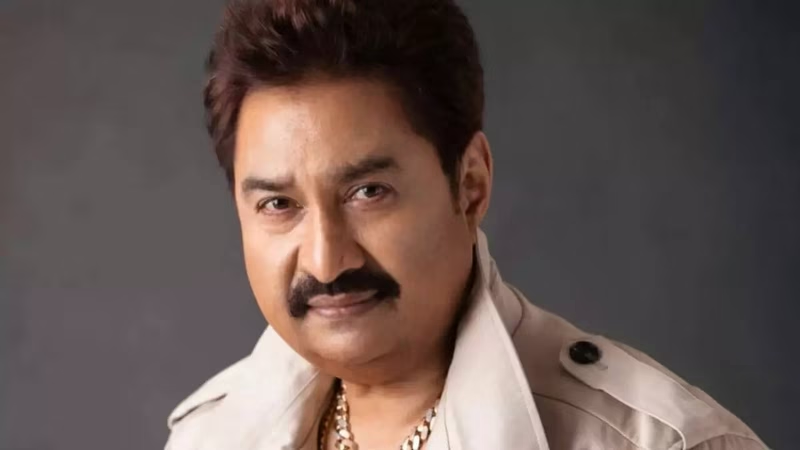
In an age where celebrity interactions often feel transactional or curated for social media, a recent act of genuine human kindness has captured hearts across India. Legendary singer Kumar Sanu—renowned for his soulful 90s hits—stepped off the stage and into the life of a stranger in pain. After reading a Times of India report about a Bhopal man who attempted suicide, Sanu didn’t just send thoughts and prayers—he picked up the phone and called the man’s father . This deeply personal gesture, stemming from the Kumar Sanu fan suicide attempt story, reveals a side of stardom rarely seen: raw, unfiltered empathy.
A Fan’s Despair and a Star’s Response
The young man from Bhopal, whose identity remains protected, had reportedly been struggling with severe personal and financial stress. In a moment of overwhelming despair, he attempted to end his life. What made his story particularly poignant was his lifelong devotion to Kumar Sanu’s music—songs that had once been his solace now echoing in a hospital room in Patna, where he was receiving treatment .
Upon learning of the incident through the media, Kumar Sanu was visibly shaken. He immediately instructed his team to locate the family and get updates on the man’s condition. But he didn’t stop there. He personally spoke with the man’s father, expressing deep sadness and offering words of comfort. “He is praying for his recovery,” a close aide confirmed .
Kumar Sanu Fan Suicide Attempt: The Full Story
The original report detailed how the man, in his late 20s, had faced mounting pressures—job loss, family expectations, and social isolation—that culminated in a tragic decision. Friends noted he often played Kumar Sanu’s classics like “Tujhe Dekha Toh” and “Ek Ladki Ko Dekha” during difficult times, finding temporary peace in the melodies .
When the news broke, it sparked an outpouring of concern online. But Kumar Sanu’s direct intervention stood apart. His team not only sought medical updates but also conveyed a message: “Tell him his favorite singer is rooting for him.” This simple yet powerful affirmation can be a lifeline for someone battling suicidal ideation—a reminder that they are seen, heard, and valued.
Why This Case Resonates Beyond Headlines
This incident touches on several urgent societal issues:
- Mental Health Stigma: In many Indian communities, seeking help for depression is still taboo.
- Celebrity Influence: Public figures have immense power to normalize conversations about emotional well-being.
- Human Connection: In a digital world, real human outreach—like a phone call from a hero—can be transformative.
Sanu’s action wasn’t performative; it was private, humble, and driven by genuine concern. That authenticity is what makes it so impactful.
The Psychology of Fandom and Emotional Attachment
Why do fans form such intense bonds with artists they’ve never met? Psychologists explain that music activates the brain’s reward system, releasing dopamine and oxytocin—the “bonding hormone.” Over time, listeners associate an artist’s voice with comfort, nostalgia, or identity . For someone isolated, that voice can feel like a friend.
When that emotional anchor is threatened—by personal crisis—the sense of loss can be profound. Conversely, when the artist acknowledges the fan’s pain, it validates their existence in a deeply healing way.
Celebrities as Unlikely Mental Health Advocates
While not trained therapists, celebrities like Kumar Sanu can play a crucial role in mental health advocacy by:
- Using their platform to share messages of hope
- Challenging stigma through personal stories
- Directly supporting individuals in distress (as Sanu did)
Other Indian stars—like Deepika Padukone, who founded The Live Love Laugh Foundation—have led formal campaigns. But Sanu’s quiet, personal gesture shows that advocacy doesn’t always need a megaphone. Sometimes, it just needs a phone call.
For those seeking professional support, resources like the World Health Organization’s mental health portal offer global guidance. In India, the Vandrevala Foundation (1860-233-3333) provides free counseling.
What You Can Do If Someone Is in Crisis
Kumar Sanu’s response offers a template for all of us:
- Reach Out: Don’t wait for them to ask for help. A simple “Are you okay?” can open the door.
- Listen Without Judgment: Let them speak. Avoid clichés like “Just be positive.”
- Stay Connected: Check in regularly. Isolation worsens despair.
- Encourage Professional Help: Gently suggest speaking to a counselor or doctor.
You don’t need to be a celebrity to make a difference. For more on supporting loved ones, see our guide on [INTERNAL_LINK:recognizing-signs-of-suicidal-ideation].
Conclusion: Compassion Crosses Fame and Anonymity
The Kumar Sanu fan suicide attempt story is ultimately not about fame—it’s about humanity. It reminds us that behind every headline is a person in pain, and behind every voice we love is a human capable of extraordinary kindness. In a world quick to scroll past tragedy, Sanu chose to stop, listen, and care. His actions may not solve systemic mental health gaps, but they offer something equally vital: hope. And sometimes, hope is enough to keep someone fighting for tomorrow.
Sources
- Times of India – Is he better now? After TOI report, Kumar Sanu reaches out to Bhopal man who attempted suicide
- Local reports from Bhopal and Patna on the incident
- American Psychological Association – The Psychology of Music and Fandom
- WHO Mental Health Resources
- Vandrevala Foundation Crisis Helpline Information