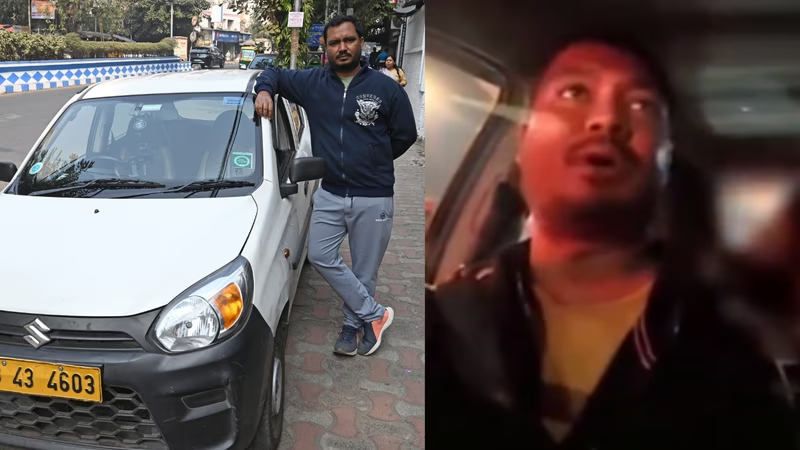
In a world often dominated by outrage and negativity, a quiet moment of decency in Kolkata has become a beacon of hope. On Christmas Eve 2025, cab driver **Munna Ajij Mollick** didn’t just drive a fare—he delivered care, compassion, and a powerful reminder of what basic humanity looks like.
The now-viral incident began when a young woman, visibly drunk and disoriented, flagged down Mollick’s cab late at night. Instead of dismissing her or charging extra, Mollick gently helped her into the vehicle, listened as she mumbled her address, and when she couldn’t recall it clearly, he did something most wouldn’t: he called her mother using the phone number stored under ‘Maa’ in her contacts.
After confirming the destination, he drove her home—and didn’t stop there. Seeing she was too unsteady to walk, he got out, supported her, and **walked her all the way to her front door**, ensuring she was safely inside before leaving. His parting words? “Take care of yourself.”
This act—captured by a bystander and shared online—has since amassed **hundreds of thousands of views and thousands of emotional reactions**, with users calling Mollick a “real-life hero” and “the kindness we need.”
Table of Contents
- The Night That Went Viral: Kolkata Cabby Helps Drunk Passenger
- Who Is Munna Ajij Mollick? The Man Behind the Meme
- Why This Act Resonated So Deeply
- Kolkata Cabby Helps Drunk Passenger: Public Response
- The Unseen Challenges of Kolkata Cab Drivers
- From Viral Fame to Real-World Impact
- Conclusion: When a Simple Act Becomes a National Movement
- Sources
The Night That Went Viral: Kolkata Cabby Helps Drunk Passenger
The video, shot around 11:30 PM on December 24, shows Mollick patiently assisting the woman near Park Street, a popular nightlife zone in Kolkata. She stumbles, slurs her words, and struggles to stand—but Mollick never shows frustration.
“I just did what any decent person would do,” he later told reporters. “She was alone, vulnerable. What if it was my sister? My daughter?”
After the clip surfaced on social media, it spread like wildfire—first on X (formerly Twitter), then Instagram Reels, and finally national news channels. By Christmas Day, Mollick was a household name.
Who Is Munna Ajij Mollick? The Man Behind the Meme
Contrary to viral fame, Mollick isn’t new to acts of service. The 38-year-old has been driving cabs in Kolkata for over 15 years and runs a small YouTube channel where he shares stories of daily life, traffic tips, and motivational messages for fellow drivers.
Ironically, despite his consistent online presence, none of his previous videos gained traction—until this one. “All my social media efforts never brought attention,” he said with a smile. “But one act of basic humanity did.”
Why This Act Resonated So Deeply
In an era where public transport safety—especially for women—is a national concern, Mollick’s behavior struck a chord because it defied negative stereotypes. His actions demonstrated:
- Empathy over opportunism: He didn’t exploit the situation for money or attention.
- Responsibility beyond duty: His job ended at the meter—but his care didn’t.
- Quiet dignity: He refused to see himself as a “hero,” calling it “just humanity.”
As explored in [INTERNAL_LINK:everyday-heroes-in-indian-cities], such moments remind us that heroism often wears ordinary clothes.
Kolkata Cabby Helps Drunk Passenger: Public Response
The internet’s reaction was overwhelming:
“This is the Kolkata I love. Kind, grounded, and deeply human.” — @BengalDiaries
“While influencers chase clout, real heroes like Munna are changing lives quietly.” — @UrbanCompassion
Local businesses have offered Mollick free fuel vouchers, and the Kolkata Traffic Police invited him for a “Citizen of the Month” award. Yet, he remains humble: “I don’t want rewards. I just hope more people treat strangers like family.”
The Unseen Challenges of Kolkata Cab Drivers
Mollick’s act is even more remarkable considering the daily struggles of Kolkata’s cab drivers:
- Long hours: Many work 12–16 hours a day for modest earnings.
- Safety risks: Night shifts often involve dealing with intoxicated or aggressive passengers.
- Economic pressure: Rising fuel costs and platform competition (Ola, Uber) have squeezed incomes.
According to a 2025 report by the Labour Bureau of India, over 60% of urban taxi drivers report high stress levels and limited social support.
From Viral Fame to Real-World Impact
Since the video went viral, Mollick has been approached by NGOs to speak at youth events on “compassion in public service.” He’s also started a small community initiative where drivers share safety tips and look out for vulnerable passengers.
More importantly, his story has sparked conversations about **ethical public transport** and the need for better recognition of frontline service workers—those who keep cities moving, often invisibly.
Conclusion: When a Simple Act Becomes a National Movement
The phrase “Kolkata cabby helps drunk passenger” may have started as a headline—but it’s become a symbol. A symbol that kindness doesn’t require grand gestures. That “basic humanity,” as Mollick calls it, is still alive in the heart of India’s cities.
In a season meant for goodwill, one man’s quiet choice to say “take care of yourself” has reminded millions to do the same—for each other.
Sources
Times of India. (2026, January 4). ‘Did nothing out of the way’: Kolkata cabby after Christmas Eve helping-hand act goes viral. https://timesofindia.indiatimes.com/…
The Telegraph India. (2026). Kolkata cab driver’s Christmas Eve act of kindness touches hearts nationwide. https://www.telegraphindia.com/…
Labour Bureau, Government of India. (2025). Urban Transport Worker Welfare Report. https://labourbureau.gov.in
NDTV. (2026). Viral Kolkata Cabby: “It was just basic humanity.” https://www.ndtv.com/…