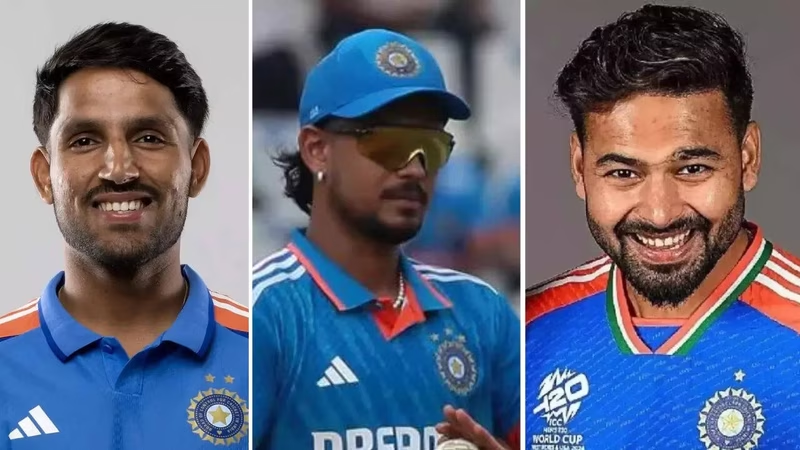
It’s not every day you have a surplus of world-class wicketkeeper-batters fighting for a single bench spot. But that’s the enviable—and tricky—situation facing India’s national selectors as they finalize their ODI squad for the upcoming tour of New Zealand. With KL Rahul firmly locked in as the first-choice glovesman and top-order mainstay, the real intrigue lies in who earns the role of his official backup.
This isn’t just about carrying a spare keeper; it’s about strategic depth, future planning, and managing the egos and trajectories of three elite talents: Ishan Kishan, Rishabh Pant, and Dhruv Jurel. Each brings a unique blend of skills, recent performances, and long-term potential to the table. Picking one means leaving two others—who could easily be starters for most other international sides—on the sidelines. Let’s unpack this fascinating selection battle for the KL Rahul backup role.
Table of Contents
- Why KL Rahul Is Undisputed No. 1
- Ishan Kishan: The Form Card Trumps All?
- Rishabh Pant: The Comeback Kid’s X-Factor
- Dhruv Jurel: The Quiet, Consistent Contender
- What’s the Selection Committee Really Looking For?
- The Most Likely Outcome
Why KL Rahul Is Undisputed No. 1
Before diving into the backup race, it’s essential to understand why KL Rahul remains the cornerstone of India’s ODI plans. He’s not just a wicketkeeper who can bat—he’s a top-three batter who happens to be an excellent keeper. His calm demeanor, ability to anchor the innings, and technical soundness against both pace and spin make him irreplaceable in the current setup .
His role provides crucial stability in a lineup that often leans on explosive middle-order hitting. With his job secure, the selectors can afford to think strategically about the reserve role—whether they want more firepower, experience, or future assurance.
Ishan Kishan: The Form Card Trumps All?
If selection were a pure meritocracy based on recent runs, Ishan Kishan would be on the plane to New Zealand without a second thought. His domestic season has been on fire. For Jharkhand, he’s been scoring heavily and at a rapid clip, reminding everyone why he was once considered the heir apparent to the Indian wicketkeeping throne .
Kishan’s biggest strength is his ability to be a genuine opener in the T20 and ODI formats—a role that demands aggression from ball one. His left-handedness also offers a useful balance to the top order. While questions about his glovework in high-pressure games have lingered, his bat-first approach could be exactly what India needs as an impact substitute. In a format where momentum shifts quickly, having Kishan on the bench is like holding a loaded weapon.
Rishabh Pant: The Comeback Kid’s X-Factor
Then there’s Rishabh Pant, whose story transcends statistics. His journey back from a near-fatal car accident to playing international cricket again is one of the most inspiring in modern sport. Now, he’s knocking on the ODI door once more.
Pant’s case isn’t about current domestic stats; it’s about his unparalleled big-match temperament and game-breaking ability. He’s the ultimate “match-winner”—a player who can single-handedly dismantle a bowling attack on his day. His experience in overseas conditions, including memorable knocks in Australia and England, gives him a mental edge that Kishan and Jurel are still developing .
Selecting Pant would be a statement of faith in his resilience and a tactical move to have a genuine finisher with gloves on the bench. In New Zealand’s tricky conditions, his street-smart glovework and ability to read the game could be invaluable in close contests.
Dhruv Jurel: The Quiet, Consistent Contender
Don’t overlook Dhruv Jurel. The young keeper from Uttar Pradesh has been the epitome of consistency. He may not post viral innings like Kishan or carry the narrative weight of Pant, but he’s been delivering solid performances game after game in domestic cricket and India ‘A’ tours .
Jurel is a technically correct wicketkeeper with safe hands and a compact, reliable batting style. He’s seen as a long-term prospect—a player who can be groomed for the post-Rahul era. His selection would signal that the team is thinking beyond just this series and is investing in sustainable depth for the 2027 ODI World Cup cycle. In a tour where experimentation with the bench is possible, Jurel represents the future-proof option.
What’s the Selection Committee Really Looking For?
The final decision will hinge on the selectors’ immediate tactical needs versus their long-term vision:
- Immediate Firepower? Kishan’s explosive batting is the answer.
- Big-Match Insurance? Pant’s experience and chaos-bringing ability are unmatched.
- Future-Proofing? Jurel is the smart, sustainable investment.
New Zealand’s seaming, swinging conditions might also tilt the balance toward a technically sound gloveman, which could favor Jurel or even Pant. For more on India’s overseas strategy, check out our [INTERNAL_LINK:india-overseas-cricket-challenges].
The Most Likely Outcome
While all three are deserving, the momentum seems to be with Rishabh Pant. His emotional comeback story, combined with his unique skill set and past success in overseas ODIs, makes him a compelling choice for a high-stakes tour. The selectors may view his presence as more valuable than Kishan’s form or Jurel’s future promise—for now.
However, this debate is a powerful reminder of India’s incredible wicketkeeping depth. The KL Rahul backup dilemma isn’t a problem—it’s a luxury that most cricketing nations would envy. No matter who gets the nod, the competition is pushing Indian cricket to new heights.
Sources
- Times of India – Original Article: https://timesofindia.indiatimes.com/
- ESPNcricinfo – Player Profiles and Stats: https://www.espncricinfo.com/
- ICC Official Website – Playing Conditions & Regulations: https://www.icc-cricket.com/