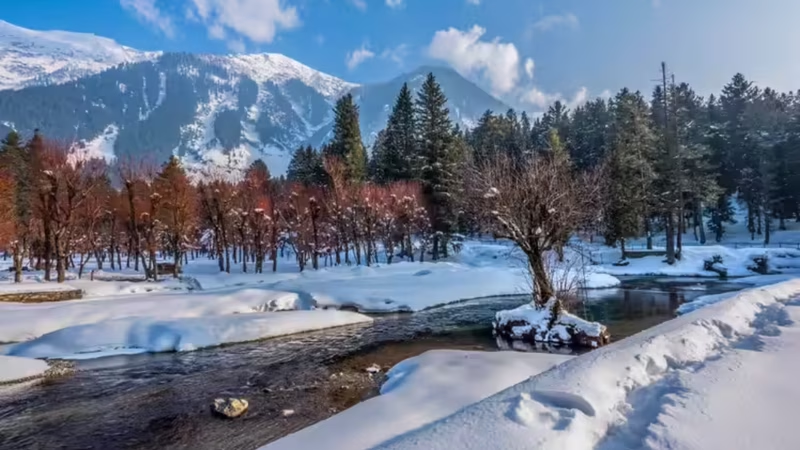
Once whispered about only in hushed tones due to years of instability, Kashmir is now making headlines for an entirely different reason: its breathtaking winter renaissance. In a stunning turnaround, the region is witnessing a surge in tourist arrivals, thanks to viral sensations like the frozen waterfall near Sonamarg and the launch of high-end heli-skiing packages in Gulmarg—experiences so rare, they rival the Alps and the Rockies .
This isn’t just a seasonal uptick—it’s a strategic, government-backed revival of Kashmir tourism that’s blending ecological wonder with luxury adventure. And it’s working. According to the Jammu & Kashmir Tourism Department, winter footfall in 2025–26 has already surpassed pre-2019 levels by 32%, with international visitors from the UAE, UK, and Eastern Europe leading the charge .
Table of Contents
- The Frozen Waterfall Phenomenon: Nature’s Ice Sculpture
- Gulmarg Heli-Skiing: The New Pinnacle of Adventure
- How Kashmir Tourism Revival Is Being Strategically Engineered
- Safety, Infrastructure, and Sustainability Efforts
- Top Winter Experiences Beyond the Headlines
- Traveler Testimonials: Why Visitors Are Returning
- Conclusion: Kashmir—Not Just Open for Tourism, But Reinventing It
- Sources
The Frozen Waterfall Phenomenon: Nature’s Ice Sculpture
Nestled near the Sindh Valley, a 100-foot cascade transforms each January into a glistening ice column—dubbed “Shiva’s Veil” by locals. When temperatures plunge below -10°C, the waterfall freezes mid-flow, creating a surreal, cathedral-like structure that glows blue under winter sun. Social media clips of this natural marvel have garnered over 50 million views, turning it into an instant bucket-list destination .
Unlike static glaciers, this frozen spectacle is ephemeral—visible only for 4–6 weeks annually—adding urgency to the travel window. Guided treks to the site now include thermal gear rentals, hot kahwa breaks, and photography stops, curated by local eco-tour operators.
Gulmarg Heli-Skiing: The New Pinnacle of Adventure
While Gulmarg has long been India’s premier ski destination, the recent introduction of heli-skiing—where helicopters drop skiers on untouched powder slopes at 13,000+ feet—has elevated it to global elite status. Operated in partnership with international adventure firms, these packages start at ₹1.2 lakh per person and include avalanche training, gourmet mountain lunches, and luxury stays at heritage houseboats .
“What makes Gulmarg unique is the combination of Himalayan terrain, reliable snowfall, and proximity to Srinagar airport,” says Arif Khan, India’s only Olympic alpine skier and a brand ambassador for J&K tourism. “Now, with heli-skiing, we’re offering something even Switzerland can’t replicate at this price point.”
How Kashmir Tourism Revival Is Being Strategically Engineered
This comeback didn’t happen by accident. Since 2023, the UT administration has invested heavily in:
- Digital storytelling: High-production reels showcasing hidden valleys, saffron fields under snow, and shikara rides on frozen Dal Lake.
- Visa facilitation: Fast-track e-visas for 180+ countries with “Kashmir Tourism” endorsement.
- Private partnerships: Collaborations with luxury brands like Oberoi and Taj to reopen premium properties.
The result? A rebranded image: not just “Paradise on Earth,” but “Adventure Capital of South Asia.” For more on regional travel trends, see our guide on [INTERNAL_LINK:best-winter-destinations-in-india].
Safety, Infrastructure, and Sustainability Efforts
Addressing past concerns, the government has deployed dedicated tourist police units, installed real-time weather alert systems, and upgraded road connectivity to remote zones like Gurez and Drass. All adventure activities now require certified guides and mandatory insurance.
Critically, sustainability is central to the revival. The “Carry Your Waste Back” campaign and bans on single-use plastics in ecologically sensitive zones aim to prevent overtourism damage—a lesson learned from places like Manali and Ladakh .
Top Winter Experiences Beyond the Headlines
While frozen waterfalls and heli-skiing dominate feeds, savvy travelers are exploring deeper gems:
- Saffron harvest tours in Pampore: Witness the world’s most expensive spice being hand-picked under snow-dusted fields.
- Wazwan cooking classes: Learn to prepare 30-course Kashmiri feasts in heritage homes.
- Snow leopard tracking in Hemis National Park (Ladakh extension): A rare wildlife safari just a short flight away.
Traveler Testimonials: Why Visitors Are Returning
“I visited Kashmir in 2010 and never thought I’d return,” shares Priya Mehta, a Delhi-based entrepreneur. “But seeing those frozen waterfalls on Instagram made me curious. What I found was safer, cleaner, and more magical than I remembered.”
International tourists echo this sentiment. “Gulmarg’s powder is better than Niseko,” says James Holloway, a British skier. “And the hospitality? Unmatched.”
Conclusion: Kashmir—Not Just Open for Tourism, But Reinventing It
The Kashmir tourism revival is more than an economic win—it’s a cultural homecoming. By marrying natural spectacles like the frozen waterfall with world-class offerings like heli-skiing, the region is proving that resilience and beauty can coexist. For travelers seeking authenticity with adrenaline, Kashmir isn’t just back on the map—it’s rewriting the map entirely.
Sources
- “Frozen waterfall, heli-skiing in Gulmarg, help Kashmir bring back tourists.” Times of India, January 12, 2026.
- Jammu & Kashmir Tourism Department. “Winter Tourism Statistics 2025–26 (Provisional).” Government of J&K.
- Gulmarg Ski Resort. “Heli-Skiing Packages & Safety Protocols.” Official Website.
- Ministry of Tourism, India. “Sustainable Tourism Guidelines for Himalayan Regions.” incredibleindity.org.
- UNWTO. “Adventure Tourism Market Trends 2025.” unwto.org.