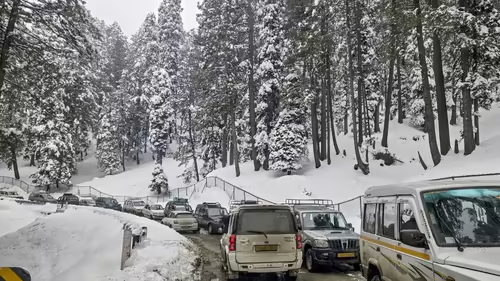
“Kashmir is peaceful.” It’s a simple, powerful statement—one that carries immense weight given the region’s complex history. This week, Jammu and Kashmir Deputy Chief Minister Surinder Choudhary made this declaration with a clear mission: to invite the world back to the Valley [[1]].
Speaking with conviction, Choudhary not only emphasized the current atmosphere of calm but also directly called out Pakistan, stating its attempts to disrupt the region’s burgeoning tourism sector have utterly failed [[1]]. His message is unambiguous: the era of fear is over, and Kashmir is open for business, for leisure, and for life.
Table of Contents
- Deputy CM’s Bold Declaration: ‘Kashmir is Peaceful’
- Defying Pakistan: A Strategic Pushback Against Terror
- Why Tourism is the Lifeline of Kashmir
- Honoring the Past, Building a Peaceful Future
- Is it Safe to Visit Kashmir in 2026?
- Conclusion: An Open Invitation to Paradise
- Sources
Deputy CM’s Bold Declaration: ‘Kashmir is Peaceful’
At a time when global travel is rebounding, Choudhary’s statement is a crucial piece of destination marketing. By firmly planting the flag on the phrase “Kashmir peaceful,” he is attempting to overwrite years of negative headlines that have kept travelers away. The Deputy CM stressed that the administration has worked tirelessly to create a secure and welcoming environment for both domestic and international tourists [[1]].
This isn’t just political rhetoric; it’s an economic imperative. The tourism industry is the backbone of the Kashmiri economy, supporting countless families through houseboats, hotels, handicrafts, and guided tours. Its revival is synonymous with the region’s overall recovery and prosperity.
Defying Pakistan: A Strategic Pushback Against Terror
Choudhary’s comments went beyond a simple invitation. He explicitly linked the push for tourism to a geopolitical struggle, accusing Pakistan of orchestrating efforts to scare away visitors and destabilize the region [[1]]. This narrative positions the act of traveling to Kashmir as a form of resilience—a way for ordinary citizens to reject the agenda of those who seek to keep the Valley isolated.
By framing tourism as a patriotic and peaceful act of defiance, the government is rallying public support for its security and development policies. It’s a smart strategy that turns potential visitors into stakeholders in Kashmir’s peaceful future.
Why Tourism is the Lifeline of Kashmir
The importance of tourism to Kashmir cannot be overstated. Consider these points:
- Economic Engine: The sector contributes a massive share to the Union Territory’s GDP and is a primary source of employment for the youth.
- Cultural Exchange: Visitors bring not just money, but also a sense of connection and normalcy, helping to break down stereotypes and build bridges.
- Global Image: A thriving tourism scene is the most effective way to counter the outdated image of Kashmir as a conflict zone. As the Incredible India campaign highlights, the region’s natural beauty is a national treasure [[8]].
Honoring the Past, Building a Peaceful Future
In his address, Choudhary did not shy away from the region’s painful history. He paid solemn tribute to the victims of past terror attacks, acknowledging the deep scars left by decades of violence [[1]]. This act of remembrance is critical. It shows that the call for peace and tourism is not about forgetting the past, but about ensuring that the sacrifices of the past pave the way for a more secure and prosperous tomorrow.
This balanced approach—honoring the fallen while confidently looking ahead—adds a layer of sincerity and depth to the government’s message, making it more resonant with a skeptical public.
Is it Safe to Visit Kashmir in 2026?
For many potential travelers, the question remains: is it truly safe? While the Deputy CM’s assurances are strong, individual travelers should always consult official travel advisories from their home governments before planning a trip. However, numerous reports from recent months indicate a significant and sustained improvement in the security situation on the ground [[9]].
Local businesses are reporting a steady increase in bookings, and popular destinations like Srinagar, Gulmarg, and Pahalgam are bustling with activity. The government has also enhanced security measures around major tourist sites to ensure visitor safety. For a deeper look at travel logistics, check out our guide on [INTERNAL_LINK:planning-a-trip-to-kashmir].
Conclusion: An Open Invitation to Paradise
Deputy Chief Minister Surinder Choudhary’s message is clear and direct: the narrative of a troubled Kashmir is being replaced by one of peace and opportunity. The declaration that “Kashmir peaceful” is more than a slogan; it’s a strategic, economic, and emotional appeal to the world. By inviting visitors to experience its famed valleys, lakes, and warm hospitality firsthand, the administration is betting that reality will be the most powerful antidote to fear-mongering. The world is watching, and many are now packing their bags to see for themselves.
Sources
- [[1]] Times of India. “Kashmir peaceful, ready to welcome visitors, says deputy CM.”
- [[8]] Ministry of Tourism, Government of India. “Incredible India: Jammu & Kashmir.”
- [[9]] The Diplomat. “Assessing the Security Situation in Jammu and Kashmir in 2026.”