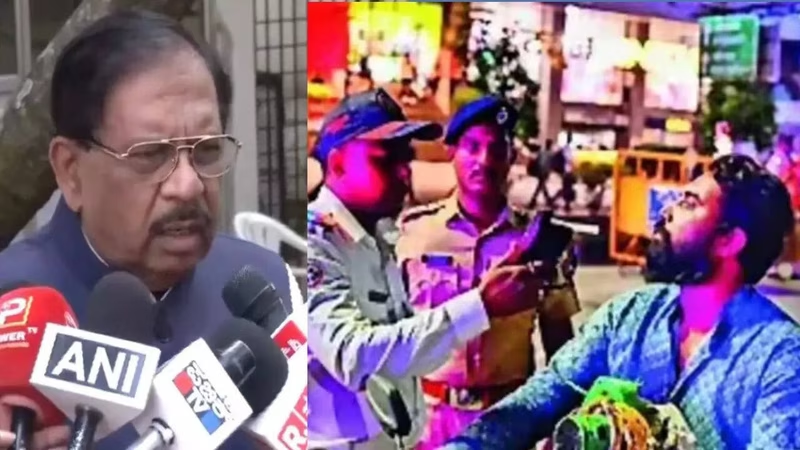
Forget designated drivers for a moment—Karnataka is rolling out something even more unconventional for New Year’s Eve 2025: official “rescue drops” for people too drunk to get home safely. Yes, you read that right. In a move that’s equal parts public service and social experiment, the state government has announced it will transport heavily intoxicated individuals directly to their doorsteps if they’re found unconscious or incoherent in public spaces.
Dubbed a “compassionate intervention,” this initiative is part of a broader safety strategy that includes 15 dedicated resting spots across Bengaluru and other major cities, over 20,000 police personnel on duty, and a special focus on women’s security. But while many are applauding the government’s proactive stance, others are asking: is this enabling risky behavior—or simply saving lives?
Table of Contents
- What Are Karnataka’s New Year Rescue Drops?
- Karnataka New Year Rescue Drops: How It Works
- 15 Rest Centres and Massive Police Deployment
- Focus on Women’s Safety
- Public Reaction and Ethical Debate
- What Other Cities Can Learn
- Tips for a Safe New Year’s Eve in Karnataka
- Conclusion: Balancing Festivity and Responsibility
- Sources
What Are Karnataka’s New Year Rescue Drops?
Announced by Karnataka’s Urban Development Minister, the **Karnataka New Year rescue drops** initiative targets individuals who are so intoxicated during New Year’s Eve celebrations that they lose consciousness or become a danger to themselves. Instead of leaving them on sidewalks or hauling them to police stations, authorities will use GPS-enabled vehicles to safely drop them at their registered home addresses.
The goal? To prevent alcohol-related deaths, reduce the burden on emergency services, and—critically—avoid situations where vulnerable people (especially women) are left exposed in unsafe environments.
Karnataka New Year Rescue Drops: How It Works
So how does this system actually function? Here’s the step-by-step process:
- Identification: Police or civic volunteers identify a person who is severely intoxicated and unable to care for themselves.
- Verification: Identity and address are verified via Aadhaar or phone contact with family/friends.
- Transport: The individual is taken to the nearest rest centre for a quick medical check-up, then escorted home in a government vehicle.
- No penalty: Importantly, this service is penalty-free—no fines or legal action for public intoxication, as long as no violence or crime is involved.
This approach aligns with global best practices. For example, cities like Amsterdam and Copenhagen have long operated “drunk tanks” or safe transport services to manage nightlife-related health risks [WHO on alcohol and public health].
15 Rest Centres and Massive Police Deployment
Beyond the rescue drops, the Karnataka government has set up 15 temporary rest centres in high-footfall areas like MG Road, Koramangala, Indiranagar, and Mysuru’s Devaraja Market. These centres will offer:
- Free water and ORS to combat dehydration
- Basic first aid
- Charging stations for phones
- Female police officers stationed specifically for women’s assistance
Meanwhile, over 20,000 police personnel—including traffic cops, women’s safety units, and cybercrime teams—will be deployed statewide. DUI checkpoints will be active from 10 PM onwards, with zero tolerance for drink-driving.
Focus on Women’s Safety
Recognizing that New Year’s Eve can be particularly risky for women, the state has implemented several targeted measures:
- Pink patrol vehicles will be on standby near major party zones.
- Women can call the dedicated helpline 112 for immediate pickup and escort.
- Bars and clubs must display emergency contact numbers and provide safe waiting areas for cabs.
[INTERNAL_LINK:womens-safety-india-new-years] “The safety of our sisters and daughters is non-negotiable,” said the Bengaluru City Police Commissioner in a press briefing.
Public Reaction and Ethical Debate
On social media, reactions are split. Many citizens praise the move as “humane” and “pragmatic.” One Twitter user wrote, “Better to get someone home safely than find them dead in a gutter.”
But critics argue it might encourage binge drinking. “Are we rewarding recklessness?” asked a columnist in a leading Kannada daily. Public health experts counter that harm reduction—not moral judgment—is the goal. As the World Health Organization notes, policies that reduce alcohol-related harm save lives, even if they don’t eliminate drinking altogether.
What Other Cities Can Learn
Karnataka’s model could serve as a blueprint for other Indian metros. With urban nightlife expanding rapidly, cities like Delhi, Mumbai, and Hyderabad face similar challenges. A structured, non-punitive response to intoxication—paired with strong anti-DUI enforcement—strikes a smart balance between freedom and safety.
Tips for a Safe New Year’s Eve in Karnataka
If you’re celebrating in Karnataka this NYE, keep these tips in mind:
- Save the police helpline (112) and your nearest rest centre location.
- Use app-based cabs or pre-book transport—never drive after drinking.
- Stick with friends and establish a buddy system.
- Carry ID and ensure your phone is charged.
- If you see someone in distress, alert police or volunteers—don’t assume they’ll “sleep it off.”
Conclusion: Balancing Festivity and Responsibility
The **Karnataka New Year rescue drops** initiative is more than a policy—it’s a statement. It says that public safety isn’t just about punishment, but about protection. While no system is perfect, this compassionate, well-resourced approach could prevent tragedies and set a new standard for how Indian cities manage the intersection of celebration and public health.
As the clock strikes midnight, Karnataka isn’t just counting down the year—it’s counting on responsibility, empathy, and smart governance to keep its citizens safe.