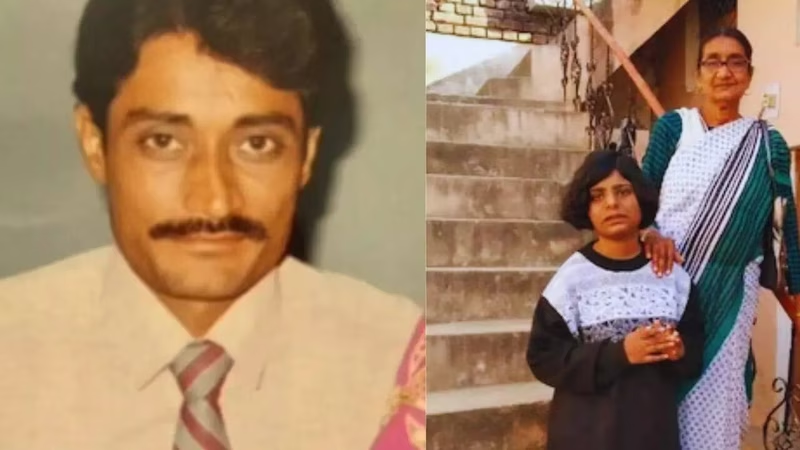
It began as a routine family visit—and ended in horror.
In Jhansi, Uttar Pradesh, relatives of a retired railway employee arrived at his home expecting to mourn his recent passing. What they found instead was a scene so disturbing it defied belief: his teenage daughter, emaciated and barely alive, confined like a prisoner in her own house. The two had allegedly been held captive for five years by the very people hired to care for them—their servants.
This is the story of the Jhansi captivity case—a harrowing tale of neglect, exploitation, and the dark side of domestic trust that has ignited outrage across India.
Table of Contents
- The Discovery That Shocked a Community
- Who Were the Victims?
- Jhansi Captivity Case: Timeline of Abuse
- How the Servants Took Control
- The Role of Property Greed
- Police Action and Legal Proceedings
- Broader Implications: Elder and Mental Health Abuse in India
- Conclusion
- Sources
The Discovery That Shocked a Community
After the retired railway employee passed away, family members finally gained access to the home he shared with his daughter and two live-in servants—a married couple. What they saw inside left them speechless.
The daughter, described as mentally unwell and dependent on her father, was found in a skeletal state, her body “reduced to a dried frame,” according to police reports . She had been locked indoors, denied proper food, medical care, and human contact for years. Her father, already frail, had reportedly died from prolonged starvation and neglect .
Neighbors later told police they hadn’t seen either victim in years—assumed the family had moved away. The servants had cut off all outside communication, creating a silent prison behind closed doors.
Who Were the Victims?
The father, a pensioner from Indian Railways, had spent decades in public service. In his retirement, he lived modestly in Jhansi with his only child—a daughter suffering from a mental health condition that left her vulnerable and reliant on his care.
With no immediate family nearby, the couple hired domestic help: a male and female servant who gradually assumed total control over the household. What began as a caregiving arrangement allegedly morphed into a scheme of isolation, control, and, ultimately, captivity.
Jhansi Captivity Case: Timeline of Abuse
Based on police investigations and family testimonies, here’s how events likely unfolded:
- 2019: Servant couple hired to assist with daily chores and care for the daughter.
- 2020–2021: Communication with extended family gradually cut off; servants claimed the father preferred privacy.
- 2022–2024: Neighbors report no sightings; servants collected the pension and managed all affairs.
- December 2024: Father dies under suspicious circumstances—no medical help sought.
- Early January 2025: Relatives visit after hearing of the death—and discover the daughter near death.
How the Servants Took Control
According to preliminary police findings, the servant couple used psychological manipulation and physical control to isolate the victims. They allegedly:
- Restricted phone and internet access
- Told neighbors the family was “traveling” or “in seclusion”
- Took over bank transactions and pension collection
- Denied the daughter food as punishment or control
Medical reports indicate the daughter weighed less than 25 kg. Doctors described her condition as “consistent with chronic starvation”—a level of neglect rarely seen in urban India .
The Role of Property Greed
Investigators believe financial motive was central to the crime. The family owned a small but valuable piece of land in Jhansi—a city experiencing rapid real estate growth. With no legal heirs actively involved, the servants allegedly planned to forge documents or manipulate the daughter into transferring ownership after the father’s death .
This aligns with a disturbing trend in India: crimes against elderly or vulnerable individuals driven by property disputes. According to the National Crime Records Bureau (NCRB), crimes targeting senior citizens rose by 16% between 2020 and 2023, with property-related motives accounting for nearly 40% of cases .
Police Action and Legal Proceedings
Following the discovery, the servant couple was arrested under multiple sections of the Indian Penal Code, including:
- Section 304 (culpable homicide not amounting to murder)
- Section 330 (voluntarily causing hurt to extort confession or property)
- Section 376 (related to wrongful confinement)
- Section 468 (forgery for purpose of cheating)
The daughter is now under medical care and the protection of child welfare authorities. Authorities are also investigating whether forged property documents were created during the captivity period.
Broader Implications: Elder and Mental Health Abuse in India
The Jhansi captivity case is not an isolated incident—it’s a symptom of larger systemic failures. India lacks robust legal and social frameworks to protect vulnerable adults, especially those with mental illness or cognitive decline.
The Mental Healthcare Act of 2017 was a step forward, but implementation remains weak in smaller cities. Similarly, elder abuse often goes unreported due to stigma, family shame, or lack of awareness. Experts urge for mandatory welfare checks on isolated seniors and better training for local police on recognizing signs of domestic captivity .
For more on safeguarding vulnerable adults, see [INTERNAL_LINK:elder-abuse-prevention-india].
Conclusion
The Jhansi captivity case is a grim reminder that cruelty can hide behind closed doors—even in homes we assume are safe. It exposes the dangers of unchecked power in domestic settings and the urgent need for community vigilance, legal reform, and mental health support. While the daughter survived, her father did not. Their story must spark change, not just headlines.
Sources
Times of India: ‘Body reduced to skeletal frame’: Rtd railway employee, daughter held in captivity
National Crime Records Bureau (NCRB) – Crime in India Reports
World Health Organization: Mental Health in India
Ministry of Health & Family Welfare: Mental Healthcare Act, 2017