Introduction: Chaos in the Courthouse Square
The quiet steps of the Hennepin County Courthouse in Minneapolis were the unlikely stage for a dramatic clash of ideologies this past weekend. At its center was Jake Lang, a figure whose name is now permanently etched in the annals of American political unrest due to his role in the January 6th Capitol riot. Fresh off a presidential pardon from Donald Trump, Lang attempted to rally support for U.S. Immigration and Customs Enforcement (ICE) but was met with a massive, angry counter-protest that forced him to flee. His subsequent social media posts, claiming he was “lynched” and stabbed, have ignited a firestorm of debate online. But what’s the real story behind the chaos?
Table of Contents
- Who Is Jake Lang? From Jan 6 to Presidential Pardon
- The Minneapolis Rally: A Clash of Ideologies
- “Lynched” or Exaggerated? Fact-Checking Lang’s Claims
- The Broader Implications for Free Speech and Political Violence
- Conclusion: A Microcosm of a Divided Nation
- Sources
Who Is Jake Lang? From Jan 6 to Presidential Pardon
Jake Lang is not a new face in the world of far-right activism. He gained national notoriety for his actions during the January 6, 2021, attack on the U.S. Capitol, where he was seen on video using a bullhorn to incite the crowd. He was later arrested and charged for his role in the insurrection. However, in a controversial move, former President Donald Trump included Lang in a list of individuals he pardoned, effectively wiping his legal slate clean just before leaving office .
This pardon has been a point of significant contention, with critics arguing it sends a dangerous message about accountability for political violence. Lang’s return to public life has been anything but quiet, as evidenced by his recent activities in Minneapolis.
The Minneapolis Rally: A Clash of Ideologies
Lang’s rally, dubbed the “March Against Minnesota Fraud,” was ostensibly a show of support for ICE. However, it was held against a backdrop of heightened local tensions following the fatal shooting of Renee Good by an ICE agent on January 7th . This context turned what was planned as a small gathering into a flashpoint for community anger.
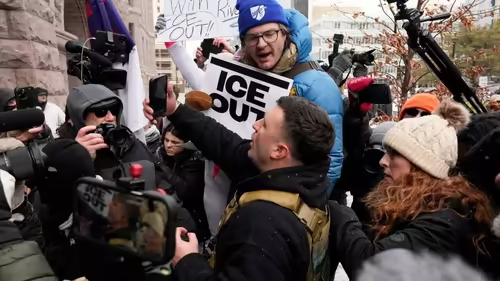
Reports and photos from the scene paint a clear picture: Lang’s group was vastly outnumbered by a large and vocal anti-ICE counter-protest . The atmosphere quickly turned hostile, with counter-protesters jeering, jostling, and ultimately forcing Lang and his supporters to retreat from the area . Videos from the event show Lang being chased away, with his vest being lifted by a protester in a moment of chaotic confrontation .
Jake Lang: “Lynched” or Exaggerated?
In the aftermath, Lang took to social media with a dramatic claim: he had been “ripped limb from limb” and stabbed during the altercation . The term “lynched” carries immense historical weight in the United States, and its use by Lang was widely criticized as inflammatory and inappropriate.
While photos from the scene do show Lang with visible bruises and appearing injured , there is no publicly available evidence from law enforcement or credible news sources to substantiate his claim of being stabbed. The Minneapolis Police Department has not released any reports confirming a stabbing incident related to the rally. The chaotic nature of the event likely involved physical shoving and aggression, but Lang’s description appears to be a significant exaggeration designed to garner sympathy and portray himself as a victim.
His rally itself was also marked by provocative acts, including blasting the song “Ice, Ice Baby” and making threats to burn a Quran, which undoubtedly inflamed the already tense situation .
The Broader Implications for Free Speech and Political Violence
The Minneapolis incident raises complex questions that go beyond one man’s claims. It sits at the intersection of several critical issues:
- Free Speech vs. Public Safety: While Lang has a right to assemble, does that right extend to holding a rally in a community already traumatized by a recent police shooting, especially when his past actions are so deeply tied to an act of domestic terrorism?
- The “Victim” Narrative: There is a growing trend among some far-right figures to reframe their own aggressive actions as victimhood when faced with opposition. Lang’s “lynched” claim is a textbook example of this strategy, attempting to shift the narrative away from his role as an instigator.
- The Impact of Pardons: Trump’s pardon of Lang and others has effectively given them a platform to return to activism without legal consequence. This raises concerns about whether such pardons embolden individuals to continue engaging in disruptive and potentially violent behavior.
For more on the ongoing debate surrounding the January 6th pardons, see our deep dive on [INTERNAL_LINK:january-6-pardons-impact].
Conclusion: A Microcosm of a Divided Nation
The chaotic scene in Minneapolis is more than just a local news story; it’s a microcosm of the deep divisions and escalating tensions that continue to plague American society. Jake Lang’s attempt to stage a pro-ICE rally, his subsequent retreat, and his inflated claims of victimhood all serve as a stark reminder of the volatile mix of political extremism, social media, and a fragile public discourse. While his specific claim of being stabbed remains unverified and likely exaggerated, the event itself underscores the urgent need for a national conversation about accountability, the limits of free speech, and how to prevent political rallies from becoming flashpoints for violence.
Sources
- Times of India: ‘Ripped limb from limb’: January 6 rioter Jake Lang claims he was ‘lynched’ during clash with anti-ICE protesters in Minneapolis
- Associated Press: Reporting on the pardon of January 6 defendants
- Local Minneapolis news coverage detailing the rally and counter-protest , , , ,
- U.S. Department of Justice archives on January 6 prosecutions (for context on Lang’s original charges) [EXTERNAL_LINK:https://www.justice.gov/capitol-breach]