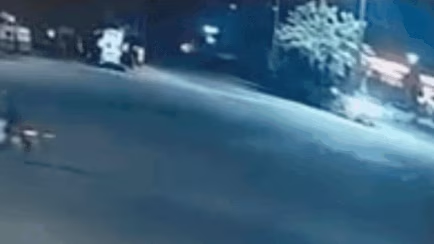
It was supposed to be just another evening in Jaipur—but in a matter of seconds, chaos erupted as a speeding luxury car careened into a bustling street crowd, leaving devastation in its wake. The Jaipur hit-and-run near Kharbas Circle has sent shockwaves across Rajasthan, with one person dead, at least 15 injured, and haunting CCTV footage that’s impossible to unsee.
Eyewitnesses described scenes of panic as food vendors, shoppers, and bystanders had no time to react. The vehicle—a black Audi—ploughed through roadside stalls before fleeing the scene, only to be intercepted by police moments later as an enraged mob surrounded the occupants. Now, questions are mounting about driver accountability, urban traffic management, and whether this tragedy could have been prevented.
Table of Contents
- What Happened During the Jaipur Hit-and-Run?
- CCTV Footage Reveals Moments of Chaos
- Eyewitness Accounts from the Scene
- Police Response and Arrests
- Why Urban Hit-and-Runs Are on the Rise in India
- What Can Be Done to Prevent Future Tragedies?
- Conclusion
- Sources
What Happened During the Jaipur Hit-and-Run?
The incident occurred on the evening of January 9, 2026, near Kharbas Circle—a busy commercial junction in Jaipur known for its street food vendors and evening foot traffic. According to preliminary reports from Rajasthan Police, a black Audi sedan was traveling at high speed when it lost control, veering off the road and crashing into multiple pedestrians and makeshift food shacks .
The impact was catastrophic. One victim, identified as a local vendor in his late 40s, succumbed to his injuries at the hospital. Fifteen others, including women and children, were rushed to nearby medical facilities with fractures, head trauma, and internal injuries. Several remain in critical condition.
CCTV Footage Reveals Moments of Chaos
Security cameras installed at a nearby shop captured the entire sequence in chilling detail. The footage shows the Audi swerving violently before slamming into a row of food carts, sending debris—and people—flying. Within seconds, the street transforms from a lively marketplace into a scene of horror .
Notably, the vehicle did not stop. It reversed briefly, then sped away—prompting immediate pursuit by local residents and traffic police. The video, now widely shared on social media, has intensified public anger and demands for justice.
Eyewitness Accounts from the Scene
“It happened so fast—like a nightmare,” said Ramesh Meena, a tea stall owner who witnessed the crash. “People were screaming. One man was lying under a broken cart… blood everywhere.”
Another bystander, Priya Sharma, recounted how she pulled her daughter out of the Audi’s path just in time. “If I’d been two seconds slower, she wouldn’t be here,” she said, visibly shaken.
Multiple witnesses confirmed that the car appeared to be driven recklessly, possibly under the influence or engaged in street racing—a growing concern in urban India.
Police Response and Arrests
Rajasthan Police acted swiftly, intercepting the Audi less than a kilometer from the crash site. The occupants—two young men in their early 20s—were pulled from the vehicle by an angry crowd before officers intervened to prevent mob violence .
Both individuals have been taken into custody. Authorities are investigating whether alcohol or drugs were involved and have seized the vehicle for forensic analysis. Charges are expected to include culpable homicide not amounting to murder, rash driving, and endangering public safety.
Why Urban Hit-and-Runs Are on the Rise in India
This tragedy is not isolated. According to data from the Ministry of Road Transport and Highways, India recorded over 168,000 road crash fatalities in 2023 alone—with hit-and-run cases accounting for nearly 18% of all fatal accidents .
Factors contributing to this alarming trend include:
- Poorly designed urban roads that mix high-speed traffic with pedestrian zones
- Lax enforcement of speed limits and DUI laws
- Culture of impunity among affluent drivers using luxury vehicles
- Inadequate street lighting and signage in commercial hubs like Kharbas Circle
Experts warn that without systemic reforms, such incidents will continue to plague Indian cities.
What Can Be Done to Prevent Future Tragedies?
Preventing another Jaipur hit-and-run requires multi-layered action:
- Install speed-calming infrastructure: Speed bumps, narrower lanes, and pedestrian-only zones near markets.
- Mandate AI-powered traffic monitoring: Real-time license plate recognition and automated speed alerts.
- Strengthen penalties: Harsher jail terms and vehicle confiscation for hit-and-run offenders.
- Community awareness campaigns: Educate youth on responsible driving and bystander intervention.
- Improve emergency response: Faster ambulance access and trauma care in high-risk areas.
Cities like Pune and Indore have already seen success with similar measures—proof that change is possible.
Conclusion
The Jaipur hit-and-run is more than a tragic accident—it’s a stark reminder of the deadly consequences of reckless driving and urban planning failures. As the victims recover and the legal process unfolds, this incident must serve as a catalyst for nationwide road safety reform. For more on urban safety in India, explore our deep dive on [INTERNAL_LINK:road-safety-crisis-india].
Sources
- Times of India: CCTV captures horrific hit-and-run in Jaipur: Audi mows down several people; 1 dead, 15 injured
- Ministry of Road Transport and Highways, India: Road Accidents in India – 2023 Report