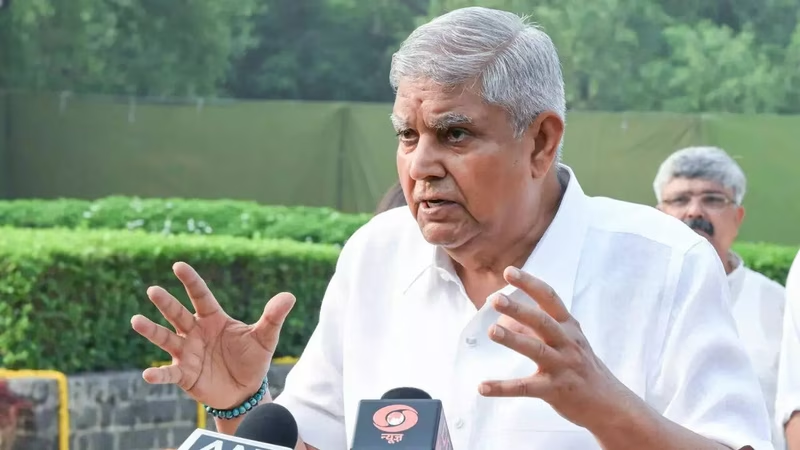
Jagdeep Dhankhar Hospitalised: A Recurring Health Battle in the Public Eye
On Monday, January 12, 2026, former Vice President Jagdeep Dhankhar was admitted to the All India Institute of Medical Sciences (AIIMS) in New Delhi under medical supervision. The decision followed two alarming episodes of unconsciousness he experienced the previous week—incidents that have reignited public concern over his long-standing health struggles. This latest development marks a troubling continuation of a pattern that ultimately led him to resign from one of India’s highest constitutional offices in July 2025 . The phrase “Jagdeep Dhankhar hospitalised” is no longer just news—it’s a recurring chapter in a high-profile health saga that blends personal vulnerability with national interest.
Table of Contents
- Timeline of Dhankhar’s Public Health Struggles
- Why Was He Admitted to AIIMS Now?
- The Resignation: When Duty Met Declining Health
- What Could Be Causing These Fainting Episodes?
- Public and Political Reaction
- Conclusion: Privacy, Protocol, and Public Figures
- Sources
Timeline of Dhankhar’s Public Health Struggles
Dhankhar’s health issues have played out under intense public scrutiny:
- 2023–2024: Multiple instances of fainting or dizziness during official events as Vice President, including a notable collapse during a Rajya Sabha session.
- July 2025: Submitted his resignation to President Droupadi Murmu, explicitly citing “deteriorating health” as the reason—a rare move for a constitutional postholder .
- October 2025: Brief hospitalisation for routine check-ups, but discharged within 48 hours.
- January 2026: Two fainting spells in one week prompt urgent AIIMS admission for comprehensive diagnostics, including an MRI scan.
This pattern suggests a chronic, possibly neurological or cardiovascular condition that has resisted full resolution despite top-tier medical care.
Why Was He Admitted to AIIMS Now?
According to sources within AIIMS, doctors insisted on inpatient admission after reviewing the frequency and severity of his recent syncopal (fainting) episodes. Outpatient monitoring was deemed insufficient. “Recurrent unexplained loss of consciousness requires controlled observation, advanced imaging like MRI, and cardiac workup,” explained a senior neurologist familiar with such cases (not directly involved in Dhankhar’s treatment) . The MRI is expected to assess potential structural brain abnormalities, while Holter monitoring may evaluate heart rhythm irregularities—common causes of syncope in older adults.
The Resignation: When Duty Met Declining Health
Dhankhar’s July 2025 resignation was historic. While Vice Presidents typically serve their full term unless elected to another office, Dhankhar chose to step down—a decision widely interpreted as a responsible acknowledgment of his physical limits. In his farewell address, he expressed gratitude but offered no detailed medical disclosure, maintaining dignity while prioritizing national interest over personal tenure. His departure left the Vice President’s chair vacant until a successor was appointed later that year.
What Could Be Causing These Fainting Episodes?
While AIIMS has not released a diagnosis, medical experts point to several possibilities common in individuals over 70:
- Cardiac Syncope: Arrhythmias or valve disorders can cause sudden drops in blood flow to the brain.
- Neurological Causes: Transient ischemic attacks (mini-strokes) or seizures may present as brief unconsciousness.
- Orthostatic Hypotension: A sharp drop in blood pressure upon standing, often medication-induced.
- Vasovagal Syncope: A reflex triggered by stress, pain, or prolonged standing—though less likely to recur so frequently.
Given Dhankhar’s age (74) and history, a multifactorial cause is probable. The upcoming MRI and cardiology reports will be critical [[INTERNAL_LINK:common-causes-of-fainting-in-elderly]].
Public and Political Reaction
News of Dhankhar’s hospitalisation drew swift reactions across the political spectrum. Prime Minister Narendra Modi and President Murmu conveyed wishes for his speedy recovery. Opposition leaders, while respectful, questioned whether adequate health safeguards were in place during his tenure. On social media, citizens expressed sympathy, with many praising his courage in stepping down when he did. “He put the nation before self—that’s true leadership,” read one widely shared tweet.
Conclusion: Privacy, Protocol, and Public Figures
The Jagdeep Dhankhar hospitalised episode underscores a delicate balance in democratic societies: the public’s right to know about leaders’ fitness for office versus an individual’s right to medical privacy. Dhankhar’s case stands out because he chose transparency through action—resigning rather than risking instability. As he undergoes tests at AIIMS, the nation watches not with gossip, but with genuine concern for a man who served at the highest level. We wish him strength and a full recovery.
Sources
- Times of India: “Dhankhar hospitalised: Ex-VP admitted to AIIMS, to undergo MRI; fainted twice last week” (January 12, 2026)
- American Heart Association – Guidelines on Evaluation of Syncope (https://www.heart.org)
- Official statements from Rashtrapati Bhavan and AIIMS Public Relations Office