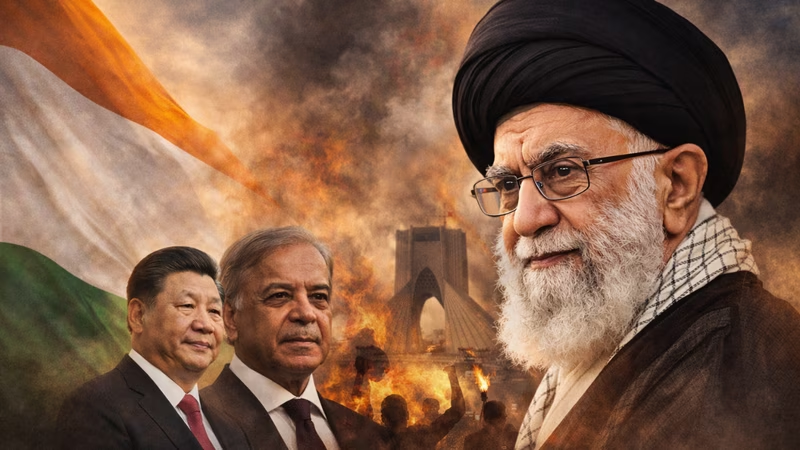
Tehran is burning—and New Delhi is watching with growing alarm. The latest wave of Iran unrest isn’t just another Middle Eastern crisis; it’s a direct threat to India’s most ambitious foreign policy gambit in decades. From the docks of Chabahar to the snow-capped peaks of Kashmir, a destabilized Iran could unravel India’s entire western strategy—while handing China and Pakistan a golden geopolitical windfall.
Why? Because Iran isn’t just a neighbor—it’s India’s lifeline to Central Asia, a counterweight to Islamabad, and a linchpin in its “multi-alignment” doctrine. If Tehran weakens or collapses into chaos, that lifeline snaps. And in the vacuum, Beijing and Rawalpindi are already positioning themselves to fill the void .
Table of Contents
- Why Iran Matters So Much to India
- How Iran Unrest Threatens the Chabahar Dream
- The Kashmir Security Dimension
- Why China and Pakistan Benefit from Tehran’s Turmoil
- Can India Salvage Its Western Strategy?
- Conclusion: A Fragile Balance at a Breaking Point
- Sources
Why Iran Matters So Much to India
India’s relationship with Iran is built on three strategic pillars:
- Chabahar Port: India’s $125 million investment gives it direct sea access to Afghanistan and Central Asia—bypassing hostile Pakistan entirely .
- Counter to Pakistan: A stable, independent Iran dilutes Islamabad’s influence in the region and provides India diplomatic leverage.
- Energy Security: Though reduced due to U.S. sanctions, Iran remains a potential long-term oil and gas partner.
Lose Iran, and India loses its only reliable land-sea corridor west of Pakistan—a blow to both trade and strategic autonomy.
How Iran Unrest Threatens the Chabahar Dream
The Chabahar Port is more than concrete and cranes—it’s India’s answer to China’s Gwadar. But if Iran’s government falters, the entire project is at risk:
- Operational Disruption: Protests, strikes, or regime change could halt cargo movement, scaring off investors and shippers.
- Security Vacuum: A weakened state may struggle to protect Indian assets from sabotage or militant attacks—especially near the volatile Sistan-Baluchestan province.
- Geopolitical Isolation: If hardliners seize control, they may pivot closer to China, sidelining India’s role in the port’s future .
Already, progress on the Chabahar-Zahedan rail link has been slow. Prolonged Iran unrest could kill it altogether—stranding India’s hopes for the International North-South Transport Corridor (INSTC) .
The Kashmir Security Dimension
Less obvious but equally critical: Iran’s stability indirectly affects Kashmir. A distracted or fragmented Iran means less regional pressure on Pakistan to curb cross-border terrorism. Tehran has historically opposed extremist groups like Jaish-e-Mohammed—groups that target Indian soil.
If Iran turns inward to manage domestic chaos, its intelligence-sharing and diplomatic checks on Islamabad weaken. That creates space for Pakistan to escalate covert operations in Jammu & Kashmir under reduced scrutiny—a nightmare scenario for Indian security planners .
Why China and Pakistan Benefit from Tehran’s Turmoil
While India panics, Beijing smiles. China has spent years deepening ties with Iran through its 25-year Strategic Cooperation Agreement—securing oil, infrastructure deals, and military access . Unlike India, China doesn’t care about democracy; it cares about control. A pliant, isolated Iran is perfect for Beijing’s Belt and Road ambitions.
Pakistan, meanwhile, sees a double win:
- Chabahar Neutralized: If India’s port stalls, Gwadar (run by China) becomes the undisputed gateway to Central Asia.
- Diplomatic Cover: With Iran distracted, Pakistan faces less regional condemnation for its support of militant proxies.
In short: chaos in Tehran = strategic clarity for Beijing and Rawalpindi.
Can India Salvage Its Western Strategy?
Not all is lost—but time is short. India must act fast:
- Quiet Diplomacy: Engage all Iranian factions—not just the current regime—to ensure Chabahar’s survival regardless of who rules.
- Diversify Routes: Accelerate alternative corridors like the India-UAE-Europe Economic Corridor to reduce Chabahar dependency [[INTERNAL_LINK:india-middle-east-corridors-2026]].
- Strengthen Ties with Gulf States: Partner with Oman and UAE to create backup logistics hubs near Chabahar.
Most importantly, India must avoid public commentary that alienates any emerging power center in Tehran. Neutrality, not moral posturing, is the order of the day.
Conclusion: A Fragile Balance at a Breaking Point
The Iran unrest is more than a regional crisis—it’s a stress test for India’s entire Indo-Pacific and Eurasian strategy. If Tehran collapses, India loses its western anchor, empowering its two biggest rivals in one fell swoop. But if New Delhi navigates this carefully—through quiet diplomacy, strategic patience, and contingency planning—it might just turn turbulence into opportunity. The stakes couldn’t be higher.
Sources
- Times of India: From Chabahar to Kashmir: Why chaos in Iran hurts India, benefits China & Pakistan
- Council on Foreign Relations (CFR): Iran’s Regional Role and Geopolitical Shifts
- Ministry of External Affairs, India – Chabahar Project Updates
- U.S. Congressional Research Service: China-Iran Strategic Partnership