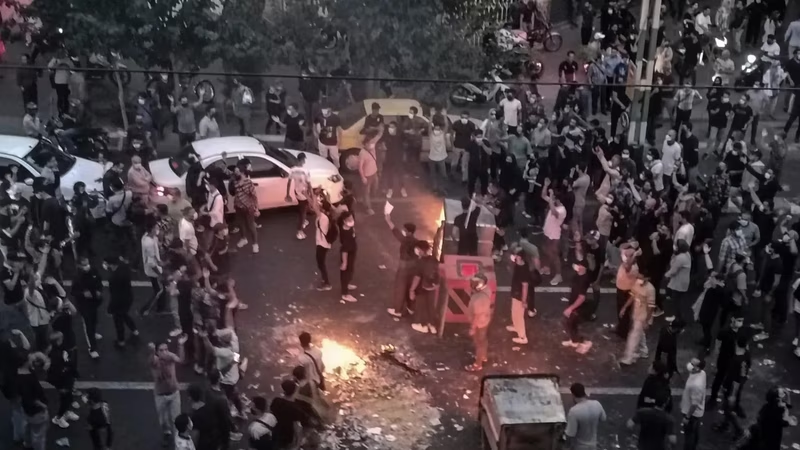
In the dead of night, the digital lights of an entire nation went out. A nationwide Iran internet shutdown has plunged the country into an information black hole, just as the most significant wave of civil unrest since 2019 reaches a boiling point. This isn’t just a technical glitch; it’s a deliberate strategy by a regime on the brink, scrambling to hide a brutal crackdown that has already claimed dozens of lives .
The official story from Tehran is one of foreign conspiracy. In a dramatic move, Iran has sent a formal letter to the United Nations Security Council, accusing the United States and Israel of meddling in its internal affairs and actively stoking the flames of protest . But on the ground, the story is far more visceral—a story of an economic collapse so severe it has pushed ordinary citizens to risk everything for a sliver of hope.
Table of Contents
- How the Crisis Ignited: An Economic Tinderbox
- The Iran Internet Shutdown: A Tool of Modern Repression
- The Human Cost: Death Toll and Human Rights Violations
- Diplomatic Theater: Iran’s Letter to the UN
- What’s Next? The Global Response and Future Outlook
How the Crisis Ignited: An Economic Tinderbox
The spark for these protests wasn’t political ideology but sheer economic desperation. Iran is enduring what many experts are calling its worst economic crisis in decades. By late 2025, inflation had skyrocketed to a staggering 48.6%, eroding savings and making basic necessities unaffordable for millions .
Unemployment, especially among the youth, has become a national emergency. Official figures mask the true pain, with some independent analyses suggesting real unemployment could be above 20% . For young Iranians, the future looks bleak, with few opportunities and a constant struggle to survive. This economic despair created the perfect tinderbox, and a single event was all it took to set it ablaze.
The Iran Internet Shutdown: A Tool of Modern Repression
When the protests erupted, the Iranian government didn’t just send out its security forces—it severed the country’s connection to the world. The Iran internet shutdown is a well-worn tactic, but its scale in early January 2026 has been unprecedented, with a near-total blackout reported across the nation .
This digital curtain serves two primary purposes for the regime:
- Information Control: It prevents protesters from organizing, sharing real-time updates, and documenting events.
- Concealing Abuses: Most critically, it creates a smokescreen behind which security forces can operate with impunity, hiding the true extent of their violent crackdown from international observers .
Internet freedom monitors like NetBlocks have confirmed the severity of the blackout, noting it crossed the 24-hour mark with no signs of relenting . This isolation is a form of collective punishment, cutting off not just activists but every citizen from essential services, communication, and the global community.
The Human Cost: Death Toll and Human Rights Violations
Beyond the silenced internet, the human cost of this crisis is mounting at an alarming rate. As of January 8, 2026, credible human rights organizations have documented the deaths of at least 45 protesters . Other reports, including data from the Iran Human Rights NGO (IHRNGO), place the death toll even higher, at over 51 people across 11 provinces .
The crackdown has been described as “deadly” and “renewed,” with security forces using live ammunition and other excessive force against demonstrators . This pattern of violence is part of what human rights groups call a “coordinated structural repression” by the Iranian state, a system designed to crush dissent at any cost .
The victims are not faceless statistics. They are students, workers, and mothers who took to the streets out of economic necessity, only to be met with lethal force. Their stories, hidden behind the digital wall of the Iran internet shutdown, are a stark reminder of the regime’s willingness to sacrifice its own people to maintain power.
Diplomatic Theater: Iran’s Letter to the UN
While its forces crack down at home, Iran is waging a diplomatic offensive abroad. The letter sent to the UN Security Council is a masterclass in deflection. It frames the domestic uprising not as a homegrown rebellion against economic mismanagement, but as an act of foreign aggression orchestrated by Washington and Tel Aviv .
By pointing the finger at external enemies, the Iranian government aims to rally nationalist sentiment at home and muddy the waters of international opinion. This narrative of victimhood is a familiar one, used to justify its draconian security measures as necessary acts of self-defense against a hostile world. However, this strategy is unlikely to find much traction in a Security Council already deeply skeptical of Tehran’s human rights record.
What’s Next? The Global Response and Future Outlook
The world is watching, even through the fog of the internet blackout. High-authority organizations like Human Rights Watch have been vocal in condemning the Iranian government’s actions, documenting systematic abuses that may amount to crimes against humanity .
The path forward for Iran is fraught with peril. The regime faces a stark choice: continue its violent suppression, which will only deepen its isolation and fuel further resentment, or engage in genuine dialogue to address the root causes of the unrest—the crippling economic crisis. For now, the digital silence from within Iran speaks volumes, a chilling testament to a nation holding its breath on the edge of a precipice.
Summary
The current turmoil in Iran is a complex interplay of a devastating economic collapse, a brutal government crackdown masked by a total internet shutdown, and a diplomatic gambit at the UN to blame foreign powers. While Tehran points fingers at the US and Israel, the real battle is being fought on its own streets, where citizens are paying the ultimate price for their demand for a better life.
Sources
- Iran internet shutdown hides violations in escalating protests
- Iranian foreign minister writes letter to counterparts
- Iran protests LIVE: Khamenei signals upcoming crackdown
- Deaths during the 2025–2026 Iranian protests
- Annual Report on Human Rights Violations in Iran 2025
- Iran: Deaths and injuries rise amid authorities’ renewed
- Internet Blackout Amid Growing Iran Protests: Death Toll
- World Report 2025: Iran
- Iranian economic crisis