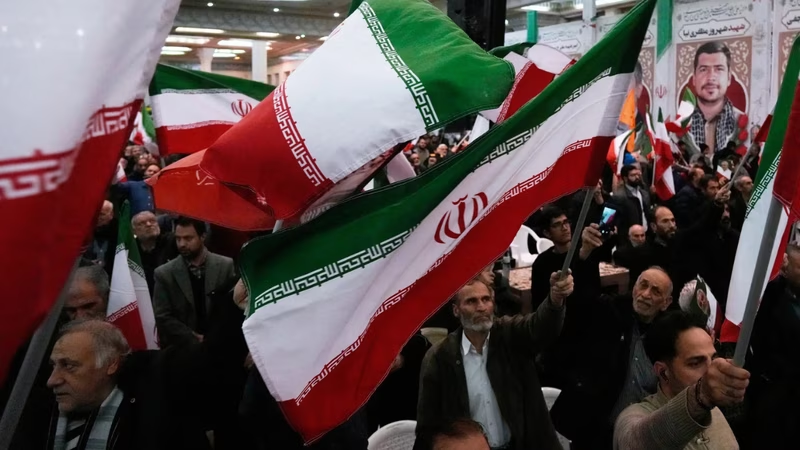
In one of the most extreme acts of digital suppression in recent history, Iran has effectively flipped its internet kill switch. As nationwide anti-government protests intensify, internet connectivity across the country has collapsed to below 2% of normal levels—an intentional, government-engineered blackout designed to silence dissent and control the narrative .
This isn’t just a temporary glitch or a side effect of unrest. It’s a calculated strategy by Iranian authorities to sever communication lines, prevent real-time documentation of alleged human rights abuses, and disrupt the organizational backbone of the protest movement. For millions of Iranians, this means no social media, no messaging apps, no news updates—and in many cases, no access to essential services that rely on the internet.
Table of Contents
- What Is an Internet Kill Switch?
- Iran Blackout by the Numbers
- Why Iran Is Using the Internet Kill Switch Now
- Impact on Citizens and Protesters
- Global Reactions and Digital Rights Concerns
- Can Iranians Bypass the Blackout?
- The Future of Digital Freedom in Iran
- Conclusion
- Sources
What Is an Internet Kill Switch?
An internet kill switch refers to a government’s ability to deliberately shut down or severely restrict internet access across an entire country or region. Unlike localized outages caused by technical failures, this is a centralized, top-down act of digital censorship.
Countries like Iran, which maintain tight control over their national telecommunications infrastructure, can execute such shutdowns by ordering state-owned internet service providers (ISPs) to disconnect from international gateways or throttle specific protocols (like those used by WhatsApp, Instagram, or Telegram). In Iran’s case, the system is highly centralized—making a nationwide blackout not only possible but frighteningly efficient .
Iran Blackout by the Numbers
According to real-time monitoring by global watchdog groups like NetBlocks and Access Now, Iran’s internet traffic has dropped to historic lows:
- Connectivity level: Below 2% of baseline (as of January 10, 2026) .
- Mobile data: Almost entirely offline; 4G/5G networks severely degraded.
- Fixed-line broadband: Partially functional in limited areas, but heavily filtered.
- Social media & messaging apps: Completely inaccessible without advanced circumvention tools.
For context, during the 2019 fuel price protests, Iran also implemented a near-total blackout—but the current shutdown appears even more comprehensive and rapid in its execution .
Why Iran Is Using the Internet Kill Switch Now
The timing is no coincidence. The blackout coincides with a fresh wave of anti-government demonstrations sparked by economic hardship, political repression, and anger over the treatment of women and minorities. Without the internet, protesters lose their most powerful tools:
- Coordination: Organizing marches and sharing safe routes becomes nearly impossible.
- Documentation: Videos and photos of police brutality or mass arrests can’t be shared globally.
- Moral support: International solidarity campaigns lose momentum without real-time evidence.
By cutting the digital lifeline, the regime aims to create an information vacuum—one it can fill with its own state-approved narrative through controlled media outlets.
Impact on Citizens and Protesters
The consequences extend far beyond activism. Ordinary Iranians are suffering:
- Hospitals struggle to access patient records or communicate with specialists.
- Online banking and payment systems are down, crippling daily commerce.
- Students can’t attend virtual classes or submit assignments.
- Families are unable to check on loved ones in protest zones.
“This isn’t just about silencing dissent—it’s collective punishment,” said a Tehran-based digital rights advocate who requested anonymity for safety reasons . “When you turn off the internet in 2026, you’re turning off life itself.”
Global Reactions and Digital Rights Concerns
International condemnation has been swift. The United Nations Human Rights Office has called the blackout “a violation of fundamental freedoms” . Meanwhile, tech companies and NGOs are scrambling to support Iranians with emergency tools like satellite messengers and encrypted mesh networks.
Organizations like the Access Now and the NetBlocks project continue to provide real-time data on the outage, helping journalists and policymakers understand the scale of the suppression.
Can Iranians Bypass the Blackout?
Some tech-savvy users are turning to workarounds:
- VPNs and proxies: Most commercial VPNs are already blocked, but custom-configured ones sometimes work.
- Satellite phones: Extremely rare and expensive, but used by some journalists.
- Bluetooth mesh networks: Experimental local networks (like Bridgefy) allow short-range messaging without the internet.
However, these solutions are inaccessible to the vast majority. And using them carries serious legal risks—possession of unauthorized communication tools can lead to arrest under Iran’s cybercrime laws.
The Future of Digital Freedom in Iran
This latest internet kill switch event underscores a troubling trend: authoritarian regimes are increasingly treating the internet not as a public utility, but as a weapon of control. Iran has invested heavily in its “National Information Network”—a walled-off intranet that could allow the state to offer limited online services while keeping citizens isolated from the global web .
If this model succeeds, it could inspire similar tactics in other countries facing civil unrest, posing a grave threat to global digital freedom.
Conclusion
Iran’s activation of the internet kill switch is more than a technical maneuver—it’s a declaration of digital war against its own people. By plunging the nation into near-total darkness online, the regime hopes to extinguish the flames of protest before they spread. But history shows that information, like water, always finds a way through cracks. The world must stand with Iranians fighting not just for political change, but for the basic right to connect. Stay updated on global digital rights issues at [INTERNAL_LINK:digital_freedom] and [INTERNAL_LINK:middle_east_news].
Sources
- Times of India: Iran tense: Cyber expert warns of ‘internet kill switch’ as protests intensify — what it means
- NetBlocks: Iran Internet Shutdown Report – January 2026
- Access Now: Emergency Alert: Iran Enacts Near-Total Internet Shutdown
- UN Human Rights Office: Iran must end internet blackout, say UN experts
- Electronic Frontier Foundation (EFF): How Iran Controls the Internet—and What It Means for Global Censorship