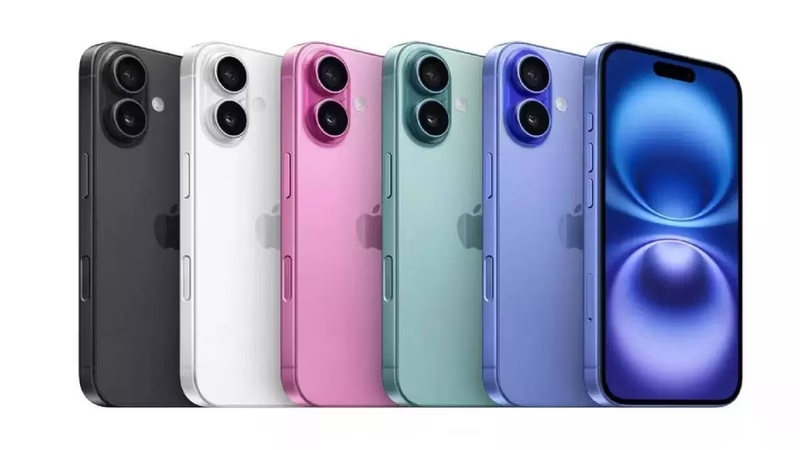
iPhone 16 Just Dethroned Everyone: Is It Really India’s #1 Smartphone in 2025?
Move over, budget kings. The smartphone market in India just got a royal shake-up. In a stunning turn of events for 2025, Apple’s iPhone 16 has officially claimed the crown as the nation’s most popular smartphone. That’s right—beating out a sea of affordable Android contenders, the premium-priced iPhone 16 is flying off the shelves from Mumbai to Guwahati .
This isn’t just a win for Apple; it’s a seismic shift in consumer behavior, signaling a new era of premium adoption in one of the world’s most competitive tech markets. But how did this happen, and what does it mean for the average Indian buyer?
Table of Contents
- Why the iPhone 16 is India’s Top Smartphone
- The Numbers Don’t Lie: iPhone 16 Sales Data
- Beyond Sales: How iPhone 16 Fueled a $4 Trillion Giant
- “Made in India”: The Secret Sauce Behind the Success
- iPhone 16 vs. iPhone 17: What’s Driving Indian Demand?
- Conclusion: The New King of Indian Smartphones
- Sources
Why the iPhone 16 is India’s Top Smartphone
For years, the Indian smartphone market was a fortress for brands like Xiaomi, Samsung, and Vivo, who dominated with feature-packed devices at aggressive price points. The idea of a premium device like the iPhone 16 taking the top spot seemed far-fetched. Yet, here we are.
The shift can be attributed to a few key factors:
- Strategic Pricing & Offers: Apple, along with its partners, rolled out aggressive carrier deals, exchange offers, and EMI options that made the iPhone 16 more accessible than ever before.
- Feature Focus: The iPhone 16 series introduced features that resonated deeply with the Indian consumer, such as improved battery life and a more durable build—addressing common pain points.
- Brand Prestige: In a market where brand value is a significant purchase driver, the Apple logo carries immense weight, and the iPhone 16 is its most powerful symbol yet.
This perfect storm of accessibility, utility, and status has turned the iPhone 16 from a luxury item into a mainstream choice.
The Numbers Don’t Lie: iPhone 16 Sales Data
According to the latest data from the highly-respected market research firm Counterpoint Research, the proof is in the pudding. Apple sold a staggering 6.5 million units of the iPhone 16 in India in just the first 11 months of 2025 .
To put this into perspective, this volume was enough to not only make it the best-selling phone in the country but also to create a significant gap between itself and its closest competitor, the Vivo Y29, which sold around 4.7 million units in the same period .
This achievement is even more remarkable when you consider that the iPhone 16 achieved this status while being priced well above the average selling price (ASP) of smartphones in India. It’s a clear indicator that the premium segment is not just growing—it’s leading.
Beyond Sales: How iPhone 16 Fueled a $4 Trillion Giant
The success of the iPhone 16 in India wasn’t happening in a vacuum. It was part of a larger, global narrative that saw Apple hit an unprecedented milestone. In October 2025, Apple became the world’s first company to close its trading day with a market capitalization above $4 trillion .
While the launch of the iPhone 17 certainly contributed to this historic surge , it was the sustained, record-breaking sales of the iPhone 16—especially in high-growth markets like India—that provided the crucial, stable foundation for this growth. Apple’s CFO, Kevan Parekh, noted that iPhone revenue grew by 6% year-over-year to a massive $49 billion, a feat driven by the strong performance of the iPhone 16 and 17 lineups .
This highlights a powerful truth: India is no longer just an emerging market for Apple; it’s a core engine of its global success.
“Made in India”: The Secret Sauce Behind the Success
Apple’s strategy in India has been two-pronged: sell more, and make more locally. The company has been aggressively shifting its manufacturing base to India for years, and 2025 was the year that strategy paid off in a big way.
By the end of fiscal year 2025, Apple had assembled a record $22 billion worth of iPhones in India, which accounted for roughly 20% of its global iPhone output . This “Made in India” initiative has had several direct benefits:
- Reduced Import Costs: Local manufacturing means lower import duties, allowing Apple to keep its prices more competitive.
- Faster Supply Chain: Having production closer to the market means faster delivery and better stock availability for hot-selling models like the iPhone 16.
- Government Favor: The move aligns perfectly with India’s “Make in India” campaign, fostering a more positive regulatory environment.
This localized strategy has been a key ingredient in making the iPhone 16 not just available, but a seamless and attractive purchase for millions of Indians .
iPhone 16 vs. iPhone 17: What’s Driving Indian Demand?
With the iPhone 17 now on the market, some might wonder about the iPhone 16’s continued dominance. The truth is that both models are thriving, but they serve different segments of the Indian market.
The iPhone 17, with its flagship features and higher price tag, is the aspirational dream for many. However, the iPhone 16 has hit a sweet spot. Post-launch, its price typically drops, making it the perfect blend of premium Apple experience and relative affordability. It’s become the go-to choice for a vast middle-ground of consumers who want an iPhone but don’t need to be on the absolute cutting edge .
This classic Apple product-stacking strategy is working brilliantly in India, with the iPhone 16 acting as the volume driver and the iPhone 17 as the prestige driver.
Conclusion: The New King of Indian Smartphones
The era of budget-only domination in India is over. The phenomenal success of the iPhone 16 in 2025 is a watershed moment, proving that Indian consumers are ready and willing to invest in premium technology when it offers a compelling blend of brand, value, and accessibility. This win is a testament to Apple’s strategic patience, its aggressive local manufacturing push, and its deep understanding of a rapidly evolving market. The iPhone 16 hasn’t just sold well; it’s reshaped the entire landscape of the Indian smartphone industry.
Sources
- Times of India: This is the most-popular Apple iPhone in India in 2025
- Counterpoint Research: iPhone 16 Best-Selling Smartphone Globally in Q3 2025 [[1], [6], [19]]
- Apple India Revenue Reports [[12], [15], [16], [18]]
- Market Cap Reports from CNBC, Bloomberg [[22], [24], [26]]