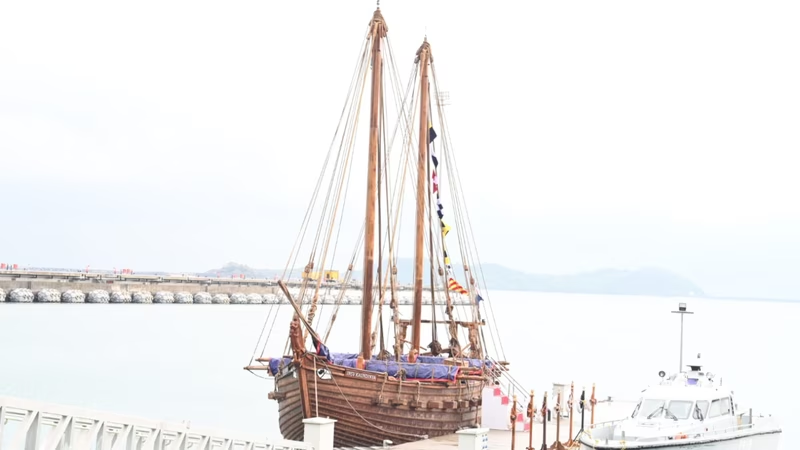
In an age of stealth destroyers, nuclear submarines, and satellite-guided navies, the Indian Navy is turning back the clock—on purpose. Introducing the INSV Kaundinya: a completely engineless, wooden sailing vessel built using ancient stitched-plank techniques, now embarking on its historic maiden voyage from Porbandar to Muscat. This isn’t a stunt. It’s a powerful statement about India’s maritime soul.
At a time when global powers race to deploy AI-driven warships, the launch of INSV Kaundinya is a poetic reminder that India’s naval identity didn’t begin with diesel engines—it began with wind, waves, and the wisdom of shipwrights who stitched planks together with coir rope centuries before Columbus set sail.
Table of Contents
- What Is INSV Kaundinya?
- The Maiden Voyage: Porbandar to Muscat
- Stitched-Plank Shipbuilding: India’s Forgotten Craft
- Why the Indian Navy Is Sailing Back in Time
- Historical Significance of the Porbandar–Muscat Route
- What Comes Next for INSV Kaundinya?
What Is INSV Kaundinya?
INSV Kaundinya is not your typical naval asset. It carries no engines, no radar, and no modern propulsion systems. Instead, it relies entirely on wind power through its twin masts and traditional sails. Built using the ancient stitched-plank (or sewn-plank) technique, its wooden hull is held together not by nails or bolts, but by coir ropes—a method perfected by Indian and Arab shipbuilders over 2,000 years ago.
Named after the legendary Buddhist scholar and traveler who strengthened cultural ties between India and Southeast Asia, the vessel is a symbol of peaceful maritime exchange, not military might. The Indian Navy commissioned the ship as part of its broader initiative to revive and showcase India’s indigenous maritime heritage.
The Maiden Voyage: Porbandar to Muscat
The INSV Kaundinya set sail from Porbandar, Gujarat—Mahatma Gandhi’s birthplace and a historic port on India’s western coast—heading toward Muscat, Oman. This route isn’t random. It retraces one of the oldest maritime corridors in human history, used by Indian merchants, sailors, and scholars for trade and diplomacy with the Arabian Peninsula.
The journey, expected to take several weeks depending on wind conditions, will be crewed by a small team of Indian Navy sailors trained in traditional seamanship. They’ll navigate using celestial methods and coastal landmarks, much like their ancestors did centuries ago.
Stitched-Plank Shipbuilding: India’s Forgotten Craft
The technology behind INSV Kaundinya is what truly sets it apart. Unlike modern ships that use iron fastenings, stitched-plank vessels are assembled by drilling holes along the edges of wooden planks and threading them together with ropes made from coconut fiber (coir). The gaps are then sealed with a natural resin mixture, often involving fish oil and lime.
This method was dominant along India’s western coast until the 18th century. Arab traders called these ships “sambuks” or “baghlahs,” while Indian sources refer to them as “kattumaram” or “parathun” vessels. Remarkably, these boats were known for their flexibility and durability in rough seas—qualities that rivaled, and sometimes surpassed, early nailed ships.
Today, only a handful of artisans in Kerala and Gujarat retain knowledge of this craft. The construction of INSV Kaundinya involved collaboration with these master shipwrights, making the project as much about cultural preservation as naval symbolism.
Why the Indian Navy Is Sailing Back in Time
You might wonder: why would a modern navy invest in an engineless vessel? The answer lies in soft power, education, and historical reconnection.
The Indian Navy’s primary goal with INSV Kaundinya is to:
- Promote maritime heritage awareness among citizens and sailors alike.
- Strengthen cultural diplomacy with nations along the Indian Ocean Rim, particularly Oman, the UAE, and Yemen.
- Revive traditional knowledge systems that are at risk of extinction.
- Complement its sail-training fleet, which already includes vessels like INSV Tarini and INSV Mhadei, used for oceanic voyages and youth leadership programs.
This initiative aligns with India’s SAGAR (Security and Growth for All in the Region) doctrine, which emphasizes peaceful maritime cooperation over dominance.
Historical Significance of the Porbandar–Muscat Route
The Porbandar–Muscat corridor was a lifeline of commerce and culture for centuries. Indian textiles, spices, and indigo traveled west, while Omani frankincense, dates, and pearls came east. More than goods, this route carried ideas—Buddhism, Hinduism, Islam, and later, scientific knowledge.
Muscat, in particular, was home to a thriving Indian merchant community by the 1700s. Many of them hailed from Gujarat and Sindh and played key roles in the Sultanate’s economy. Retracing this voyage isn’t just nostalgic—it’s a tangible reassertion of India’s deep-rooted presence in the western Indian Ocean.
What Comes Next for INSV Kaundinya?
After its maiden journey, INSV Kaundinya is expected to serve as an ambassador of India’s maritime legacy. Plans include:
- Participation in international tall ship festivals.
- Educational voyages for naval cadets and students.
- Collaborative expeditions with Oman and other Gulf nations to jointly study shared maritime history.
The vessel may even inspire a documentary or museum exhibit, further embedding this ancient craft into public consciousness.
Summary
INSV Kaundinya is far more than a sailboat—it’s a moving monument to India’s seafaring genius. By launching this engineless, stitched-plank vessel on a historic route, the Indian Navy isn’t rejecting modernity; it’s enriching it with memory, meaning, and craftsmanship. In a world obsessed with speed and firepower, this quiet voyage reminds us that sometimes, the most revolutionary act is to remember where you came from. For more on India’s naval heritage, explore our feature on [INTERNAL_LINK:indian-navy-historic-vessels].
Sources
Times of India: INSV Kaundinya: Navy’s engineless ship to embark on maiden voyage
Official Website of the Indian Navy
Encyclopædia Britannica: Sewn-Plank Boat Construction