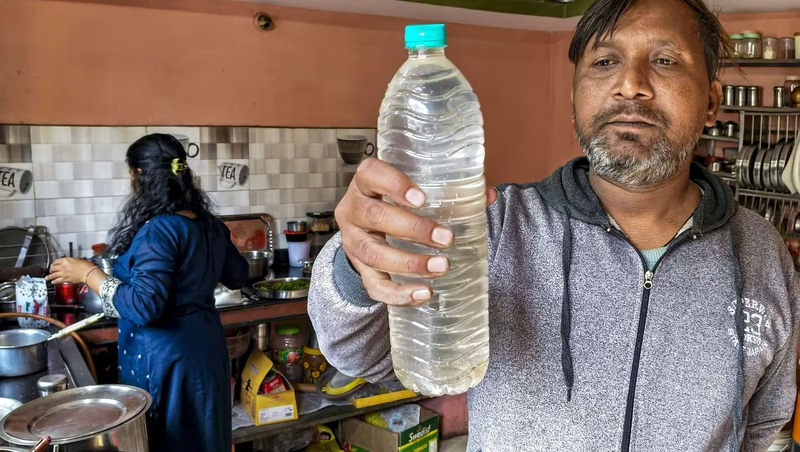
The title of India’s ‘Cleanest City’ now feels like a cruel irony for the residents of Bhagirathpura in Indore. What began as complaints about foul-smelling, discolored tap water in mid-December 2025 has spiraled into a full-blown humanitarian crisis—the Indore water tragedy. With at least 10 confirmed deaths and over 1,400 people falling ill from a severe diarrhoea outbreak, a wave of grief and anger has swept through the community .
But the most chilling revelation? This disaster was not just a random act of misfortune. It was a tragedy foretold. A local BJP corporator, Kamal Waghela of Ward 11, had been pounding the table for years, warning the Indore Municipal Corporation (IMC) about the dangerously outdated and corroded pipelines supplying water to his ward. His pleas for a simple, life-saving pipeline replacement were met with bureaucratic inertia .
Table of Contents
- The Human Cost of the Indore Water Tragedy
- The Whistleblower Who Was Ignored
- How the IMC Failed Its Citizens
- Political Fallout and Accountability
- Conclusion: A Stark Warning for Every City
The Human Cost of the Indore Water Tragedy
The statistics are stark, but behind each number is a shattered family. The official death toll stands at 10, but local residents claim the actual number is higher, a grim reality often seen in the immediate aftermath of such crises [[1], [3]]. Over 1,400 people have been affected, with many requiring hospitalization. In one heart-wrenching case, an infant born after a 10-year wait for a child died from the contaminated water, and the devastated family refused government compensation in their profound grief .
Residents first noticed something was wrong in mid-December 2025 when their tap water began to look, smell, and taste foul. Initial complaints were dismissed or downplayed, but as cases of severe diarrhoea and vomiting began to surge, the scale of the emergency became impossible to ignore .
The Whistleblower Who Was Ignored: Kamal Waghela’s Red Flag
The central figure in this unfolding drama of negligence is BJP Corporator Kamal Waghela. For years, Waghela had been raising the alarm about the state of the water infrastructure in Bhagirathpura. He estimated that a staggering 40% of the pipelines in his ward were old and in dire need of replacement, a project that would cost around Rs 2.3 crore .
His warnings were not vague concerns but specific, actionable requests. He had formally demanded that the civic body lay a new pipeline for Narmada water to his constituency, a crucial upgrade to prevent exactly the kind of contamination that has now occurred . “Officers do not carry out our work quickly,” Waghela lamented, highlighting the frustrating delays that plagued his efforts .
His repeated alerts and formal requests appear to have vanished into a bureaucratic black hole, a failure of the system that has now proven fatal. He has since called the incident a “grave criminal” act of negligence .
How the Indore Municipal Corporation (IMC) Failed Its Citizens
The root cause of the contamination was a devastating leak in the main water supply pipeline in Bhagirathpura. The leak, occurring at a point where a sewerage line was also present, allowed deadly contaminants to seep directly into the city’s drinking water supply .
This incident exposes a catastrophic failure of the IMC on multiple levels:
- Preventive Maintenance Failure: The IMC failed to proactively inspect and replace aging infrastructure, despite explicit warnings.
- Delayed Response: Even after residents began complaining about the water quality in December, the response was slow and inadequate.
- Lack of Transparency: There are questions about how long the water was known to be unsafe before the public was properly informed.
In the wake of the public outcry, the Madhya Pradesh government has taken some action, removing the Indore Municipal Corporation chairman and suspending its additional commissioner and the in-charge executive engineer . However, for the families who have lost loved ones, these are merely symbolic gestures that come far too late.
Political Fallout and Accountability in the Indore Water Tragedy
The political ramifications are significant. Indore, a BJP stronghold and a city that has consistently won the ‘Swachh Survekshan’ (Cleanest City) award, is now at the center of a massive public health scandal . The fact that the warning came from a BJP corporator, pointing fingers at a BJP-led civic body, adds a complex layer of internal political tension.
The opposition has seized on the issue, demanding a thorough investigation and the resignation of higher-level officials. The public’s trust in the city’s celebrated sanitation and civic management system has been severely damaged, a blow to its carefully cultivated national image .
Conclusion: A Stark Warning for Every City
The Indore water tragedy is more than just a local crisis; it is a national wake-up call. It demonstrates how civic pride and awards are meaningless if the fundamental infrastructure that sustains life is allowed to decay through willful neglect and bureaucratic apathy. Kamal Waghela’s ignored warnings are a haunting reminder that the systems we rely on for clean water and public safety are only as strong as the vigilance and accountability of those who manage them. For other cities across India, this is a stark lesson: listen to the voices on the ground before it’s too late.
Sources
- Times of India: BJP corporator had raised red flag 2 years ago
- NDTV: Indore contaminated water deaths: Municipal commissioner removed
- Hindustan Times: Indore water contamination row: 10 dead, over 1000 affected
- The Quint: Infant dies from water contamination in Indore
- The Guardian: Ten dead in India city of Indore after water contamination crisis