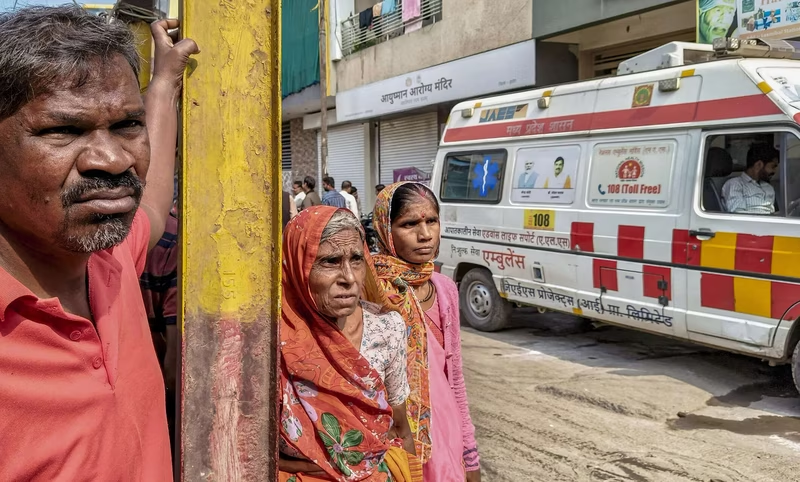
Indore Water Contamination: A Public Health Nightmare Unfolds
What began as isolated cases of stomach illness in Indore has rapidly escalated into one of Madhya Pradesh’s worst public health crises in recent memory. As of January 3, 2026, the Indore water contamination tragedy has claimed 10 lives, with more than 200 residents still battling severe symptoms in hospitals—and 32 fighting for their lives in intensive care units .
The suspected source? The city’s municipal drinking water supply, contaminated with dangerous levels of bacteria and possibly industrial pollutants. In an emergency move, the state government has removed Municipal Commissioner Dilip Kumar Yadav and suspended Additional Commissioner Rohit Sisoniya, signaling that accountability has finally arrived—but for many families, it’s too late .
Table of Contents
- How the Indore Water Contamination Outbreak Unfolded
- Indore Water Contamination: The Human Toll
- Government Action: Who Was Held Responsible?
- What Caused the Contamination? Expert Analysis
- Public Outrage and Demands for Systemic Reform
- How to Stay Safe During a Water Crisis
- Conclusion: A Wake-Up Call for Indian Cities
- Sources
How the Indore Water Contamination Outbreak Unfolded
Reports first surfaced in late December 2025, when residents in Indore’s Vijay Nagar, Palasia, and Rau areas began complaining of severe vomiting, diarrhea, and high fever. Local clinics were quickly overwhelmed. By December 28, district hospitals were admitting dozens of patients with suspected gastroenteritis.
Initial lab tests confirmed the presence of E. coli and coliform bacteria in tap water samples—clear indicators of fecal contamination. Some samples also showed traces of heavy metals, raising concerns about illegal industrial discharge into water sources .
Despite early warnings from local doctors, civic authorities downplayed the threat, insisting the water was “within permissible limits.” That delay may have cost lives.
Indore Water Contamination: The Human Toll
The numbers tell a harrowing story:
- 10 confirmed deaths, mostly among children and elderly patients with pre-existing conditions.
- Over 200 patients still hospitalized across Bombay Hospital, CHL Hospital, and district medical colleges.
- 32 in ICU on ventilator support due to acute kidney injury and sepsis.
- More than 1,200 reported cases in the past week alone.
“My 8-year-old daughter hasn’t opened her eyes in two days,” said Ramesh Patidar, a rickshaw driver from Palasia. “They told us the water is safe. Now I don’t know who to trust.”
Government Action: Who Was Held Responsible?
Under mounting public pressure, the Madhya Pradesh government acted decisively on January 2, 2026:
- Dilip Kumar Yadav, Municipal Commissioner of Indore, was removed from his post immediately.
- Rohit Sisoniya, Additional Commissioner (Water Supply), was placed under suspension pending inquiry.
- The In-Charge Superintendent Engineer of the Water Works Department was also removed.
- New officials were appointed on an interim basis to restore public trust.
Chief Minister Mohan Yadav called the incident “unacceptable” and ordered a high-level probe by the state health department in coordination with the National Centre for Disease Control (NCDC) .
What Caused the Contamination? Expert Analysis
While the official investigation is ongoing, preliminary findings point to multiple systemic failures:
- Broken sewer lines
- Inadequate chlorination
- Illegal industrial effluents
“This isn’t just a technical failure—it’s a governance collapse,” said Dr. Anjali Mehta, a public health expert at AIIMS Delhi, in a statement to the press . “Indore has been lauded as ‘India’s cleanest city’ for years, but cleanliness awards mean nothing if the water coming from your tap can kill you.”
Public Outrage and Demands for Systemic Reform
Protests have erupted across Indore, with citizens demanding more than just personnel changes. Activists are calling for:
- Mandatory real-time water quality monitoring with public dashboards.
- Strict penalties for industries violating discharge norms.
- Independent citizen oversight committees for municipal water boards.
Many are also questioning the Swachh Bharat rankings that crowned Indore “cleanest city” for eight consecutive years—despite repeated red flags about water safety .
How to Stay Safe During a Water Crisis
If you’re in Indore or any area facing a suspected water contamination event, follow these steps from the World Health Organization (WHO) :
- Boil water for at least one minute before drinking or cooking.
- Use certified water purifiers with RO+UV+UF filtration.
- Avoid ice cubes unless made from purified water.
- Wash fruits and vegetables with boiled or bottled water.
- Report symptoms like persistent diarrhea to local health authorities immediately.
For more on emergency preparedness, see our guide on [INTERNAL_LINK:water-safety-during-public-health-emergencies].
Conclusion: A Wake-Up Call for Indian Cities
The Indore water contamination crisis is more than a local tragedy—it’s a national warning. Urban infrastructure across India is aging, underfunded, and often managed without transparency. Until water safety is treated as a non-negotiable right—not a political talking point—more cities will face similar disasters. The removal of officials is a start, but true justice lies in systemic reform that ensures no family ever has to fear their own tap again.
Sources
- Times of India: Indore water contamination – 200 still hospitalised, 32 in ICUs
- NDTV: Indore Water Poisoning Crisis: 10 Dead, Over 200 Hospitalised
- Government of Madhya Pradesh: Press Release on Indore Water Crisis Probe
- World Health Organization (WHO): Drinking Water Safety Guidelines
- Swachh Bharat Mission: Official Rankings and Data