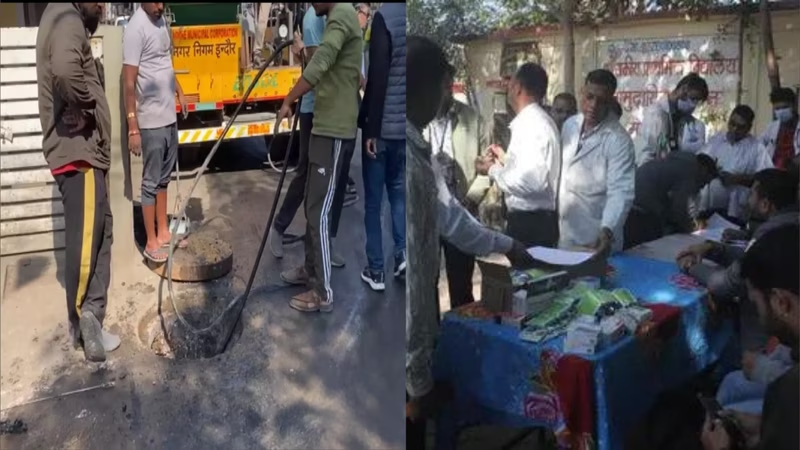
A public health nightmare has unfolded in Indore, Madhya Pradesh, where **Indore water contamination** has led to three confirmed deaths and a flood of patients into local hospitals. Over 15,000 residents in the Bhagirathpura locality are now under urgent health advisories after consuming water tainted with raw sewage. What started as isolated cases of vomiting and diarrhoea quickly escalated into a city-wide emergency—and it all traces back to a shocking lapse in basic sanitation infrastructure.
Table of Contents
- What Happened in Bhagirathpura?
- Indore Water Contamination: The Root Cause
- Symptoms and Health Risks of Contaminated Water
- Emergency Response by Authorities
- What Residents Should Do Now
- Broader Implications for Indian Urban Water Safety
- Conclusion: A Wake-Up Call for Urban Planning
- Sources
What Happened in Bhagirathpura?
On December 29, 2025, hospitals in Indore began seeing an alarming influx of patients—mostly children and elderly—complaining of severe gastrointestinal distress. Within 48 hours, three fatalities were confirmed, all linked to the consumption of municipal water in the Bhagirathpura area .
Local clinics were quickly overwhelmed. The Indore Municipal Corporation (IMC) issued an immediate public warning: residents were urged to stop using tap water for drinking or cooking. Health officials confirmed that the symptoms—acute diarrhoea, vomiting, fever, and dehydration—were consistent with bacterial or viral waterborne diseases like cholera, typhoid, or E. coli infection.
Indore Water Contamination: The Root Cause
Investigators from the Public Health Engineering Department (PHED) traced the source to a newly constructed household toilet. Shockingly, the toilet’s waste outlet had been illegally connected to a sinkhole positioned directly above a critical joint in the city’s underground drinking water pipeline .
Over time, raw sewage seeped into the pressurised water line, contaminating the supply for an entire neighbourhood. The IMC admitted the oversight was a result of poor on-site verification during recent sanitation upgrades under the Swachh Bharat Mission. “This was a catastrophic engineering and regulatory failure,” said a senior PHED official, speaking on condition of anonymity.
This incident underscores a recurring problem in rapidly urbanising Indian cities: the dangerous intersection of haphazard construction and aging or inadequately monitored water infrastructure.
Symptoms and Health Risks of Contaminated Water
Consuming water contaminated with faecal matter can introduce a host of dangerous pathogens into the human body. According to the World Health Organization (WHO), unsafe water is a leading cause of preventable illness and death globally.
Common symptoms to watch for include:
- Watery or bloody diarrhoea
- Severe stomach cramps and nausea
- High fever and chills
- Dehydration (dry mouth, dizziness, reduced urination)
- Persistent vomiting
Children, the elderly, and those with compromised immune systems are at the highest risk of complications. Immediate medical attention is crucial if symptoms persist beyond 24 hours.
Emergency Response by Authorities
In the wake of the crisis, the Indore Municipal Corporation has launched a multi-pronged emergency response:
- Pipeline Flushing: Water mains in Bhagirathpura are being rigorously flushed and disinfected with chlorine.
- Water Tankers: Over 100 tankers are now supplying clean, potable water to affected households.
- Medical Camps: Temporary health camps have been set up to provide free ORS, antibiotics, and IV fluids to patients.
- Criminal Inquiry: A high-level committee has been formed to investigate potential negligence, with possible charges against the toilet contractor and municipal inspectors.
[INTERNAL_LINK:india-public-health-emergencies] The city’s disaster management team has also activated its public health emergency protocol, a rare step for a water-related incident.
What Residents Should Do Now
If you live in or near Bhagirathpura, or have concerns about your water supply, take these immediate steps:
- Do not consume tap water until an official all-clear is issued.
- Boil water for at least 1 minute if no alternative is available—but note that boiling won’t remove chemical contaminants.
- Use bottled or tanker-supplied water for drinking, cooking, and brushing teeth.
- Seek medical help immediately if you or a family member show symptoms of gastrointestinal illness.
- Report any unusual taste, odour, or colour in your water to the IMC helpline.
Broader Implications for Indian Urban Water Safety
The **Indore water contamination** crisis is not an isolated event. Similar incidents have been reported in other Indian cities, including Chennai, Bengaluru, and Patna, often linked to cross-connections between sewage and water lines during unregulated construction.
Despite Indore’s reputation as “India’s Cleanest City” for seven consecutive years under Swachh Survekshan, this tragedy reveals a critical gap: cleanliness awards don’t guarantee water safety. Experts argue for mandatory third-party audits of plumbing and sanitation infrastructure before new connections are approved.
Investing in smart water monitoring systems—like real-time contamination sensors—could prevent future disasters. As urban populations grow, so must the sophistication of our water governance.
Conclusion: A Wake-Up Call for Urban Planning
The deaths in Bhagirathpura are a heartbreaking reminder that public health is only as strong as its weakest infrastructure link. While emergency measures are underway, the real test lies in systemic reform. The **Indore water contamination** incident must serve as a national wake-up call—to enforce stricter building codes, empower local health inspectors, and prioritize water safety over cosmetic urban accolades.
For now, the residents of Indore are in our thoughts. Their ordeal is a stark lesson: clean water isn’t a luxury—it’s a fundamental human right that demands constant vigilance.