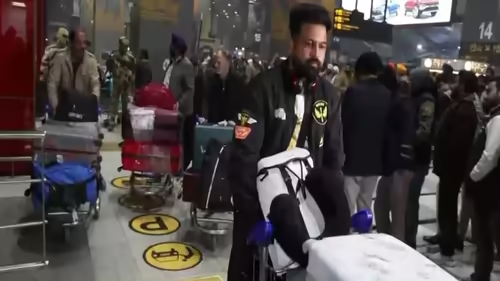
The relief on their faces was palpable, mixed with a lingering shadow of fear. At Delhi’s Indira Gandhi International Airport, a group of weary Indian travelers stepped off their flight from Tehran, not as tourists returning from a holiday, but as citizens escaping a nation in turmoil. Their firsthand accounts paint a chilling picture of life in Iran during its latest bout of deadly civil unrest. “It was a bad situation,” one returnee told reporters, a simple phrase that carries the immense weight of having lived through unpredictable violence and uncertainty .
Table of Contents
- The Exodus: Why Indians Are Leaving Iran
- On the Ground in Tehran: A City on Edge
- The MEA Response: Monitoring and Advisories
- Reuniting with Family: The Emotional Homecoming in Delhi
- Historical Context: India-Iran Relations and Crisis Precedents
- What This Means for Future Travel and Work
- Conclusion: A Cautious Watch on a Volatile Region
- Sources
The Exodus: Why Indians Are Leaving Iran
The primary driver behind this wave of departures is a significant escalation in civil unrest across major Iranian cities. While the specific trigger for the current protests remains a subject of international reporting, the resulting environment has become increasingly dangerous for all residents, including foreign nationals. Reports of violent clashes between protesters and security forces, widespread internet blackouts, and a general breakdown in public order have created a climate of fear.
For the Indian community in Iran—many of whom are students, professionals, or business owners—the risk has simply become too great. The decision to leave is not taken lightly, often involving the abandonment of jobs, studies, and personal belongings. But as one returnee stated, the priority shifted instantly from livelihood to survival. This self-initiated exodus is a direct response to what they perceive as an untenable security situation, leading to the growing number of Indians return from Iran.
On the Ground in Tehran: A City on Edge
Those who have just returned describe a capital city transformed. Tehran, once bustling with activity, has become a place of tension and unpredictability. Key aspects of their experience include:
- Unpredictable Violence: Protests can erupt without warning, turning peaceful streets into zones of conflict within minutes. The sound of gunfire and tear gas has become a grim reality.
- Communication Blackouts: Authorities have frequently shut down internet and mobile networks, making it nearly impossible for people to contact loved ones or access news, amplifying feelings of isolation and panic.
- Restricted Movement: Curfews and roadblocks have made daily commutes and even basic errands hazardous, trapping many in their homes for days on end.
This environment of constant anxiety and danger is what compelled so many to seek the first available flight out, regardless of the cost or inconvenience.
The MEA Response: Monitoring and Advisories
The Ministry of External Affairs (MEA) has been closely monitoring the situation. While it has not yet launched a formal, large-scale evacuation operation like the historic Vande Bharat missions, it has issued strong advisories urging Indian citizens in Iran to exercise extreme caution .
The MEA’s stance appears to be one of active monitoring and preparedness. They are in constant contact with the Indian embassy in Tehran, which is providing consular assistance to those who choose to stay or are in the process of leaving. The government is likely assessing whether the situation warrants a full-scale evacuation or if the current trend of individual departures is sufficient to manage the risk. For now, their official guidance is for citizens to register themselves with the embassy and avoid all non-essential travel within the country.
Reuniting with Family: The Emotional Homecoming in Delhi
The arrival terminal in Delhi has become a stage for deeply emotional reunions. Families who had been living in a state of constant worry for weeks were finally able to embrace their loved ones. The anxiety etched on the faces of parents, spouses, and children waiting at the airport spoke volumes about the stress of having family members in a conflict zone.
For the returnees, the journey home is just the beginning of their recovery. Many are dealing with the psychological aftermath of their ordeal—sleepless nights, heightened anxiety, and the trauma of witnessing violence. Community support groups and family networks will be crucial in helping them readjust to normal life in India. Their stories serve as a powerful, human reminder of the real-world impact of geopolitical instability.
Historical Context: India-Iran Relations and Crisis Precedents
India and Iran share deep historical, cultural, and economic ties. However, the region has seen its share of volatility. India has a track record of successfully evacuating its citizens from crisis zones in West Asia, most notably during the Iraq War and the Yemen conflict. The current situation in Iran, while serious, has not yet reached the scale that triggered those massive operations. Nevertheless, the precedent is there, and the Indian government’s machinery is undoubtedly on high alert, ready to act if the security situation deteriorates further .
What This Means for Future Travel and Work
This event will have a lasting impact on how Indian citizens and businesses view Iran. Students may reconsider their plans to study there, and companies may reassess their investments and the deployment of personnel. The perception of Iran as a stable destination for education or business has been severely damaged, at least in the short to medium term. Anyone considering travel to the region in the near future would be wise to heed the MEA’s advice and proceed with extreme caution, if at all.
Conclusion: A Cautious Watch on a Volatile Region
The sight of Indians returning from Iran, their faces a mix of relief and residual fear, is a stark symbol of our interconnected yet fragile world. Their escape from a “bad situation” underscores the unpredictable nature of global politics and its direct impact on ordinary lives. As the Indian government continues to monitor the crisis, the focus remains on the safety of every citizen still in the region. For now, the message is clear: the situation in Iran demands the highest level of vigilance from anyone with ties to the country.
Sources
- Times of India: ‘Bad situation’: Several Indians return from Iran amid deadly protests, reunite with families in Delhi
- Ministry of External Affairs, Government of India: Official advisories and updates on Iran
- United Nations Office for the Coordination of Humanitarian Affairs (OCHA): Reports on humanitarian situations in Iran