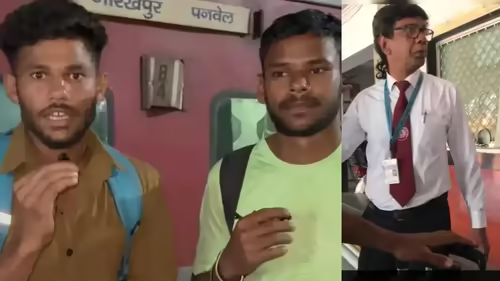
Imagine training for years to represent your country, only to be stopped in your tracks—not by an injury or a rival—but by a railway clerk who thinks your competition gear is contraband metal. That’s exactly what happened to India’s top pole vaulters, including national record holder Dev Meena, in a frustrating incident that highlights a glaring disconnect between sports infrastructure and bureaucratic protocol.
Table of Contents
- The Incident at Panvel Station
- Why Pole Vault Poles Are Not ‘Steel Pipes’
- Railway Rules vs. Athlete Reality
- Impact on Indian Athletes and Sports Development
- What Needs to Change
- Conclusion
- Sources
The Incident at Panvel Station
On their way to a crucial training camp in Bhopal, Dev Meena and his teammates arrived at Panvel railway station with their standard athletic gear—including their carbon fiber pole vault poles. What should have been a routine journey turned into a bureaucratic nightmare when railway officials flagged the poles as “unauthorized steel pipes” and demanded a penalty fee .
Despite showing their athlete IDs, explaining the nature of their sport, and even offering documentation, the team was held for hours. With no clear escalation path or understanding from station staff, they were forced to pay an unexpected fine just to board their train. The delay not only cost them valuable training time but also forced them to incur additional travel expenses to make up for the missed connection .
Why Pole Vault Poles Are Not ‘Steel Pipes’
To anyone familiar with track and field, this confusion is baffling. Modern pole vault poles are not made of steel—they’re crafted from lightweight, flexible composites like fiberglass or carbon fiber. These materials allow athletes to convert horizontal speed into vertical lift, a physics-defying feat that requires precision engineering, not plumbing supplies.
The poles are hollow, tapered, and often marked with brand names and performance ratings. They bear no resemblance to industrial steel pipes used in construction. Yet, without proper awareness or training, a railway official might see a long cylindrical object and default to the most common category in their rulebook: “metal cargo.”
Pole vaulters and the Gap in Railway Policy
Indian Railways, while one of the world’s largest networks, has outdated guidelines when it comes to transporting specialized sports equipment. According to current regulations, any “long item” or “metallic object” may be subject to scrutiny and potential fines if not declared as luggage or booked under special provisions .
But here’s the problem: there’s no clear, nationwide protocol for athletes traveling with non-standard gear like javelins, discuses, or pole vault poles. Unlike airlines that have specific policies for sports equipment (often with pre-approval options), Indian Railways leaves interpretation to individual station masters—many of whom have never seen a pole vault pole in their lives.
This lack of standardization creates a hostile environment for grassroots and elite athletes alike, especially those from smaller towns who rely on trains as their primary mode of long-distance travel.
Impact on Indian Athletes and Sports Development
For a nation striving to improve its Olympic medal tally, incidents like this are more than just inconvenient—they’re demoralizing. Consider the ripple effects:
- Financial Burden: Many athletes operate on tight budgets. Unexpected fines and last-minute travel changes can derail their entire month’s planning.
- Training Disruption: Missing a day at a national camp can mean falling behind in technique or fitness, especially during peak season.
- Psychological Toll: Being treated like a rule-breaker for carrying essential sports gear sends a message: your sport isn’t valued or understood by the system.
- International Embarrassment: As India hosts more global events, such stories reflect poorly on the country’s support for its own athletes.
Dev Meena, who holds the national record in men’s pole vault, is not a rookie—he’s a seasoned competitor. If even he faces this hurdle, what hope do young, aspiring vaulters have?
What Needs to Change
Fixing this isn’t about bending rules—it’s about creating clarity. Here’s what stakeholders can do:
- Issue Official Guidelines: The Ministry of Railways, in consultation with the Sports Authority of India (SAI), should publish a clear policy on transporting sports equipment, complete with visual guides.
- Train Station Staff: Brief workshops for ticketing and security personnel at major stations could prevent future misunderstandings.
- Create an Athlete Travel Pass: Similar to defense or press passes, a verified “National Athlete ID” could streamline travel and grant automatic recognition of sports gear.
- Digital Pre-Approval System: Allow athletes to upload equipment details before travel via IRCTC or a SAI portal for quick verification.
Countries like Japan and Germany already have such systems in place for their Olympic athletes. India, with its growing sporting ambitions, must follow suit.
Conclusion
The fining of Indian pole vaulters for carrying their essential equipment isn’t just a logistical hiccup—it’s a symptom of a larger issue: the systemic undervaluation of non-cricket sports in India’s public infrastructure. While the railway staff may have acted within their narrow interpretation of the rules, the real failure lies in the absence of athlete-friendly policies. Supporting champions means more than just funding medals; it means ensuring they can even get to the starting line without being mistaken for smugglers. It’s time for Indian Railways to catch up with the athletes it’s supposed to serve.
Sources
- Times of India: India’s leading vaulters stranded: Fined by the railways for carrying ‘poles’
- Sports Authority of India (SAI) Official Website: https://sportsauthorityofindia.nic.in/
- Indian Railways Passenger Guidelines: https://indianrailways.gov.in/
- [INTERNAL_LINK:dev-meena-national-record-pole-vault]
- [INTERNAL_LINK:challenges-faced-by-indian-athletes-in-non-cricket-sports]