Tomorrow’s Deadline: The Make-or-Break Moment for the India-US Trade Deal
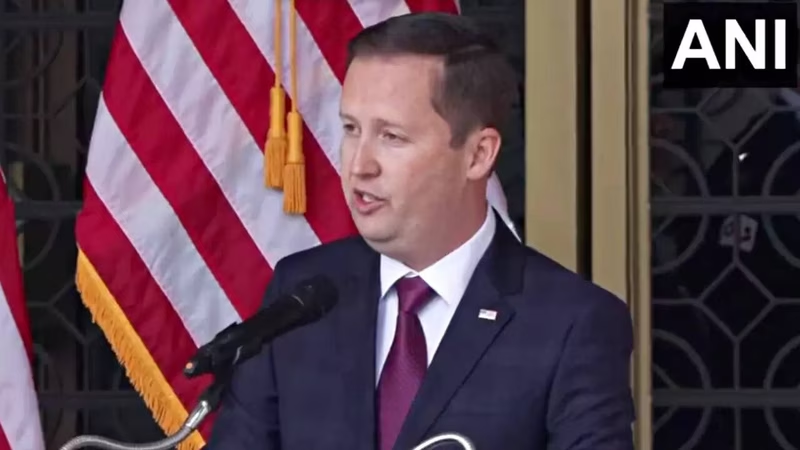
In a development that could reshape economic ties between the world’s oldest and largest democracies, US Ambassador to India Sergio Gor has announced that a crucial decision on the India-US trade deal is expected as early as tomorrow. Speaking to reporters in New Delhi, Gor emphasized that both nations are “actively engaged” in high-stakes discussions, with the next formal round of talks already scheduled—and the outcome potentially game-changing for businesses, exporters, and consumers on both sides of the globe . At a time when global supply chains are being rewired and protectionist sentiments are rising, Gor didn’t mince words: “No country is more essential to America’s future than India.”
Table of Contents
- What We Know About Tomorrow’s Decision
- Why the India-US Trade Deal Has Been Stalled
- Key Issues on the Negotiating Table
- The Trump Tariff Shadow and Biden-Era Realities
- What a Breakthrough Would Mean for Indian Businesses
What We Know About Tomorrow’s Decision
According to Ambassador Gor, negotiators from the Office of the US Trade Representative (USTR) and India’s Ministry of Commerce have been in near-daily contact over the past week. The “next call”—a high-level virtual or in-person meeting—is set for Tuesday, January 13, 2026, and is expected to yield either a framework agreement or a clear timeline for finalization .
While full details remain confidential, sources indicate the focus is on a limited-scope “early harvest” deal rather than a comprehensive pact. This would address low-hanging fruit like medical devices, dairy access, and digital trade norms—building trust for tougher conversations later on agriculture subsidies and data localization.
Why the India-US Trade Deal Has Been Stalled
Talks for a formal bilateral trade agreement began in earnest in 2019 but hit repeated roadblocks. Core sticking points include:
- Tariffs: The US imposed Section 232 tariffs on steel and aluminum imports under Trump, which India retaliated against with duties on almonds, apples, and motorcycles.
- Market Access: American dairy farmers demand greater access to India’s protected market, while Indian IT firms seek easier visa pathways for skilled workers.
- Digital Services Tax: The US opposes India’s equalization levy on foreign tech giants, viewing it as discriminatory.
These issues created a cycle of tit-for-tat measures that eroded momentum—until recently.
Key Issues on the Negotiating Table
Current negotiations are reportedly centered on mutual concessions:
- India may agree to: Reduce import duties on certain US agricultural products and streamline approval processes for medical devices.
- The US may agree to: Restore India’s Generalized System of Preferences (GSP) benefits and ease H-1B visa scrutiny for Indian tech professionals.
Critically, both sides appear willing to decouple sensitive topics like data sovereignty from immediate deliverables—opting instead for a joint working group to address them long-term.
The Trump Tariff Shadow and Biden-Era Realities
Although President Biden has softened Trump’s confrontational tone, many tariffs remain in place. However, geopolitical imperatives—especially countering China’s influence—have elevated India’s strategic value. As the US seeks to diversify manufacturing away from China (“de-risking”), India’s role as a trusted alternative has never been clearer .
Ambassador Gor’s remark that “no country is more essential” isn’t just diplomacy—it reflects Washington’s urgent need for a reliable economic partner in Asia. For India, a deal would signal global credibility and attract further foreign investment under the ‘Make in India’ initiative.
What a Breakthrough Would Mean for Indian Businesses
A successful India-US trade deal could unlock significant opportunities:
- Export Growth: Easier access for textiles, pharmaceuticals, and engineering goods into the $27 trillion US economy.
- Investment Inflows: Greater confidence among US firms to set up R&D centers and manufacturing units in India.
- Tech Collaboration: Streamlined frameworks for AI, semiconductors, and clean energy partnerships under the iCET initiative.
Even a partial agreement would send a powerful signal: that India is open for business with its most important democratic ally.
Conclusion
With the India-US trade deal decision looming tomorrow, all eyes are on Washington and New Delhi. While challenges remain, the political will appears stronger than ever. If negotiators can bridge the final gaps, this deal won’t just balance trade ledgers—it will cement a 21st-century partnership built on shared values, mutual respect, and strategic necessity. For businesses waiting on the sidelines, tomorrow could be the day the door finally swings open.
Sources
- Times of India: Trump tariffs: Sergio Gor says India-US deal decision due tomorrow
- Office of the United States Trade Representative (USTR): India Trade Relations Overview
- [INTERNAL_LINK:india-us-trade-barriers-explained]
- [INTERNAL_LINK:impact-of-us-tariffs-on-indian-exports]