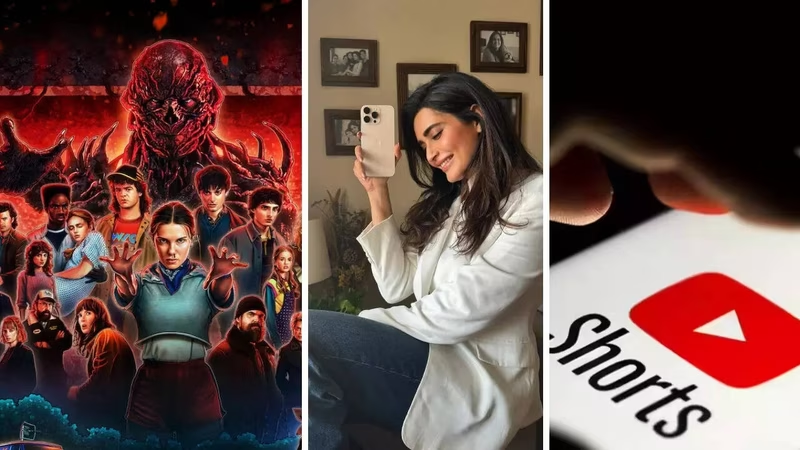
Picture this: It’s 10 p.m. You tell yourself you’ll watch just one episode of that new Netflix series. Two hours later, you’re doomscrolling through Instagram Reels, eyelids heavy but fingers still swiping. Sound familiar? You’re not alone. According to the Times of India Habit Index 2025, this split-screen tug-of-war between long-form OTT content and short-form video reels now defines how India spends its leisure time . But beneath the surface of trending shows and viral clips lies a growing concern: digital fatigue. And many are starting to fight back.
Table of Contents
- The OTT Reign: Netflix Dominates India’s Screen Time
- The Reel Revolution: Why Short-Form Video Is Addictive
- India Screen Time 2025: The Data Behind the Duality
- The Hidden Cost of Endless Scrolling: Digital Fatigue
- How Indians Are Pushing Back Against Screen Overload
- Conclusion: Balance Is the New Binge
- Sources
The OTT Reign: Netflix Dominates India’s Screen Time
When it comes to immersive storytelling, Netflix continues to lead the pack in India. The platform’s mix of global hits, local originals like Sacred Games and Delhi Crime, and exclusive international content has cemented its position as the go-to for “quality” entertainment . Viewers aren’t just watching—they’re investing. Hours disappear into binge-worthy series, often replacing traditional TV and even movie theater outings.
What’s driving this loyalty? Three key factors:
- Narrative depth: Unlike fleeting reels, OTT shows offer emotional arcs and character development that keep viewers hooked for hours.
- Cultural resonance: Indian-language originals on Netflix now rival Bollywood in popularity, especially among urban millennials and Gen Z.
- Ad-free experience: In a world of interruptions, uninterrupted storytelling is a luxury many are willing to pay for.
The Reel Revolution: Why Short-Form Video Is Addictive
But just as Netflix pulls us into deep focus, platforms like Instagram, YouTube Shorts, and Moj yank us back into micro-moments. Short-form videos—typically under 60 seconds—now account for nearly 40% of daily screen time among users aged 18–35 .
Why? Because they exploit the brain’s reward system. Every swipe promises a new dopamine hit: a laugh, a dance, a life hack, a shocking fact. It’s designed for frictionless consumption. And unlike OTT, which requires intent (“I’m going to watch something”), reels thrive on passive scrolling—making them far harder to quit.
India Screen Time 2025: The Data Behind the Duality
The TOI Habit Index 2025 reveals a fascinating duality in Indian digital behavior:
- Average daily screen time: **4.2 hours**
- OTT consumption: **~1.8 hours/day** (Netflix leading at 42% share)
- Short-form video: **~1.6 hours/day** (Instagram Reels and YouTube Shorts dominate)
- **68%** of respondents admitted to “unintentional scrolling” beyond their intended time
- **52%** expressed a desire to reduce screen time in 2026
This split isn’t just about entertainment—it’s a reflection of modern life’s paradox: we crave both depth and distraction, often within the same hour .
The Hidden Cost of Endless Scrolling: Digital Fatigue
Here’s the uncomfortable truth: all this screen time is taking a toll. The World Health Organization (WHO) now recognizes “digital fatigue” as a growing public health concern, linked to poor sleep, anxiety, reduced attention spans, and even eye strain .
In India, the signs are clear:
- Searches for “digital detox” rose by **120%** in 2025 (Google Trends)
- Mental wellness apps like Wysa and InnerHour saw a **70% increase** in downloads
- Workplaces are introducing “screen-free hours” to combat burnout
The irony? We turn to screens to relax—but often end up more drained than before.
How Indians Are Pushing Back Against Screen Overload
Thankfully, awareness is turning into action. Across urban and semi-urban India, people are adopting smart strategies to regain control:
- Time-bound viewing: Setting strict limits—e.g., “Only one episode before bed.”
- Reel detox days: Designating Sundays or weekdays as “no short-form video” days.
- Curated subscriptions: Canceling unused OTT apps to reduce choice overload.
- Replacing screen time: With reading, walks, or analog hobbies like sketching or cooking.
Some are even using apps like ScreenZen or built-in iOS/Android tools to track and cap usage. [INTERNAL_LINK:digital-wellness-tips-india]
Conclusion: Balance Is the New Binge
The India screen time 2025 report isn’t just a snapshot of entertainment habits—it’s a wake-up call. Netflix and reels aren’t the enemy; mindless consumption is. The goal isn’t to quit screens altogether, but to engage with them intentionally. As one survey respondent put it: “I don’t want to waste my life watching things I won’t remember tomorrow.”
In 2026, the real trend won’t be which show tops the charts—it’ll be who masters the art of mindful screen use.
Sources
- Times of India: TOI Habit Index: India’s 2025 entertainment split – Netflix nights, reel breaks
- World Health Organization (WHO): Digital Well-being and Mental Health Guidelines
- Google Trends India: Digital Detox Search Volume (2025)
- Statista: India OTT Market Report 2025
- Indian Journal of Psychological Medicine: Impact of Social Media on Youth Mental Health in India