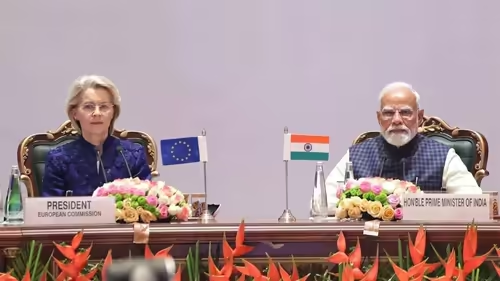
Introduction: The Deal Two Decades in the Making
It’s being hailed as the “mother of all trade deals”—and for good reason. After 20 years of stop-start negotiations, diplomatic hurdles, and shifting global priorities, India and the European Union have finally finalized a comprehensive Free Trade Agreement (FTA) [[1]]. This isn’t just another trade pact; it’s a strategic realignment that could reshape supply chains, boost GDP, and redefine India’s place in the global economy. But like any major economic shift, the India–EU FTA creates clear winners—and equally clear losers. As tariffs fall and markets open, some industries are poised for explosive growth, while others face an existential threat from European competition.
Table of Contents
- What the India–EU FTA Actually Covers
- Top Winners from the Deal
- Sectors Facing Headwinds
- Broader Economic Implications for India
- EU Perspective: What Europe Gains
- Conclusion: A Balancing Act of Opportunity and Risk
- Sources
What the India–EU FTA Actually Covers
The agreement eliminates or reduces tariffs on over 90% of traded goods between the two regions [[3]]. Key provisions include:
- Zero-duty access for key Indian exports like textiles, gems & jewellery, leather goods, and processed seafood.
- Gradual tariff reduction on EU exports such as automobiles, machinery, wines, and dairy products entering India.
- Stronger IP protections and streamlined customs procedures to reduce non-tariff barriers.
- Enhanced services market access, benefiting India’s IT, engineering, and healthcare sectors.
Critically, the deal includes a “sensitive list” for both sides—products shielded from immediate liberalization. For India, this includes items like dairy and certain agricultural goods. For the EU, it covers sectors like shipbuilding and specific chemicals.
Top Winners from the Deal
Several Indian industries are set to thrive under the new regime:
1. Textiles & Apparel
Currently facing EU tariffs of up to 12%, Indian garment exporters will now enjoy duty-free access. With Europe’s growing demand for sustainable and affordable fashion, this could unlock billions in new revenue. The Tirupur and Surat clusters alone could see export growth of 25–30% within three years [[5]].
2. Gems & Jewellery
India processes over 90% of the world’s diamonds. The FTA removes the 4–8% import duties on cut-and-polished stones, giving Indian exporters a decisive edge over competitors like Israel and Belgium. Mumbai-based traders estimate a $2–3 billion annual boost to the sector [[7]].
3. Seafood & Processed Foods
Shrimp, frozen fish, and value-added food products—currently taxed at 8–16%—will enter the EU market tariff-free. This is a massive win for coastal states like Andhra Pradesh and Kerala, where seafood processing employs millions.
Sectors Facing Headwinds
Not all news is rosy. Some domestic industries are bracing for intense competition:
1. Automobiles
While Indian cars face steep EU emissions and safety standards (limiting immediate impact), the reverse is more concerning. European luxury and mid-range vehicles—like BMW, Mercedes, and Volkswagen—will see Indian import duties drop from 70–100% to 15–25% over 5–7 years [[9]]. This could flood the premium segment, squeezing homegrown players like Tata Motors and Mahindra.
2. Liquor & Alcoholic Beverages
Indian-made foreign liquor (IMFL) brands may struggle as Scotch whisky, French wine, and German beer gain easier access. Currently protected by high import duties (up to 150%), the domestic spirits market could see a surge in premium European imports, pressuring local giants like United Spirits and Radico Khaitan.
Broader Economic Implications for India
Beyond sectoral impacts, the India–EU FTA signals deeper strategic alignment:
- GDP Boost: The World Bank estimates the deal could add 0.5–0.8% to India’s annual GDP growth over the next decade [[11]].
- Supply Chain Diversification: As companies seek alternatives to China, the FTA makes India a more attractive manufacturing hub for EU-bound goods.
- Standards Upgrade: To meet EU regulatory norms, Indian firms will need to invest in quality, sustainability, and labor practices—raising overall industry standards.
EU Perspective: What Europe Gains
For the EU, the deal is about more than trade—it’s about strategic autonomy. By deepening ties with India, Europe reduces its dependency on volatile regions and gains a democratic partner in Asia. European machinery, pharmaceuticals, and green tech firms also stand to benefit from increased access to India’s vast consumer market [[13]].
Conclusion: A Balancing Act of Opportunity and Risk
The India–EU FTA is a landmark achievement, but its success hinges on execution. Winners must scale rapidly to capture new markets, while vulnerable sectors need smart policy support—like phased tariff reductions, R&D incentives, and workforce retraining. If managed well, this deal won’t just boost trade; it could accelerate India’s journey toward becoming a global manufacturing and innovation powerhouse. For more on how trade deals shape economies, see our analysis on [INTERNAL_LINK:global-trade-agreements-impact].