Table of Contents
- How the Himachal Doctors’ Strike Began
- Himachal Doctors’ Strike Escalates
- CM Sukhu’s Intervention and the Turning Point
- The Controversial Incident Behind the Sacking
- Why Doctors Felt the Punishment Was Unfair
- What the Review Committee Will Consider
- Broader Implications for Public Healthcare
- Summary
- Sources
How the Himachal Doctors’ Strike Began
The Himachal doctors’ strike erupted after the state government summarily dismissed a junior doctor from a district hospital for allegedly assaulting a patient. The dismissal—handed down without a formal departmental inquiry—triggered immediate outrage among resident doctors and medical associations across Himachal Pradesh. They argued the punishment was disproportionate and violated due process, especially given the immense pressure frontline healthcare workers face daily.
Himachal Doctors’ Strike Escalates
What began as a symbolic protest quickly snowballed into a full-scale work stoppage. Doctors across multiple government hospitals—including in Shimla, Mandi, Solan, and Kangra—walked out of their duties, leaving only emergency services minimally staffed. Outpatient departments (OPDs) were shut, elective surgeries canceled, and thousands of patients left stranded.
The Himachal Pradesh Doctors’ Association (HPDA) demanded not just the reinstatement of their colleague, but also systemic reforms: clearer protocols for handling patient-staff conflicts, mental health support for overworked doctors, and protection from mob violence in hospitals. “We’re not striking for one person—we’re striking for the dignity of every doctor in this state,” said an HPDA representative.
CM Sukhu’s Intervention and the Turning Point
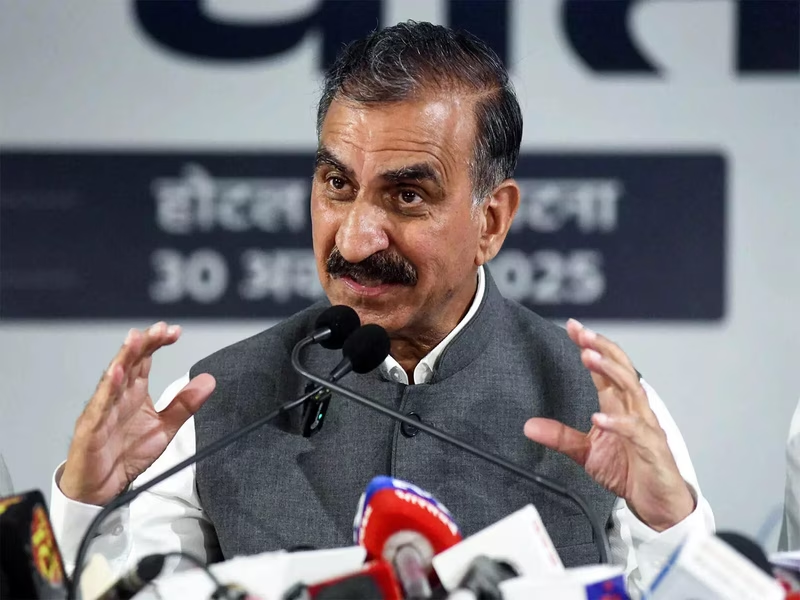
With public healthcare grinding to a halt and political pressure mounting, Chief Minister Sukhvinder Singh Sukhu stepped in personally. In a late-night meeting with health officials and medical union leaders, CM Sukhu announced a major concession: the formation of a high-level review committee to re-examine the sacking of the junior doctor.
According to the CM, the doctor involved had already expressed regret for his actions. “He has repented for hitting the patient,” Sukhu stated, emphasizing that while violence is never acceptable, the context—reportedly extreme provocation and hours of verbal abuse—must be considered .
This promise of a fair, transparent review was enough to convince the striking doctors to return to their wards—effectively ending the Himachal doctors’ strike after days of deadlock.
The Controversial Incident Behind the Sacking
The incident that sparked the crisis occurred at a government hospital where the junior doctor, working a grueling 36-hour shift, was allegedly subjected to relentless verbal abuse by a patient’s relatives. Sources say the situation escalated when the relatives physically blocked the doctor from leaving his duty room. In a moment of frustration, the doctor reportedly slapped one of the individuals.
While physical retaliation is indefensible, many in the medical fraternity argue that the state’s zero-tolerance dismissal ignored the chronic understaffing, lack of security, and emotional toll that define rural healthcare in Himachal Pradesh. “Doctors aren’t trained to be security guards or conflict mediators,” noted a senior physician. “We need systems that protect us too.”
Why Doctors Felt the Punishment Was Unfair
The medical community’s backlash centered on three key concerns:
- Lack of due process: The doctor was fired without a formal inquiry or chance to present his side.
- Double standards: No action was reportedly taken against the patient’s relatives for alleged harassment or obstruction.
- Precedent-setting fear: Doctors worried this would embolden hostile behavior toward medical staff with no accountability.
These concerns reflect a national pattern. According to the Indian Medical Association (IMA), over 70% of doctors in public hospitals have faced verbal or physical abuse at work .
What the Review Committee Will Consider
The newly formed committee—expected to include senior IAS officers, medical council representatives, and legal experts—will assess:
- The exact sequence of events leading to the altercation
- Whether hospital security protocols were followed
- If the punishment aligns with similar past cases
- Recommendations for preventing future incidents
Its findings could influence not just this case, but broader policies on healthcare worker safety across the state.
Broader Implications for Public Healthcare
This strike highlights a systemic crisis in India’s public health infrastructure. Rural hospitals in states like Himachal Pradesh are chronically short-staffed, under-resourced, and lack basic security. Doctors often work 24–36 hour shifts with minimal backup.
The World Health Organization (WHO) emphasizes that healthcare worker safety is a prerequisite for effective patient care . Without addressing root causes—like understaffing and inadequate grievance redressal—such conflicts will keep recurring.
[INTERNAL_LINK:healthcare-worker-safety-india] and [INTERNAL_LINK:rural-doctor-shortage-himachal] are critical issues that demand long-term policy attention, beyond temporary resolutions.
Summary
The Himachal doctors’ strike has ended, but the underlying tensions remain. CM Sukhu’s promise to review the sacked doctor’s case was a politically astute and humane move that restored essential services. However, the real test lies ahead: will the state use this moment to build a safer, fairer, and more sustainable healthcare environment for its doctors—and by extension, its patients? The answer will shape Himachal Pradesh’s health future for years to come.
Sources
- Times of India: Career-saving review promise sends HP docs back to wards
- Indian Medical Association (IMA): Official Website
- World Health Organization (WHO): Health Worker Safety Fact Sheet