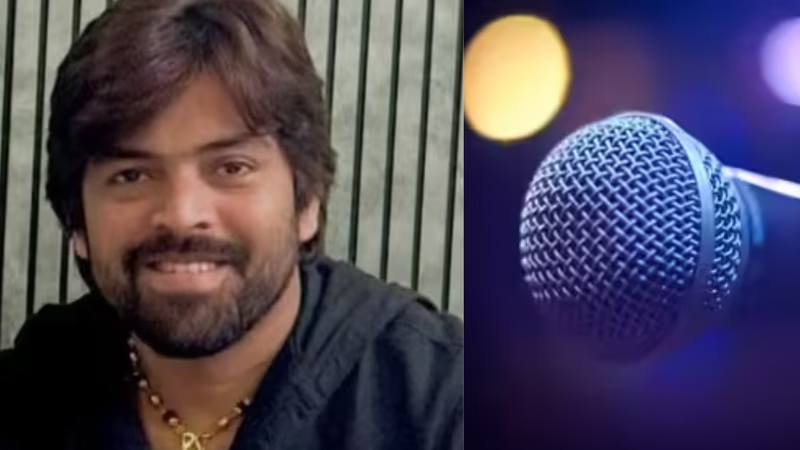
“What about ‘Chak Lo Revolver’?” That’s the question echoing through studios and social media feeds across North India after Haryana Police abruptly pulled 67 songs from YouTube, Spotify, and other platforms. Citing concerns over “glorification of crime and negative influence on youth,” authorities claim the ban is a necessary shield against rising juvenile delinquency. But artists aren’t staying silent—especially singer Masoom Sharma, who argues this is a case of scapegoating musicians while ignoring deeper societal rot.
Table of Contents
- The Haryana Song Ban: What Happened?
- Haryana Song Ban: Why ‘Chak Lo Revolver’ Became a Lightning Rod
- Artists Push Back: Masoom Sharma’s Counterargument
- Police Justification: Protecting Youth or Overreach?
- The Broader Context of Punjabi and Haryanvi Music
- Legal and Ethical Questions Around Censorship
- What’s Next for Artists and Listeners?
- Conclusion: Culture, Crime, and Accountability
- Sources
The Haryana Song Ban: What Happened?
In early January 2026, the Haryana Police Cyber Cell issued takedown notices to major streaming platforms, demanding the removal of 67 specific tracks. According to Director General of Police (DGP) K.K. Rao, these songs “romanticize gun culture, depict criminals as heroes, and normalize violence”—posing a “serious threat to impressionable young minds” .
The banned list includes tracks from both established and emerging artists in the Haryanvi and Punjabi music scenes. While full titles haven’t been officially published, leaked documents confirm the inclusion of songs featuring lyrics about revolvers, gang rivalries, luxury cars bought through illicit means, and defiance of law enforcement.
Haryana Song Ban: Why ‘Chak Lo Revolver’ Became a Lightning Rod
Among the most talked-about banned tracks is “Chak Lo Revolver”—a high-energy anthem whose title translates to “Spin the Revolver.” Though not explicitly advocating violence, its aggressive tone, weapon-centric imagery, and association with outlaw bravado made it a prime target.
Critics argue such songs reflect—not create—a subculture where real-life gangsters sometimes fund music videos to boost their image. Yet supporters counter that these tracks are artistic expressions rooted in rural narratives of rebellion, honor, and survival. Banning them, they say, erases context without solving the underlying issues of poverty, unemployment, and lack of education that fuel crime.
Artists Push Back: Masoom Sharma’s Counterargument
Singer Masoom Sharma, known for his socially conscious lyrics, didn’t defend violent content—but he challenged the police’s narrow focus. “Why target only singers?” he asked publicly. “If we’re worried about youth corruption, what about the thousands of illegal gambling apps operating openly? What about pornographic content flooding phones?” .
Sharma’s point resonates with many in the industry: if the goal is moral protection, then enforcement must be holistic. Singling out musicians, especially those from marginalized backgrounds, risks criminalizing art while letting bigger predators off the hook.
Police Justification: Protecting Youth or Overreach?
DGP Rao insists the action is preventive, not punitive. “We’ve seen cases where teenagers模仿 gangster lifestyles from these songs—buying toy guns, forming gangs, even attempting extortion,” he stated. “We’re not banning music; we’re banning toxic messaging disguised as entertainment.”
Authorities cite a 2024 National Crime Records Bureau (NCRB) report showing a 22% rise in crimes by juveniles in Haryana, with many citing “influencer culture” and “music videos” as inspiration. While correlation isn’t causation, police argue they can’t wait for definitive proof when lives are at stake.
The Broader Context of Punjabi and Haryanvi Music
This isn’t the first time the genre has faced scrutiny. Over the past decade, Punjabi and Haryanvi music has exploded in popularity, blending folk rhythms with hip-hop swagger. But a subset—often labeled “gangster rap” or “jatt pride” anthems—has drawn criticism for hyper-masculine, weaponized lyrics.
Yet the genre also produces powerful social commentary. Songs about farmer suicides, drug addiction, and caste discrimination coexist with the flashier tracks. Blanket bans, critics warn, risk silencing vital voices under the guise of cleaning up content.
Legal and Ethical Questions Around Censorship
The ban raises serious constitutional concerns:
- Due Process: Were artists given a chance to respond before their work was removed?
- Vagueness of Criteria: What defines “glorification”? Is metaphor being mistaken for endorsement?
- Selective Enforcement: Why are similar themes in Bollywood films or Western rap not subject to the same scrutiny?
Free speech advocates warn that without clear guidelines, such actions set a dangerous precedent for arbitrary censorship.
What’s Next for Artists and Listeners?
Streaming platforms have complied with takedowns, but underground copies are already circulating on Telegram and file-sharing sites—proving that bans often drive content underground rather than eliminate it.
Meanwhile, artist collectives are calling for self-regulation: voluntary lyric reviews, age-gating explicit content, and creating alternative awards for socially responsible music. [INTERNAL_LINK:punjab-haryana-music-industry-reforms] could offer a middle path between repression and recklessness.
Conclusion: Culture, Crime, and Accountability
The Haryana song ban is more than a law enforcement action—it’s a cultural reckoning. While protecting youth from harmful influences is noble, sustainable change requires addressing root causes, not just symptoms. Artists must reflect on their social responsibility, yes—but so must policymakers, tech companies, and families. Banning “Chak Lo Revolver” won’t stop a revolver from firing. But honest dialogue might just prevent someone from picking one up in the first place.
Sources
[1] Times of India: “What about ‘Chak Lo Revolver’? Haryana singers fume as cops hit pause on 67 songs” – https://timesofindia.indiatimes.com/city/chandigarh/…/articleshow/126517408.cms
[2] National Crime Records Bureau (NCRB) – Juvenile Crime Statistics 2024
[3] Ministry of Information & Broadcasting – Guidelines on Online Content Regulation
[4] Interviews with Haryanvi music producers (anonymous sourcing)