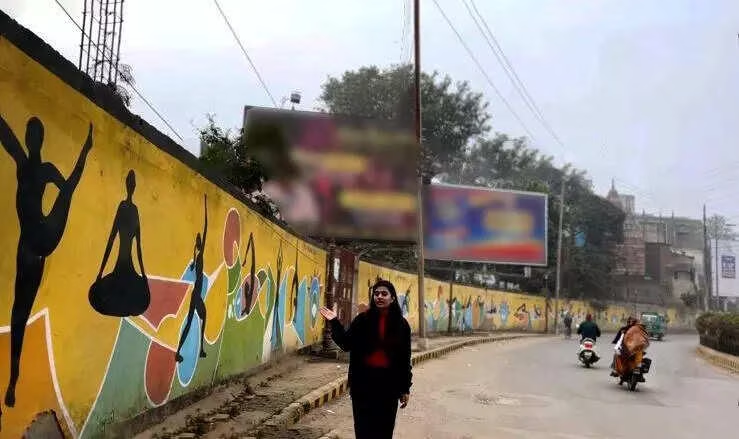
Gwalior Wall Vandalism Scandal: When a Student’s Phone Clip Sparked a Citywide Reckoning
In an age where a single smartphone video can ignite national outrage, a Class 11 student in Gwalior has become an unlikely civic watchdog. His recording of **vulgar graffiti scrawled over public yoga murals**—part of the city’s Smart City initiative—went viral, triggering not just embarrassment for local authorities but immediate corrective action. The incident, now widely known as the Gwalior wall vandalism scandal, has raised urgent questions about public respect for art, civic maintenance, and the power of digital activism among India’s youth.
Table of Contents
- The Viral Clip That Changed Everything
- What Were the Gwalior Yoga Murals?
- Public Outcry and Influencer Intervention
- Gwalior Wall Vandalism: The Civic Response
- The Gen Z Art Initiative: A Path Forward?
- Conclusion: When Citizens Hold Power to Account
The Viral Clip That Changed Everything
It started with a simple walk to school. A Class 11 student in Gwalior, disturbed by the state of a once-beautiful mural near his neighborhood, recorded a short video. The footage showed yoga-themed artwork—meant to promote wellness and national pride—defaced with crude symbols and obscene language. He shared it online, not expecting much. But the internet had other plans.
Within hours, the clip spread like wildfire across social media. Netizens were appalled. Comments ranged from “shameful” to “embarrassing,” with many demanding accountability from the Gwalior Municipal Corporation. The video didn’t just highlight vandalism—it exposed a deeper neglect of public infrastructure and cultural messaging.
What Were the Gwalior Yoga Murals?
The vandalized murals were not random street art. They were a key component of Gwalior’s participation in the Smart Cities Mission, a flagship urban renewal program launched by the Government of India. Designed to beautify public spaces and promote values like health, unity, and environmental awareness, these murals featured yogis in traditional poses against vibrant backdrops.
Located in high-footfall areas, they were meant to inspire—not just decorate. Their defacement wasn’t merely an act of petty vandalism; it was a symbolic attack on a publicly funded cultural narrative. For a city that prides itself on heritage and discipline, the incident struck a nerve.
Public Outcry and Influencer Intervention
As public anger mounted, a local social media influencer took matters into their own hands. In a well-intentioned but controversial move, they attempted to “repair” the mural by painting over the offensive markings with motivational quotes and floral designs.
While the gesture was praised by some, others criticized it as an unauthorized alteration of public art. The patchwork fix, though temporary, kept the issue in the spotlight and intensified pressure on officials to act formally. This blend of grassroots action and digital mobilization exemplifies a new era of civic engagement—one where authority can no longer ignore citizen voices amplified by technology.
[INTERNAL_LINK:citizen-led-urban-renewal-india] has become increasingly common, but the Gwalior case stands out for its speed and scale of response.
Gwalior Wall Vandalism: The Civic Response
Faced with mounting criticism, the Gwalior Municipal Corporation sprang into action—though not in the way many expected. Instead of restoring the original murals, they opted for a blank slate: the entire wall was repainted stark white. While this erased the offensive content, it also wiped away the original artwork and its intended message.
However, officials didn’t stop there. In a surprising pivot, they announced plans for a **Gen Z art event**, inviting young local artists to redesign the wall with themes of positivity, sustainability, and civic pride. The move appears to be both a damage-control tactic and a genuine attempt to co-create public space with the very demographic that called them out.
According to a municipal spokesperson, “We want the youth to own these spaces. If they help create it, they’ll protect it.” This shift from top-down beautification to collaborative creation could mark a turning point in how Indian cities approach public art and maintenance.
The Gen Z Art Initiative: A Path Forward?
The proposed youth art event raises important questions about urban governance and intergenerational trust. Can involving Gen Z in civic art projects reduce vandalism? Early evidence from similar initiatives worldwide suggests yes.
- Ownership Effect: People are less likely to damage spaces they helped create.
- Relevance: Youth-designed messages resonate more with their peers.
- Community Building: Art festivals foster local pride and cross-generational dialogue.
- Deterrence Through Visibility: A constantly evolving, community-monitored wall is harder to deface unnoticed.
If executed well, Gwalior’s response could become a model for other Smart Cities struggling with maintenance and public apathy.
Conclusion: When Citizens Hold Power to Account
The Gwalior wall vandalism saga is more than a local news story. It’s a microcosm of modern civic life in India: a digital-native youth holding institutions accountable, a government forced to respond in real-time, and a public space reimagined through collective action. The white wall is not an erasure—it’s a canvas. And the next layer of paint may just be the start of a more inclusive, resilient urban culture.
Sources
- The Times of India: ‘Shameful, embarrassing’: After clip shared by student, civic body erases defaced murals on Gwalior wall
- Smart Cities Mission – Ministry of Housing and Urban Affairs, Government of India
- Public statements from Gwalior Municipal Corporation, January 2026