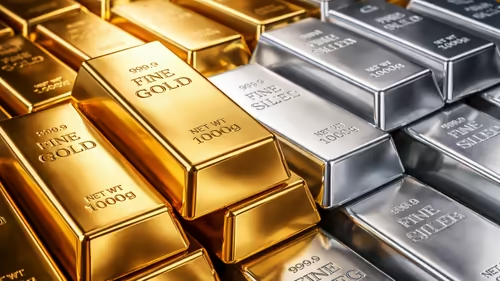
Gold and Silver Prices Crash: A Shocking Reversal After Record Highs
Just days after hitting multi-month highs, the precious metals market was blindsided by a **brutal selloff** that sent both **gold and silver prices crashing** across global exchanges. On Friday, January 30, 2026, traders rushed to lock in profits, triggering a wave of selling that wiped out weeks of gains in a matter of hours [[1]].
What happened? Was this a temporary correction—or the start of a deeper downturn? In this deep dive, we unpack the real forces behind the plunge, from a resurgent US dollar to shifting investor psychology, and what it means for your portfolio.
Table of Contents
- The Numbers Behind the Crash
- Why Gold and Silver Prices Crash Today
- The US Dollar Effect
- Profit-Taking After a Rally
- What This Means for Investors
- Outlook for the Next Week
- Conclusion
- Sources
The Numbers Behind the Crash
On the COMEX exchange, gold futures plummeted over 2.8% to settle near $2,035 per ounce—their sharpest single-day drop since late 2025. Silver wasn’t spared either, nosediving nearly 4.5% to around $23.10 per ounce [[2]].
In India, the impact was equally severe. On the Multi Commodity Exchange (MCX), February-delivery gold contracts tumbled by ₹1,200 per 10 grams, while silver futures shed more than ₹900 per kilogram. The sudden volatility caught many retail investors off guard, especially after weeks of bullish momentum fueled by geopolitical tensions and inflation fears.
Why Gold and Silver Prices Crash Today
The immediate trigger? A powerful combination of macroeconomic headwinds and technical market dynamics. While no single factor explains the entire move, three key drivers stand out:
- A surging US dollar index (DXY) – which hit a 3-week high, making dollar-denominated assets like gold more expensive for foreign buyers.
- Stronger-than-expected US economic data – including durable goods orders and consumer confidence, reducing the appeal of safe-haven assets.
- Aggressive profit-taking – after gold rallied over 8% in the past month, short-term traders seized the opportunity to exit positions.
This confluence created a perfect storm for a correction—one that was arguably overdue.
The US Dollar Effect
Gold has an inverse relationship with the US dollar. When the dollar strengthens, gold typically weakens—and vice versa. On Friday, the DXY jumped above 104.5, its highest level since early January, driven by renewed bets that the Federal Reserve will keep interest rates higher for longer [[3]].
Higher rates increase the opportunity cost of holding non-yielding assets like gold. With Treasury yields climbing, investors are rotating out of commodities and into bonds or equities offering better returns. This dynamic is particularly potent in volatile sessions where sentiment can shift rapidly.
Profit-Taking After a Rally
Let’s not forget the human element. After a thrilling run-up—fueled by Middle East tensions, central bank buying, and ETF inflows—many traders were sitting on significant paper gains. Friday’s session offered the ideal exit window.
Technical indicators also flashed warning signs. Gold had approached key resistance levels near $2,100, a zone where selling pressure historically intensifies. Once momentum stalled, algorithmic trading systems likely accelerated the decline through stop-loss triggers and automated sell orders.
As one veteran commodities strategist noted: “This wasn’t panic—it was discipline. Smart money took profits before the music stopped.”
What This Means for Investors
If you’re holding physical gold or silver, don’t panic. Short-term volatility is normal in commodity markets. Long-term fundamentals—like central bank demand (especially from China and India) and persistent inflation concerns—remain supportive.
However, if you’re trading futures or leveraged ETFs, exercise caution. The current environment is highly sensitive to Fed commentary and economic data releases. [INTERNAL_LINK:how-to-invest-in-gold-safely] could be a valuable resource for navigating these swings.
For now, watch these key levels:
- Gold support: $2,000/oz (psychological floor)
- Silver support: $22.50/oz
- Resistance to reclaim: $2,080 for gold, $24.20 for silver
Outlook for the Next Week
All eyes are now on the upcoming US jobs report (Non-Farm Payrolls) and Fed Chair Jerome Powell’s scheduled speech. Strong employment data could reinforce the “higher for longer” rate narrative, keeping downward pressure on metals.
Conversely, any sign of economic softening or dovish Fed signals could spark a rapid rebound. Geopolitical flare-ups—particularly in the Red Sea or Eastern Europe—would also reignite safe-haven demand almost instantly.
Bottom line: expect continued volatility. But remember, dips in gold have historically been buying opportunities for long-term investors.
Conclusion
The recent crash in **gold and silver prices** is less about a broken bull market and more about a necessary cooldown after an overheated rally. Driven by a stronger US dollar, robust economic data, and widespread profit-taking, the selloff reflects healthy market mechanics—not a fundamental collapse in value.
For savvy investors, this dip may offer a strategic entry point. But tread carefully: in today’s fast-moving markets, timing matters more than ever. Stay informed, manage risk, and keep your eyes on the bigger picture.