Table of Contents
- Why I Quit the Beaches (and Never Looked Back)
- Goa Offbeat Travel: What No Brochure Tells You
- The Magic of Goa’s Hinterlands in Monsoon
- Unexpected Encounters: Local Art in the Most Unlikely Places
- 5 Hidden Spots Every Traveler Should See
- How to Travel Responsibly in Rural Goa
- Conclusion: The Real Goa Was Never on the Map
- Sources
Why I Quit the Beaches (and Never Looked Back)
Like many first-timers, I came to Goa chasing sunsets over Baga and cocktails on Palolem. But a past trip—marred by overpriced shacks, aggressive touts, and plastic-strewn shores—left me disillusioned. I swore off Goa… until curiosity pulled me back, this time with a different mission: to ignore the coast entirely.
What I found wasn’t just a reprieve from chaos—it was a revelation. The Goa offbeat travel experience I stumbled upon reshaped everything I thought I knew about India’s most famous beach destination.
Goa Offbeat Travel: What No Brochure Tells You
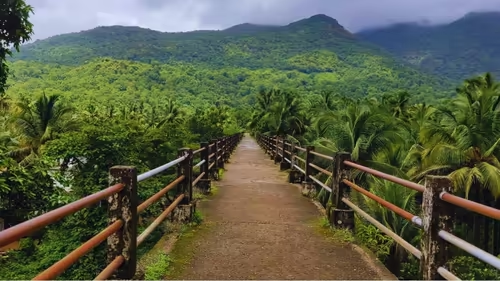
When we say “Goa,” our minds default to bikini-clad crowds and trance music. But step just 20 kilometers inland, and you enter a world where time slows down. Here, red laterite roads wind through emerald paddy fields, century-old churches stand silent in misty valleys, and locals greet you with warm smiles—not sales pitches.
This is the Goa that doesn’t trend on Instagram. It’s quieter, greener, and infinitely more human. And it’s especially magical during the monsoon (June–September), when the landscape transforms into a lush, dripping canvas of green.
The Magic of Goa’s Hinterlands in Monsoon
I visited in late July, when the rains had softened the earth and filled every stream to the brim. The air smelled of wet soil and blooming jasmine. In villages like Chandor, Keri, and Netravali, life unfolded at a rhythm dictated by nature—not tourist seasons.
Farmers tended to flooded rice fields. Children played under giant mango trees. And homestays—run by Goan families—offered home-cooked meals of sol kadhi, xacuti, and fresh fish curry. There were no neon signs, no bachelorette parties—just peace, authenticity, and the gentle patter of rain on terracotta roofs.
Unexpected Encounters: Local Art in the Most Unlikely Places
One afternoon, while wandering near the Netravali Wildlife Sanctuary, I stumbled upon a small clay studio tucked behind a betel nut grove. An elderly potter, Mr. Prabhakar, was shaping traditional Goan lamps on a hand-turned wheel. He invited me in, offered tea, and shared stories of how his craft was fading as younger generations moved to cities.
Later, in a village church courtyard, I saw vibrant murals painted by local teens—depicting folk tales and environmental messages. These weren’t curated for tourists; they were expressions of community identity. This organic, uncommodified art is the heartbeat of rural Goa—and it’s invisible to those who never leave the beach strip.
5 Hidden Spots Every Traveler Should See
If you’re ready to ditch the crowds, here are five underrated gems:
- Chandor – Home to the ancient Braganza House and Goa’s oldest inhabited mansion.
- Netravali Bubble Lake – A mysterious natural spring that “bubbles” due to trapped methane (safe to visit with a guide).
- Keri Village – A serene coastal hamlet with a historic fort and pristine mangroves.
- Usgalimal Rock Carvings – Prehistoric petroglyphs dating back 20,000 years, hidden in the Kushavati riverbed.
- Pomburpa – A pottery village where artisans still use centuries-old techniques.
How to Travel Responsibly in Rural Goa
Exploring offbeat Goa comes with responsibility. These communities aren’t theme parks—they’re real homes. Here’s how to be a respectful guest:
- Stay in family-run homestays (not large resorts) to support local economies.
- Ask before taking photos of people or private property.
- Avoid single-use plastics—many villages lack waste infrastructure.
- Learn a few Konkani phrases like “Dev borem korum” (Thank you).
- Hire local guides—they offer deeper insights and ensure your visit benefits the community.
For more on ethical travel in India, see our guide on [INTERNAL_LINK:sustainable-tourism-india-practices].
Conclusion: The Real Goa Was Never on the Map
The Goa offbeat travel experience isn’t just an alternative—it’s the antidote to everything that’s gone wrong with mass tourism. It’s slower, richer, and deeply human. You won’t find viral TikTok spots here. But you might find yourself—sitting under a rain-heavy tree, sipping kokum juice, listening to the stories of a land that’s been waiting patiently for you to look beyond the shore.
Sources
- Times of India: “’What I saw in Goa was something I could have never imagined’” (January 2026)
- Goa Tourism Development Corporation – Official Village Tourism Initiatives
- Lonely Planet: Responsible Travel in Goa
- Interviews with local artisans and homestay owners in South Goa (2025–2026)
- Archaeological Survey of India – Usgalimal Rock Art Site Documentation