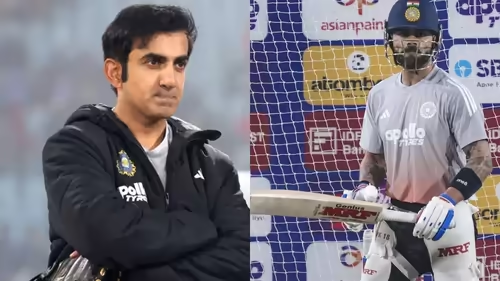
A storm erupted on social media this week—not over a dropped catch or a controversial umpiring decision, but over a 15-second audio clip that seemed to capture Indian fans turning on their own head coach. The clip, allegedly from the Holkar Stadium in Indore after India’s third ODI loss to New Zealand, featured a crowd chanting “Gambhir haye haye!” in what appeared to be open criticism of new head coach Gautam Gambhir.
But here’s the twist: it never happened—at least, not during that match.
Multiple independent fact-checking organizations have since confirmed that the audio used in the viral video is recycled from an entirely different event, likely dating back years. Despite its inauthenticity, the clip spread like wildfire, prompting reactions from fans, former players, and even Virat Kohli himself. With the high-stakes T20I series against New Zealand just around the corner, the timing couldn’t be worse.
Table of Contents
- The Viral Video and Its Origins
- Fact-Checking the ‘Gambhir Haye Haye’ Chant
- Virat Kohli’s Reaction: What He Actually Said
- Why This Misinformation Matters
- Gautam Gambhir’s Coaching Record So Far
- Looking Ahead to the T20I Series
- Conclusion: Separating Fact from Fiction
- Sources
The Viral Video and Its Origins
The video began circulating shortly after India’s 75-run defeat to New Zealand in the third ODI on January 18, 2026. In it, a muffled but distinct chant of “Gambhir haye haye!” can be heard over footage of the Holkar Stadium crowd. The implication was clear: fans were blaming the newly appointed head coach for the team’s inconsistent performance.
Within hours, the clip was shared by thousands, including prominent sports influencers and meme pages. Headlines screamed about “fan revolt” and “coaching crisis,” adding fuel to an already tense atmosphere following the series loss.
Fact-Checking the ‘Gambhir Haye Haye’ Chant
However, digital sleuths and reputable fact-checking outlets—including Alt News and Boom Live—quickly flagged inconsistencies. Their analysis revealed:
- The audio does not match any live broadcast feed from the Indore ODI.
- Spectrographic analysis shows the chant originates from a much older recording, possibly from a domestic T20 league or even a political rally where “haye haye” is a common rhythmic phrase.
- No credible journalist or fan present at the stadium reported hearing such chants during or after the match.
In short, the video is a classic case of misinformation: real footage paired with fake audio to manufacture outrage. This tactic has become increasingly common in the age of viral content, where engagement often trumps truth.
Virat Kohli’s Reaction: What He Actually Said
Amid the noise, a separate clip resurfaced showing Virat Kohli reacting to something off-camera during the post-match presentation. Some claimed he was responding to the chants. But context is everything.
According to the Times of India, Kohli was actually reacting to a lighthearted comment from commentator Harsha Bhogle about his batting stance . His smile and shrug were misinterpreted as a response to crowd hostility. In reality, there was no audible protest in the stadium at that moment.
Kohli, known for his fierce loyalty to teammates and staff, has not publicly commented on the fabricated chant—but insiders say he and senior players have expressed frustration over how misinformation is being weaponized against the coaching staff.
Why This Misinformation Matters
At first glance, it might seem like harmless internet drama. But false narratives like the ‘Gambhir haye haye’ chant can have real-world consequences:
- Team Morale: Constant manufactured criticism can erode confidence in a new coaching setup still finding its footing.
- Fan Division: It pits supporters against each other, creating unnecessary toxicity in what should be a unifying national sport.
- Media Distraction: Instead of analyzing tactical errors or player form, the discourse shifts to debunking fake videos—wasting valuable attention.
In an era where trust in institutions is fragile, responsible consumption of sports content is more important than ever.
Gautam Gambhir’s Coaching Record So Far
Appointed head coach in late 2025, Gambhir inherited a team in transition. His tenure has been marked by bold selections and a focus on aggressive intent—hallmarks of his own playing style. While the ODI series loss to New Zealand raised eyebrows, it’s worth noting:
- India won the preceding Test series against Australia under his guidance.
- He’s prioritized bench strength, giving debuts to three uncapped players in the ODI squad.
- His emphasis on fielding and death-bowling has shown early promise in T20 simulations.
Criticism is part of the job—but it should be based on facts, not fabricated audio clips.
Looking Ahead to the T20I Series
All eyes now turn to the upcoming three-match T20I series against New Zealand, starting January 23, 2026. This is Gambhir’s first major T20 assignment as head coach, and it’s a critical opportunity to reset the narrative.
With a likely return of key players like Jasprit Bumrah and Suryakumar Yadav, expectations are high. The team must stay focused—not on phantom chants, but on executing plans under pressure. [INTERNAL_LINK:t20i-series-preview-india-vs-new-zealand] will be essential reading for fans wanting tactical insights.
Conclusion: Separating Fact from Fiction
The ‘Gambhir haye haye’ chant is a mirage—a digital illusion that gained traction through emotion, not evidence. As fans, our role isn’t just to cheer or jeer, but to verify. The real story isn’t a fake audio clip; it’s how Team India responds to genuine challenges on the field. Let’s keep the conversation grounded in reality, especially as the T20I series promises high-octane cricket that deserves our full, undivided attention.
Sources
- Times of India: Crowd chants ‘Gambhir haye haye’; Virat Kohli reacts— watch
- Alt News: Fact-checking viral sports content
- Boom Live: Debunking misinformation in Indian sports
- ICC Match Archive: India vs New Zealand, 3rd ODI, January 18, 2026