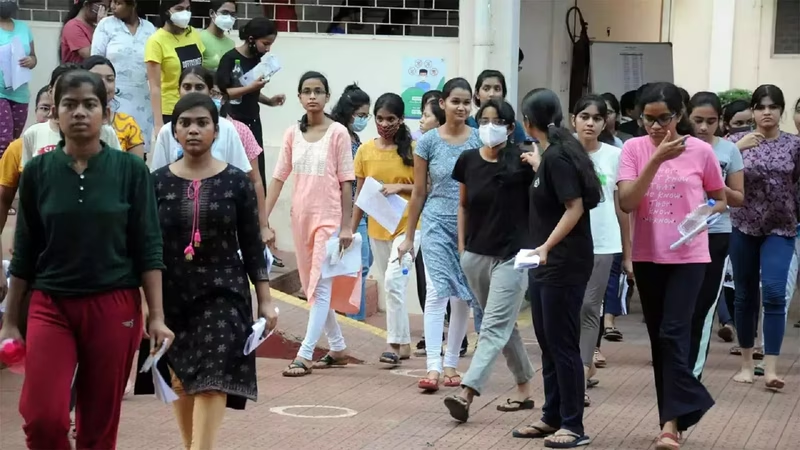
For over 180,000 aspirants who had marked March 2026 in their calendars, the news came like a thunderclap—and then a sigh of relief.
The Delhi Subordinate Services Selection Board (DSSSB) has officially postponed its upcoming recruitment exams for teaching and non-teaching posts. But this isn’t just another bureaucratic delay. It’s a direct response to a growing outcry from candidates who say they’ve been pushed out of opportunities—not by merit, but by time.
The trigger? Years of recruitment delays that caused the upper age limit to become a moving target. Now, the Delhi government is seriously considering raising the maximum age for applicants. Education Minister Ashish Sood confirmed the board is “reviewing all options to ensure fairness” and “fill long-pending vacancies” in Delhi’s government schools and departments.
If implemented, this policy shift could give a second chance to thousands who aged out while waiting for exams that never came. But it also raises urgent questions: Why did it take protests to act? And what happens next?
Table of Contents
- Why Were DSSSB Exams Postponed?
- DSSSB Exams Postponed: The Aspirants’ Perspective
- Govt Response: What Ashish Sood Said
- Historical Recruitment Delays: The Real Crisis
- What Age Limit Change Could Mean
- Next Steps for Aspirants
- Conclusion: A Delayed but Necessary Step?
- Sources
Why Were DSSSB Exams Postponed?
According to an official notification issued on December 26, 2025, the DSSSB has postponed all examinations originally scheduled for March 2026—including those for Post Graduate Teachers (PGT), Trained Graduate Teachers (TGT), and Primary Teachers (PRT).
The reason? A high-level review of the upper age limit for recruitment. The government is considering relaxing the current cap (which varies by post and category, but generally ranges from 30 to 36 years) by 2–5 years.
“We cannot let systemic delays rob qualified citizens of their right to serve,” said Education Minister Ashish Sood in a press briefing. “Many candidates missed earlier cycles not due to lack of preparation, but because the exams themselves were delayed.”
DSSSB Exams Postponed: The Aspirants’ Perspective
For years, DSSSB aspirants have staged silent protests outside the Delhi Secretariat. Their demand? Age relaxation due to “forced ineligibility.”
Take Priya Mehta, 34, who cleared the CTET in 2018 and began preparing for DSSSB. “I applied in 2019, but the exam got postponed to 2021. Then again to 2023. By 2025, I was just weeks away from crossing the 35-year ceiling for general category PGT posts,” she says. “It felt like the system was designed to exclude us.”
Groups like the Delhi Teachers’ Aspirants Forum estimate that over 42,000 candidates aged out between 2019 and 2025 due to repeated postponements—many caused by court cases, pandemic disruptions, and administrative bottlenecks.
Key Demands of Aspirants
- Uniform age relaxation of 5 years for all posts affected by delays since 2019.
- One-time exemption from age limits for those who applied in previous cycles.
- Transparent timeline for future exams.
Govt Response: What Ashish Sood Said
Minister Sood emphasized that the postponement is “not a cancellation, but a recalibration.” He acknowledged that vacant teaching positions—over 18,000 across Delhi government schools—have impacted education quality.
“Our children deserve qualified teachers, and our youth deserve a fair shot. We’re aligning policy with reality,” Sood stated .
The Delhi government will now consult with the DSSSB, legal experts, and the Union Public Service Commission (UPSC) to frame a legally sound age relaxation policy. Only after this is finalized will new exam dates be announced—likely in Q2 or Q3 of 2026.
Historical Recruitment Delays: The Real Crisis
This isn’t the first time DSSSB exams have been delayed—but the scale is unprecedented.
- 2019: Exams announced, then postponed due to RTI disputes over eligibility.
- 2020–2021: Pandemic shutdowns halted all recruitment.
- 2022–2023: Court cases over syllabus changes caused further delays.
- 2024: Only limited posts were filled; major teaching categories remained untouched.
According to a 2024 report by the Delhi Commission for Protection of Child Rights (DCPCR), 31% of government schools operate with less than 50% of their sanctioned teaching staff . The human cost? Overburdened teachers and compromised learning outcomes.
What Age Limit Change Could Mean
If the government approves age relaxation, it could:
- Reinstate eligibility for 40,000+ aspirants aged 35–40.
- Accelerate filling of critical vacancies before the 2026–27 academic year.
- Set a precedent for other states facing similar recruitment backlogs.
However, critics warn of potential legal challenges. Age limits are often tied to service tenure requirements (e.g., minimum 10 years before retirement). Any relaxation must comply with Supreme Court guidelines on fair recruitment.
Next Steps for Aspirants
While waiting for official updates, candidates should:
- Keep CTET/TET certificates valid and updated.
- Monitor the official DSSSB website (dsssb.delhi.gov.in) for notifications.
- Join verified aspirant groups for real-time alerts (avoid misinformation).
- Continue preparation—the syllabus is unlikely to change drastically.
[INTERNAL_LINK:dsssb-syllabus-2026] | [INTERNAL_LINK:how-to-prepare-for-teacher-exams]
Conclusion: A Delayed but Necessary Step?
The DSSSB exams postponed announcement is more than a scheduling update—it’s an admission that systemic failures have real human consequences. By prioritizing fairness over rigid rules, the Delhi government may finally address a recruitment logjam that’s hurt both job seekers and students.
But promises must turn into action. Aspirants have heard “wait a little longer” too many times. Now, they’re watching—not just for new dates, but for real change.
Sources
- The Times of India. “DSSSB exams postponed as Delhi considers raising age limit for teacher recruitment posts.” Link
- Delhi Commission for Protection of Child Rights (DCPCR). “Status of Teacher Vacancies in Delhi Government Schools,” Annual Report 2024.
- DSSSB Official Website. “Public Notices & Announcements.” Link