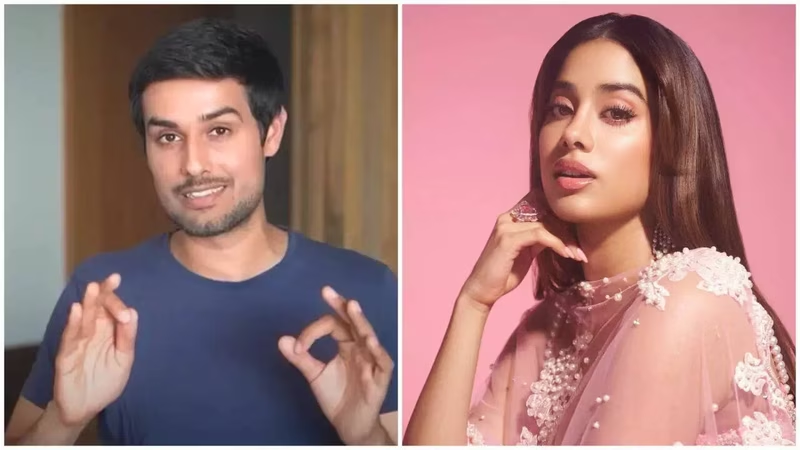
What started as a commentary on cosmetic enhancements has spiraled into one of 2025’s most polarizing digital dramas. Popular YouTuber and social commentator Dhruv Rathee is under intense fire after using a before-and-after photo of Bollywood actress Janhvi Kapoor in the thumbnail of his latest video titled “The Truth About Fake Beauty.” The backlash was immediate—and explosive.
Critics accused Rathee of body-shaming, selective targeting, and even political retaliation, especially since the video dropped shortly after Kapoor posted a supportive message for persecuted Hindus in Bangladesh. The timing, combined with the provocative visual, fueled speculation that the video was less about societal norms and more about sending a message. In response, Rathee didn’t back down. In a now-viral Instagram story, he declared: “Naa main tumhare papa se darta hoon, aur naa hi main kisi Bollywood celebrity se darta hoon” (“I don’t fear your father, nor do I fear any Bollywood celebrity”).
But is this just a clash of personalities—or a deeper reflection of India’s evolving culture wars? Let’s unpack the controversy, the context, and what it reveals about influencer power, celebrity privilege, and digital accountability.
Table of Contents
- What Happened: The Dhruv Rathee Janhvi Kapoor Thumbnail Row
- The Video Content Behind the Controversy
- Why the Timing Raised Eyebrows
- Dhruv Rathee’s Response: “No Fear of Bollywood”
- Public Reaction: Divided Along Generational and Ideological Lines
- Ethical Questions: About Thumbnails and Celebrity Criticism
- Bigger Picture: Beauty Standards and Social Media Pressure
- Conclusion: When Commentary Becomes Controversy
- Sources
What Happened: The Dhruv Rathee Janhvi Kapoor Thumbnail Row
On December 27, 2025, Dhruv Rathee uploaded a video critiquing the normalization of cosmetic procedures in the entertainment industry and among influencers. The thumbnail featured side-by-side images of Janhvi Kapoor—labeled “Before” and “After”—implying significant facial alterations through surgery or fillers.
While the video discussed multiple celebrities and influencers, Kapoor’s image dominated the visual identity of the post. Within hours, fans and industry watchers accused Rathee of singling her out, using her for clickbait, and crossing the line from critique into public humiliation. Hashtags like #BoycottDhruvRathee and #RespectJanhvi trended on X (Twitter) and Instagram.
The Video Content Behind the Controversy
Beyond the thumbnail, the video itself argues that social media promotes unrealistic beauty standards, often achieved through unacknowledged cosmetic enhancements. Rathee claims this creates psychological pressure on young viewers and erodes authenticity.
He cites industry reports suggesting over 60% of influencers have undergone some form of aesthetic procedure—many without disclosure. While Kapoor isn’t named in the narration as uniquely guilty, the visual emphasis made her the face of the issue. Critics argue that using a real person’s image without consent—especially in a negative context—violates digital ethics, regardless of public status.
Why the Timing Raised Eyebrows
The controversy intensified because Janhvi Kapoor had just days earlier posted an emotional Instagram message supporting Bangladeshi Hindus facing persecution—a statement widely praised by right-leaning commentators. Given Rathee’s known progressive and secular stance, some speculated the video was a subtle rebuke.
“This feels less like social commentary and more like punishment for stepping into political discourse,” wrote one user on Reddit. While Rathee denies any connection, the perception of motive has amplified the outrage. In India’s hyper-polarized media landscape, even aesthetic critiques can be weaponized as ideological statements.
Dhruv Rathee’s Response: “No Fear of Bollywood”
Rather than apologize, Rathee doubled down. In a fiery Instagram story, he said:
“I don’t fear your father [referring to late producer Boney Kapoor], and I don’t fear any Bollywood celebrity. My video is about a systemic problem—not one person. If you’re promoting unattainable beauty as natural, you’re part of the problem.”
He emphasized that his critique targeted an industry norm, not Kapoor personally. Still, his refusal to remove the thumbnail or blur the image has kept tensions high. As explored in our [INTERNAL_LINK:ethics-of-digital-criticism] piece, the line between public accountability and online shaming is increasingly thin.
Public Reaction: Divided Along Generational and Ideological Lines
- Gen Z viewers: Many praise Rathee for “exposing hypocrisy” in beauty culture.
- Bollywood insiders: Remain largely silent, but anonymous sources call the move “unprofessional.”
- Feminist commentators: Are split—some see it as body-shaming; others as a necessary critique of patriarchal beauty standards.
- Political groups: Right-wing accounts frame it as “anti-Hindu bias”; left-leaning voices defend it as secular critique.
Ethical Questions: About Thumbnails and Celebrity Criticism
YouTube’s algorithm rewards shock-value thumbnails—often at the cost of nuance. But does that justify using a celebrity’s face to drive clicks? Key ethical considerations include:
- Consent: Public figures don’t forfeit all dignity; using their image in negative contexts requires care.
- Proportionality: Was Kapoor’s role in the “fake beauty” narrative significant enough to warrant visual prominence?
- Impact: Could this discourage young women from entering public life due to fear of scrutiny?
For guidelines on responsible digital journalism, the Society of Professional Journalists’ Code of Ethics stresses minimizing harm—even when reporting truth.
Bigger Picture: Beauty Standards and Social Media Pressure
Beyond the feud, the episode highlights a global crisis: social media’s distortion of self-image. Studies show teens who spend >3 hours/day on image-centric platforms are twice as likely to consider cosmetic surgery.
Rathee’s core message—that authenticity matters—is valid. But the execution raises questions about who gets to be the arbiter of “real” beauty. Perhaps the real villain isn’t Kapoor or Rathee, but an industry that profits from insecurity.
Conclusion: When Commentary Becomes Controversy
The Dhruv Rathee Janhvi Kapoor clash is less about one thumbnail and more about who controls narratives in the digital age. Can influencers critique celebrities without crossing into cruelty? Can stars advocate for causes without facing retaliatory scrutiny? As India’s online discourse grows more combative, this incident serves as a cautionary tale: in the battle for attention, nuance is often the first casualty.
Sources
- Times of India: Dhruv Rathee responds to Janhvi Kapoor thumbnail backlash
- Society of Professional Journalists: Code of Ethics
- Journal of Adolescent Health: “Social Media Use and Cosmetic Surgery Consideration in Teens” (2024)
- Social media trends on X, Instagram, and Reddit (December 27–29, 2025)