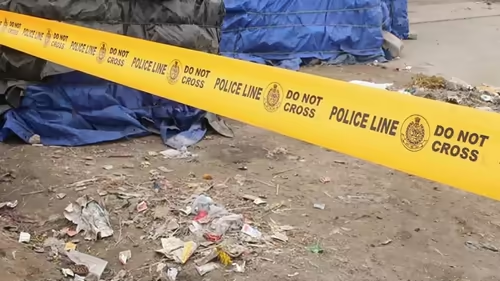
In the quiet lanes of Devli, South Delhi, a sinister operation was brewing—not a meal, but a potent cocktail of synthetic narcotics. Dubbed a ‘chemical kitchen’ by authorities, this clandestine lab was the epicenter of a major drug trafficking network, allegedly masterminded by a Nigerian kingpin from thousands of miles away. The recent bust has sent shockwaves through the city and exposed a dangerous new chapter in India’s ongoing battle against the global drug trade.
Table of Contents
- The Delhi Bust: A Kingpin’s Downfall
- What is a Synthetic Drug Lab and How Does it Work?
- The Shadow of Nigerian Cartels in India
- Why Local Production is a Game-Changer for Law Enforcement
- Conclusion: The Fight Against the Synthetic Tide
- Sources
The Delhi Bust: A Kingpin’s Downfall
The South Delhi police’s raid on Emmanuel’s residence wasn’t just another drug seizure; it was the dismantling of a factory. The operation yielded a staggering 113 kg of raw materials—precursors and chemicals essential for manufacturing high-end psychotropic substances like MDMA (Ecstasy) and heroin . This isn’t about small-time peddling; this is industrial-scale production happening right under our noses.
Emmanuel, the arrested Nigerian national, is believed to be a key operative for a larger syndicate. Preliminary investigations point to a remote-controlled operation, with the true kingpin, identified as Elo Chukwu, allegedly orchestrating the entire network from Nigeria . The modus operandi involved using couriers, often women, to move the final product, a tactic that has been seen in other recent busts across the country .
What is a Synthetic Drug Lab and How Does it Work?
A synthetic drug lab is a far cry from the poppy fields of traditional opium production. These are covert, often mobile, facilities equipped with glassware, heating elements, and a dangerous array of precursor chemicals. The goal is to chemically synthesize drugs like MDMA, methamphetamine, or fentanyl in a controlled environment.
The process for creating MDMA, for instance, involves a multi-step chemical reaction. Key precursors like MDP2P, safrole, or isosafrole are combined with other reagents in a process often referred to as ‘cooking’ . The result is a crude form of the drug, which is then purified and pressed into tablets for distribution. The discovery of 113 kg of these raw materials in Devli suggests the lab was not just active but was likely producing significant quantities for a wide market .
This shift from import to local production is a major red flag for authorities. It means the supply chain is becoming more resilient and harder to track, moving away from large, interceptable shipments at ports to a distributed, domestic network.
The Shadow of Nigerian Cartels in India
This bust is not an isolated incident. It’s part of a disturbing and growing trend of Nigerian nationals being linked to high-level drug operations in India. In a massive coordinated crackdown just months ago, a joint operation led to the arrest of over 50 Nigerians across Delhi, uncovering a vast network dealing in cocaine and ecstasy pills .
These cartels are known for their sophisticated, transnational operations. They often establish a local cell in India, which is then remotely managed by a central command in Nigeria or Europe. Their tactics include concealing narcotics in everyday items like garments and cosmetics for shipping, and even running call centers to manage their distribution networks [[29], [37]].
India’s strategic location, sandwiched between the Golden Crescent and the Golden Triangle, makes it a prime target for such networks looking to establish a foothold in Asia. The country’s own production of precursor chemicals, while vital for its pharmaceutical industry, can also be diverted for illicit use, making it an attractive hub for these international syndicates .
Why Local Production is a Game-Changer for Law Enforcement
For years, India’s primary focus in the war on drugs was on intercepting shipments at its borders. However, the emergence of domestic synthetic drug labs like the one in South Delhi changes everything. Here’s why:
- Harder to Detect: A small apartment or warehouse can be converted into a lab, making it far less conspicuous than a container ship full of contraband.
- Faster Supply Chain: Local production means drugs can hit the streets almost immediately after synthesis, catering to a ready and eager market without the delays and risks of international transit.
- Higher Profit Margins: By cutting out the middlemen and import costs, these cartels can enjoy significantly higher profits, which fuels further expansion and corruption.
- Evolving Threat: As seen in other parts of the world, local production often leads to the creation of new, more potent, and sometimes deadlier analogues of existing drugs, posing a direct threat to public health .
This shift demands a new strategy from law enforcement. It requires enhanced forensic capabilities to trace chemical precursors, deeper intelligence gathering on online marketplaces where these drugs are often sold, and stronger international cooperation to dismantle the parent organizations abroad. [INTERNAL_LINK:synthetic-drug-policy-india] could be a critical next step in this fight.
Conclusion: The Fight Against the Synthetic Tide
The ‘chemical kitchen’ in Devli is a stark warning. It’s a symbol of how the global drug trade is evolving, becoming more localized, more sophisticated, and more dangerous. The arrest of Emmanuel and the seizure of his lab is a significant victory for the South Delhi police, but it’s only one battle in a much larger war. The links to a Nigerian kingpin and an international cartel underscore that this is a transnational problem that requires a global solution. Vigilance, advanced technology, and unwavering international collaboration will be key to stemming this toxic tide before it floods our communities.
Sources
- Times of India: ‘Chemical kitchen’: South Delhi police uncover major synthetic narcotics lab
- Heather, E. N. (2020). The synthesis and chemical profiling of 3,4-methylenedioxyamphetamine (MDA) and 3,4-methylenedioxymethamphetamine (MDMA). Forensic Chemistry.
- Oxford Analytica. (2021). India will be increasingly key to Asian drug cartels.
- Demystifying the synthetic drug menace: India’s struggles and strategic challenges. (2023).
- Various reports on Nigerian drug cartels in India from DW, The Hindu, and other Indian news outlets (Nov-Dec 2025).
- United Nations Office on Drugs and Crime (UNODC): World Drug Report