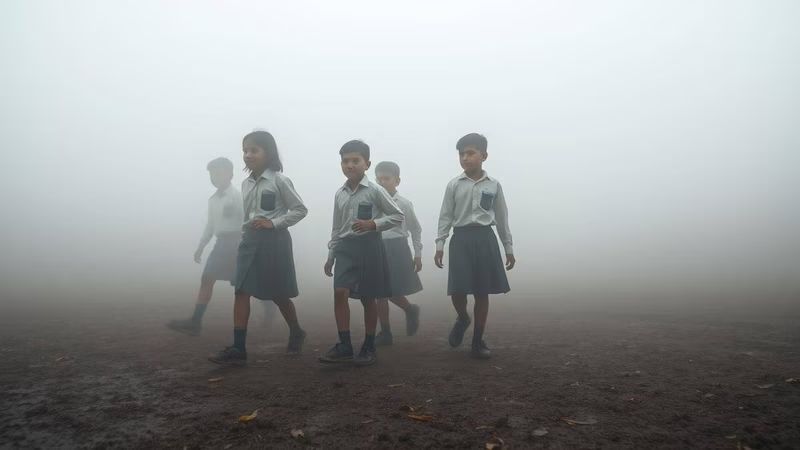
As sub-zero temperatures blanket Delhi, the city’s youngest residents are getting an unexpected—but officially mandated—extended holiday. The **Delhi schools winter break 2026** has been enforced by the Directorate of Education (DoE) until January 15, 2026, to shield students from the dangerous health effects of the ongoing cold wave . But this well-intentioned policy is now facing an unexpected challenge: uneven implementation across private institutions, leaving some parents frustrated and anxious.
Table of Contents
- Why Delhi Schools Are Closed Until Jan 15
- DoE Winter Break 2026: Official Guidelines
- Private Schools Reopening Early? Parents Raise Alarm
- Health Risks of Cold Weather for Children
- What Parents Can Do During the Extended Break
- How Other Indian Cities Handle Winter Closures
- Conclusion: Uniformity Is Key to Child Safety
- Sources
Why Delhi Schools Are Closed Until Jan 15
Delhi is currently experiencing one of its coldest starts to January in recent memory, with the India Meteorological Department (IMD) recording minimum temperatures hovering around 4–6°C—and feeling even colder due to wind chill. In such conditions, children are especially vulnerable to respiratory illnesses, frostbite, and hypothermia .
The DoE’s decision to extend the **Delhi schools winter break 2026** isn’t arbitrary. It’s a proactive public health measure embedded in the official 2025–26 academic calendar, designed to prioritize student well-being over rigid scheduling .
DoE Winter Break 2026: Official Guidelines
According to the Directorate of Education, the winter vacation for all government schools—and all private schools affiliated with the DoE—runs from December 28, 2025, to January 15, 2026. The guidelines are clear: no academic or co-curricular activities should take place during this period .
This means:
- No physical or online classes.
- No exams or assessments.
- No mandatory attendance or homework assignments that require digital submission.
These instructions apply to all schools recognized by the DoE, regardless of whether they are government-aided or privately managed.
Private Schools Reopening Early? Parents Raise Alarm
Despite the official mandate, social media platforms like X (formerly Twitter) and Facebook are flooded with concerned parents reporting that certain private schools are pressuring families to resume online classes as early as January 6 or 10 .
One parent from South Delhi posted: “My child’s school sent a circular about ‘optional’ Zoom sessions starting January 8. But when half the class attends, it’s no longer optional—it’s coercion.”
This discrepancy has led to calls for stricter enforcement. Parents argue that if some schools reopen early, others feel competitive pressure to follow suit—undermining the entire purpose of the break.
Health Risks of Cold Weather for Children
The DoE’s caution isn’t just bureaucratic—it’s medically sound. According to the World Health Organization (WHO), prolonged exposure to cold temperatures can lead to:
- Bronchitis and pneumonia: Cold air irritates the airways, increasing infection risk.
- Asthma exacerbation: Dry, cold air is a known trigger for attacks.
- Reduced immunity: The body’s defense mechanisms weaken in extreme cold.
- Mental health strain: Seasonal affective disorder (SAD) can affect even young children.
Children, especially under the age of 10, lose body heat faster than adults and often can’t articulate early signs of hypothermia—making preventive closures a critical safeguard.
What Parents Can Do During the Extended Break
Instead of worrying about academic gaps, experts suggest using this time for holistic development:
- Read together: Visit [INTERNAL_LINK:delhi-public-libraries] or build a home reading nook.
- Indoor physical activity: Yoga, dance videos, or simple obstacle courses keep kids active.
- Life skills: Cooking, organizing, or budgeting games teach practical lessons.
- Limit screen time: Balance entertainment with offline creativity—drawing, puzzles, storytelling.
How Other Indian Cities Handle Winter Closures
Delhi isn’t alone in adjusting school calendars for weather:
- Chandigarh: Winter break typically runs from late December to mid-January.
- Shimla & Srinagar: Schools often close for weeks during heavy snowfall.
- Mumbai & Chennai: No winter breaks—monsoon or heatwave closures are more common.
However, Delhi’s policy is among the most structured, with clear dates announced months in advance via the official academic calendar—a model other cities could adopt.
Conclusion: Uniformity Is Key to Child Safety
The **Delhi schools winter break 2026** is a responsible, child-first policy rooted in science and compassion. But its effectiveness depends on universal compliance. If private schools flout the rules, they not only endanger student health but also erode trust in the education system. Parents, school managements, and the DoE must work together to ensure that every child in Delhi truly gets a safe and restful winter break—free from academic pressure and cold-related health risks.
Sources
- Times of India: Winter break 2026: Delhi schools closed amid cold wave
- Directorate of Education (DoE), Delhi: Academic Calendar 2025–26
- India Meteorological Department (IMD): Delhi Weather Report, January 2026
- World Health Organization (WHO): Ambient Temperature and Health