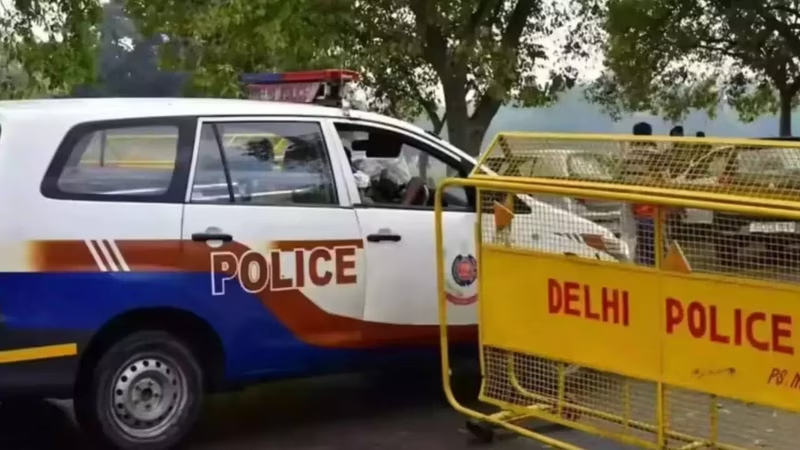
For two straight days, Delhi’s streets were under an invisible siege—not by criminals, but by the police hunting them down. In a high-stakes, citywide dragnet dubbed Operation Gang Bust, Delhi Police arrested more than 500 individuals linked to organized crime networks in just 48 hours . The operation targeted gangs involved in extortion, arms trafficking, contract killings, and violent turf wars that have long plagued neighborhoods from outer Delhi to the heart of the capital.
The timing couldn’t be more critical. With rising public anxiety over gang-related violence—including a recent attempted murder in Bawana involving known shooters—the force has shifted from reactive policing to a proactive, intelligence-driven offensive. And it’s working. Among the most significant catches: three alleged shooters affiliated with the infamous Himanshu Bhau gang, now in custody for their role in a brazen daylight attack .
Table of Contents
- What Is Operation Gang Bust? A Deep Dive
- Key Arrests and Targeted Gangs
- How Delhi Police Executed the 48-Hour Crackdown
- The Rise of Organized Crime in Delhi
- Public Safety vs. Civil Liberties: What’s the Balance?
- What Happens Next After Operation Gang Bust?
- Conclusion: A Turning Point for Delhi?
- Sources
What Is Operation Gang Bust? A Deep Dive
Operation Gang Bust is not just another routine police raid—it’s a strategic, intelligence-led campaign designed to dismantle entire criminal ecosystems in one coordinated sweep. Launched by the Special Cell and district-level anti-gang units, the operation leveraged real-time surveillance, informants, phone intercepts, and inter-agency coordination to identify and apprehend high-risk offenders across all 11 districts of Delhi .
Unlike past efforts that focused on individual crimes, this initiative treats gangs as organized enterprises. By targeting financiers, enforcers, weapon suppliers, and hideouts simultaneously, police aim to sever the operational backbone of these networks—not just remove a few members.
Key Arrests and Targeted Gangs
Among the 500+ arrests, several stand out for their implications:
- Three Shooters from Himanshu Bhau Gang: Apprehended in connection with an attempted murder in Bawana, these individuals were allegedly hired to carry out contract killings. Their arrest disrupts a key enforcement arm of one of North Delhi’s most feared syndicates.
- Extortion Racket Leaders: Multiple gang leaders running protection rackets targeting small businesses in areas like Rohini and Narela were detained.
- Illegal Arms Dealers: Raids uncovered caches of country-made pistols, cartridges, and even grenades, pointing to deeper smuggling routes.
Police confirm that many of those arrested had prior records for violent offenses, and several were out on bail pending trial—a loophole the operation seeks to exploit by re-arresting them on fresh charges .
How Delhi Police Executed the 48-Hour Crackdown
The success of Operation Gang Bust hinged on meticulous planning:
- Intelligence Fusion: Data from CCTNS (Crime and Criminal Tracking Network & Systems), local beat officers, and technical surveillance was consolidated into a master target list.
- Simultaneous Raids: Over 200 teams conducted pre-dawn raids across slums, industrial zones, and rental apartments to prevent tip-offs.
- Rapid Verification: Mobile forensic units verified identities and criminal histories on-site using biometric databases.
- Media Strategy: Public announcements were timed to amplify deterrence—sending a clear message that no gang is untouchable.
This model mirrors best practices used by agencies like the FBI’s RICO task forces, adapted for India’s urban crime landscape.
The Rise of Organized Crime in Delhi
Delhi’s transformation into a hub for organized gangs didn’t happen overnight. Experts point to rapid urbanization, land-grabbing disputes, and the lucrative underground economies of construction, scrap trading, and illicit liquor as fertile ground for gang formation .
According to the National Crime Records Bureau (NCRB), Delhi reported over 1,200 cases of extortion and 300+ instances of organized gang violence in 2024 alone . Many gangs now operate like corporations—with hierarchies, territorial boundaries, and even social media presence to project power.
Public Safety vs. Civil Liberties: What’s the Balance?
While citizens applaud the crackdown, civil rights advocates urge caution. Mass arrests risk ensnaring low-level offenders or innocent bystanders, especially in marginalized communities. The challenge lies in ensuring due process while maintaining momentum.
Delhi Police insists all arrests are backed by evidence and that legal safeguards are being followed. Still, transparency in post-arrest procedures—like timely access to lawyers and medical checks—will be crucial to maintaining public trust. As noted by Human Rights Watch, “Effective policing must never come at the cost of constitutional rights” .
What Happens Next After Operation Gang Bust?
This isn’t the end—it’s the beginning. Police plan to use seized digital devices and interrogation data to map larger networks, potentially leading to more arrests. They’re also pushing for faster trials through fast-track courts and advocating for stricter bail conditions for repeat offenders.
Long-term, the focus will shift to prevention: community policing initiatives, youth outreach programs in gang-prone areas, and economic rehabilitation—all part of a holistic strategy to break the cycle of violence. [INTERNAL_LINK:crime-prevention-in-indian-cities] could play a vital role here.
Conclusion: A Turning Point for Delhi?
Operation Gang Bust represents Delhi Police’s most aggressive move yet against organized crime. By netting over 500 suspects in under two days, they’ve sent shockwaves through the underworld. But true success won’t be measured in arrest numbers alone—it will be seen in quieter streets, safer markets, and restored peace of mind for millions of residents. If sustained, this operation could mark the start of a new era in Delhi’s fight for law and order.
Sources
- Times of India: Operation Gang Bust: Delhi Police arrests over 500 criminals in 48 hours
- Delhi Police Official Statements (January 2026)
- National Crime Records Bureau (NCRB) Annual Report 2024
- Ministry of Home Affairs – Urban Crime Trends Analysis
- Human Rights Watch – Policing and Civil Liberties in South Asia (2025)